
Scutellonema brachyurus
Scutellonema brachyurus
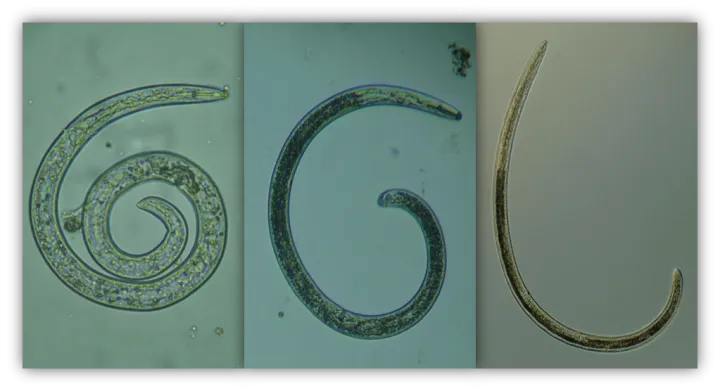
Description
How to identify
Scutellonema brachyurus is a migratory ectoparasitic nematode belonging to the Hoplolaimidae family within the Tylenchida order.
The adult worm-like nematode typically measures between 0.6 and 0.8 mm in length, featuring a robust stylet used for feeding on plant tissues.
Its biological cycle is primarily soil-borne, with larvae and adults remaining active within the rhizosphere to locate suitable plant hosts.
Identification requires professional microscopic examination, as morphological features of the tail and cuticle are key diagnostic criteria for this specific species.
The survival strategy of this nematode involves endurance in the soil under diverse environmental conditions until a host root is detected.
What it damages
This nematode is a known polyphage capable of infecting a wide variety of economic crops, including cereals, soybeans, and various horticultural species.
Feeding occurs by puncturing root cells, which causes direct cellular damage and disrupts the uptake of essential water and mineral nutrients.
The lesions caused by the nematode feeding act as entry points for secondary pathogens, often leading to root decay and decreased vigor.
In high populations, the resulting reduction in the root system's surface area leads to significant biomass loss and poor crop performance.
Economic losses are cumulative, as plants struggle to recover from root impairment, leading to uneven maturation and lower quality harvested products.
Signs of infestation
Above-ground symptoms are often subtle, manifesting as stunted plant growth or chlorotic leaves, which can be easily mistaken for nutrient deficiencies.
Plants often exhibit wilting during periods of peak transpiration, as the damaged roots fail to meet the water demands of the vegetative canopy.
Root inspection often reveals necrotic areas or browning of the root tips, with a noticeable reduction in secondary root development compared to healthy plants.
In infested fields, patches of stunted or yellowed plants are commonly observed, indicating clusters of high nematode population density.
Definitive diagnosis is achieved through diagnostic laboratory analysis of soil and root samples, where nematode counting confirms the infestation level.
Control measures
Crop rotation remains the primary cultural management tool, utilizing non-host or antagonistic crops to starve the nematode population over time.
Sanitation practices are critical, including the thorough cleaning of agricultural machinery to prevent the transfer of infested soil between field plots.
Chemical control via soil fumigation or the application of specialized nematicides may be implemented in cases of severe infestation to protect the crop.
Enhancing soil health through compost application can stimulate biological antagonists that compete with or feed on nematode populations naturally.
- Use of certified nematode-free seeds and nursery stock to prevent initial introduction.
- Implementation of fallow periods combined with tillage to reduce nematode survival.
- Periodic monitoring of soil nematode populations to determine the economic threshold for intervention.
Taxonomy
- Latin name
- Scutellonema brachyurus
- Order
- Nematodes
- Family
- Hoplolaimidae
- EPPO code
- SCUNBC
Discussion
No discussions yet — be the first.