
Herald moth
Scoliopteryx
Description
How to identify
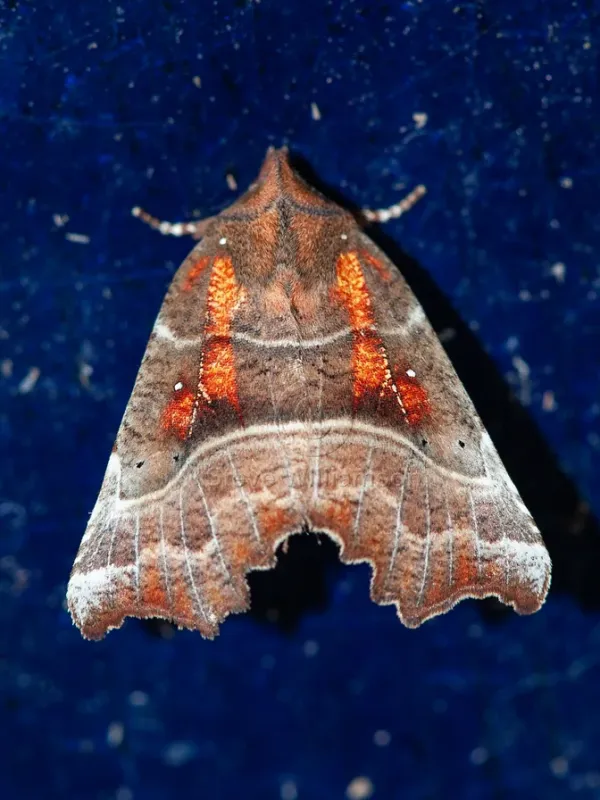
The Herald moth (Scoliopteryx libatrix) is a member of the Erebidae family. It is a distinctive moth with a wingspan of 40–45 mm, known for its unique appearance that mimics a jagged, decaying leaf.
The wings have a scalloped edge and a reddish-brown coloration with fine white and orange-red markings, providing excellent camouflage against tree bark and leaf litter.
The larva, or caterpillar, is slender and typically bright green in color, featuring thin yellow or white lateral lines. It is an active feeder that hides effectively on the undersides of leaves.
The pupa is dark brown and matte, typically enclosed within a sturdy silk cocoon spun between folded leaves or tucked away in the deep fissures of tree bark.
Adult moths of this species are notable for their ability to overwinter in dark, sheltered areas like caves, hollow trees, and sheds, which allows them to begin laying eggs very early in the season.
What it damages
The primary hosts for the Herald moth are trees from the Salicaceae family, specifically willows, poplars, and aspens. However, they are known to impact orchard trees as well.
Fruit trees such as apple, plum, and pear can suffer when these moths are present in high numbers, especially in orchards located near riparian zones where willow trees are abundant.
Caterpillars feed primarily at night, consuming leaf margins and sometimes whole leaves, leaving behind only the tougher veins, which can cause significant foliage loss.
This feeding behavior reduces the tree's photosynthetic capacity, which can lead to weakened growth, poor fruit quality, and increased susceptibility to secondary pests and pathogens.
In nurseries and young orchards, the damage caused by the larvae is particularly concerning as it affects the terminal growth and overall health of young, vulnerable saplings.
When it appears
Adults emerge from their hibernation sites early in the spring as soon as temperatures allow, often making them one of the first moths to appear in the season.
The breeding cycle follows with females laying eggs on the host foliage. Depending on the local climate and temperature, the moth can produce one or two generations per year.
The larval stage is most active throughout the summer months, coinciding with the period of maximum leaf development and growth for the host plants.
New adults emerge late in the summer, and after a period of feeding, they seek out hibernation sites to avoid the oncoming cold temperatures of autumn and winter.
Warm and moist weather conditions during the summer significantly promote the survival of the larvae, potentially leading to increased population density in the following year.
Signs of infestation
The most common sign of a Herald moth infestation is the presence of uneven, "scalloped" edges on the leaves of host trees, which is a result of larval feeding.
A closer inspection of the canopy may reveal leaves that have been folded and stitched together with silk threads, serving as protective shelters for the larvae and pupae.
The accumulation of larval droppings, known as frass, on the leaves or the ground beneath the tree canopy is a strong indicator of active caterpillar feeding.
Observing adult moths in cool, dark environments during the late autumn or winter is a precursor to potential population growth in the upcoming spring season.
Severe defoliation or stunted shoot growth in late summer may indicate that an infestation has reached a level where intervention is necessary to save the tree's vitality.
Control measures
Effective management of the Herald moth involves cultural, biological, and, if necessary, chemical strategies to maintain orchard health and productivity.
- Manual removal of folded leaves and larval nests in young or small-scale orchards.
- Encouraging natural predators such as birds and beneficial parasitic wasps to help regulate the moth population.
- The use of biorational insecticides containing Bacillus thuringiensis, which target larvae without harming beneficial pollinators.
- Maintaining clean orchard environments by clearing debris and scraping old bark where moths hibernate.
Monitoring adult populations using light traps during the spring can help orchard managers forecast potential pressure and time their control measures accordingly.
In cases of severe infestation, targeted applications of systemic or contact insecticides during the larval feeding stage can effectively mitigate crop damage.
Taxonomy
- Latin name
- Scoliopteryx
- Order
- Lepidoptera (butterflies)
- Family
- Noctuidae
- EPPO code
- SCOXSP
Discussion
No discussions yet — be the first.