
Fungus gnat
Sciara inconstans
Description
How to identify
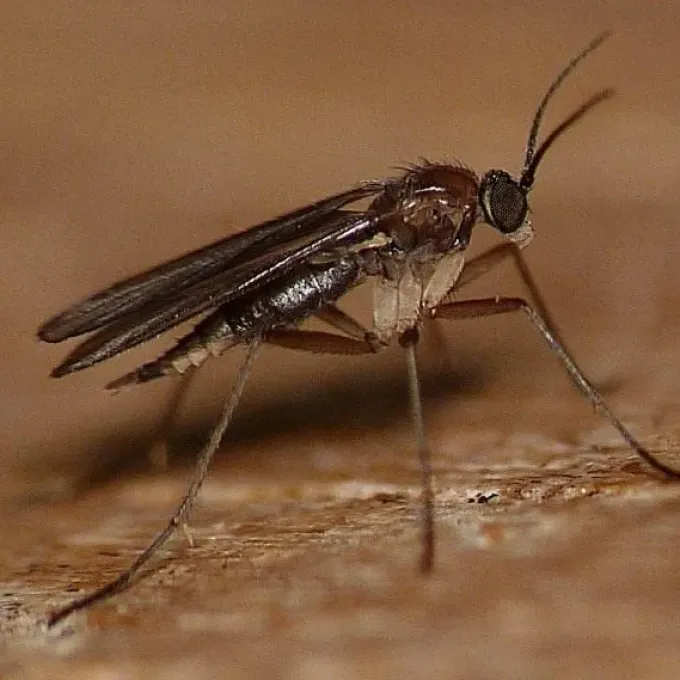
The fungus gnat (Sciara inconstans) is a dipterous insect belonging to the family Sciaridae. It is a small fly, measuring between 2 and 4 mm, with a dark, fragile body.
Adult gnats have transparent wings and weak flying capabilities, often preferring to crawl across the surface of the growing medium or plant leaves rather than flying long distances.
The larvae, which are the primary damaging stage, are 5–6 mm long with translucent bodies and a distinct, shiny black head capsule.
Their biological cycle is highly sensitive to environmental conditions, with a full life cycle from egg to adult occurring in approximately 20–25 days at 20–25°C.
Females lay eggs in moist, organic-rich soil, where the hatching larvae find optimal conditions for growth and feeding.
What it damages
This pest is a common threat to seedlings, greenhouse vegetables, and potted ornamental plants, where soil remains consistently damp.
While larvae primarily feed on decaying organic matter, high population densities drive them to consume healthy plant roots and root crowns, causing significant stress.
The damage caused by feeding results in stunted growth and chlorosis, as the plants struggle to absorb water and nutrients through a compromised root system.
Beyond direct feeding, the wounds created by the larvae provide entry points for soil-borne pathogens, including various fungal root rots.
In greenhouses, fungus gnat infestations can lead to substantial economic losses by destroying seeds and young shoots before they even emerge.
Signs of infestation
The most visible sign of infestation is the presence of small, dark flies swarming around the bases of plants or emerging from the soil during watering.
Plants affected by larval feeding exhibit general decline, yellowing leaves, and reduced vigor, often mistaken for overwatering or nutrient deficiency.
A quick inspection of the soil surface often reveals adult gnats moving quickly when the pot is disturbed or watered.
A reliable diagnostic method involves placing a thin slice of raw potato on the soil surface; larvae will often migrate to the potato within 24 hours.
In severe cases, the plant may lose its root system entirely, allowing the stem to be easily pulled from the soil with minimal effort.
Control measures
Managing soil moisture is the most effective preventative measure, as fungus gnats rely on overly wet, stagnant conditions to complete their life cycle.
Yellow sticky traps placed near the base of the plants are highly effective at catching adult gnats, thereby breaking the reproductive cycle.
For professional and home settings, sterilizing potting soil before use through heat treatment helps ensure that eggs and larvae are eliminated.
Chemical control involving soil drenching with appropriate systemic insecticides can be employed if the infestation is severe and persistent.
- Ensure proper drainage in all plant pots and trays.
- Avoid overwatering and allow the top layer of soil to dry out between waterings.
- Incorporate beneficial nematodes (Steinernema feltiae) into the soil.
- Remove any organic debris or decaying plant matter from the pot surface.
Taxonomy
- Latin name
- Sciara inconstans
- Order
- Diptera (flies)
- Family
- Sciaridae
- EPPO code
- SCIAIN
Discussion
No discussions yet — be the first.