
Sciara
Sciara
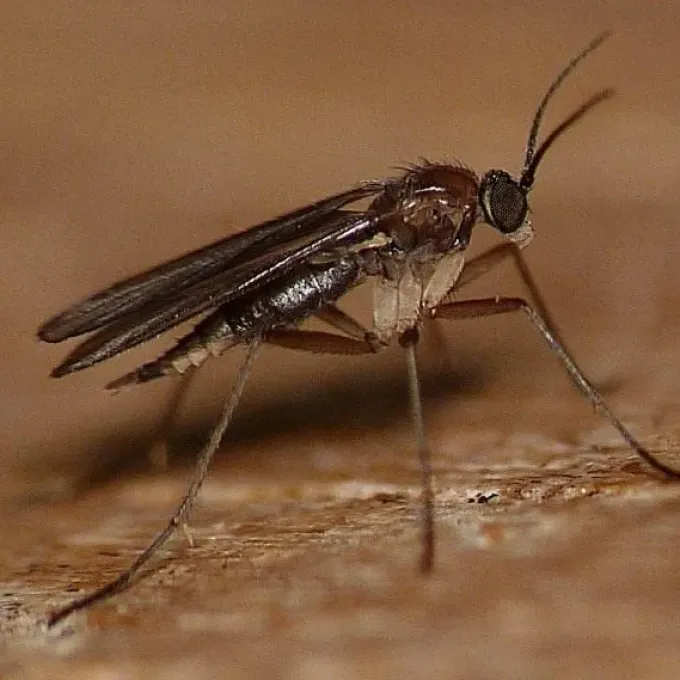
Description
How to identify
Sciara (Sciaridae), commonly known as fungus gnats, are small flies within the order Diptera. Adults are typically 2–4 mm long, with delicate black or dark grey bodies and clear, smoky wings. They are weak fliers and often seen hovering near the soil surface.
The larvae are the stage of the life cycle that causes damage. They are legless, slender, white-to-transparent larvae with a distinctive shiny black head capsule. They typically reach about 5–8 mm in length when mature.
The complete lifecycle of Sciara includes eggs, four larval instars, a pupal stage, and the adult fly. Under warm conditions (approx. 20-25°C), the lifecycle can be completed in about three to four weeks.
Females lay eggs in the moist top layers of the soil or in decaying organic matter. A single female can deposit up to 300 eggs, allowing the population to explode quickly if moisture levels remain high in the growing medium.
The insects thrive in moist conditions. While adults are nuisance pests, the larvae dwell within the top few inches of the soil where they consume organic material and fungi.
What it damages
Fungus gnats pose a threat to seedlings, cuttings, and many ornamental plants. They are a common problem in greenhouses and nurseries, where humidity and high organic content in the growing medium are constant.
While larvae primarily feed on fungi and decaying plant material, they will readily attack living plant tissue under high population density. They tunnel into roots and stems of young seedlings, causing them to wilt and die suddenly.
Damage to the root system is severe for young plants. Larvae strip the root hairs, hindering the plant's ability to take up water and nutrients, which results in stunted growth, chlorosis, and general decline.
Cuttings are particularly vulnerable. Larvae often eat the callus tissue that forms at the base of the cutting, preventing root initiation and leading to rotting of the plant base.
Furthermore, these insects act as vectors for soil-borne pathogens. They can carry fungal spores (such as Pythium, Botrytis, and Fusarium) on their bodies and spread these diseases between healthy plants.
When it appears
Sciara flies are active throughout the year in indoor environments, greenhouses, and nurseries. Since they depend on high moisture for survival, their activity levels fluctuate according to watering practices rather than external seasons.
Peak populations often occur in the winter when indoor ventilation is lower and the growing medium stays wet for longer periods, providing the perfect environment for fungi and gnat development.
Spring is also a critical time because the start of the seedling season provides large quantities of fresh, moist soil for the gnats to inhabit and thrive in.
Signs of infestation
The most obvious sign of an infestation is the presence of adult flies fluttering near the plants or resting on the surface of the soil. They are attracted to light and often appear around windows near plants.
Inspecting the soil surface might reveal the presence of small, translucent larvae. They are sensitive to light and movement and will quickly burrow into the soil or under debris when disturbed.
Poor plant performance is a key indicator. If your seedlings appear stunted, are losing their color, or suddenly wilt despite moist soil, it is highly likely that root damage from larvae is the cause.
Control measures
The most important control strategy is to manage soil moisture. Allow the top inch of soil to dry out completely between waterings to disrupt the lifecycle, as larvae cannot survive in dry soil.
Yellow sticky traps are highly effective for monitoring and reducing adult populations. Placing them near the soil surface helps catch the flying adults before they can lay more eggs.
Sterilizing the growing medium before use, by heating or freezing, is a preventative measure that kills eggs and larvae already present in the soil mix.
When chemical or biological intervention is necessary, the following methods are recommended:
- Application of entomopathogenic nematodes to the soil.
- Soil drenches with biological insecticides containing Bti (Bacillus thuringiensis israelensis).
- Use of systemic insecticides labeled for ornamental soil pests.
Good sanitation practices are vital. Remove dead leaves, fallen plant parts, and standing water from the area to reduce the availability of food and breeding sites for the larvae.
Taxonomy
- Latin name
- Sciara
- Order
- Diptera (flies)
- Family
- Sciaridae
- EPPO code
- SCIASP
Discussion
No discussions yet — be the first.