
Flesh fly
Sarcophaga ruficornis
Description
How to identify
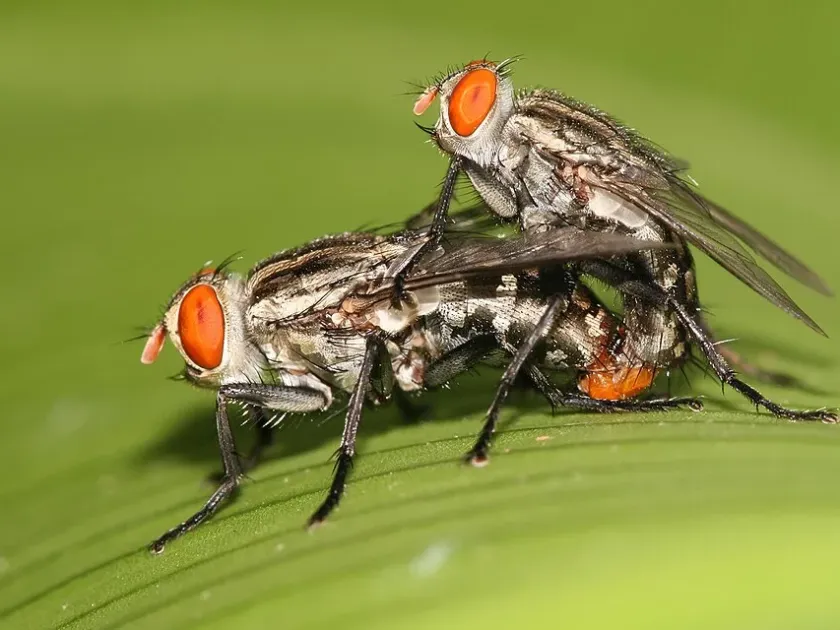
The flesh fly, scientifically known as Sarcophaga ruficornis, belongs to the Sarcophagidae family. They are medium to large flies easily recognized by their gray color, three distinct dark longitudinal stripes on the thorax, and a checkerboard pattern on the abdomen.
These flies are particularly noted for their reproductive strategy; instead of laying eggs, they are larviparous, meaning they deposit live larvae directly onto a suitable food source or substrate.
The antennae have a characteristic structure that helps entomologists distinguish them from other similar fly species. Their bodies are covered in fine, bristly hairs, giving them a slightly rugged appearance.
The life cycle is rapid, especially in warm climates. It progresses through three larval stages, a pupal stage, and finally the adult stage. This speed of reproduction allows them to quickly exploit resources in agricultural settings.
They are primarily known for feeding on decaying organic matter, but their presence near crops can lead to significant accidental or opportunistic infestation of fruits and vegetables.
What it damages
While often categorized as decomposers, flesh flies become pests when they deposit larvae on fruits or vegetables that have pre-existing damage, cracks, or rot. This is common in tomatoes, peppers, and various cucurbits.
The larvae bore into the fruit tissues, consuming the interior and accelerating decomposition. This renders the produce unmarketable and causes significant post-harvest or pre-harvest losses for farmers.
Their role in transmitting secondary pathogens is critical. By moving between rotting fruits and healthy ones, they act as vectors for bacteria and fungal spores that cause soft rots and molds.
Infestation is most severe in conditions where high humidity prevents the rapid healing of physical wounds on crops, providing the perfect entry point for the larvae.
Agricultural fields that lack proper sanitation, including those with left-over debris or fallen fruit, are at the highest risk for large-scale larval infestation.
When it appears
The activity of Sarcophaga ruficornis begins in late spring as temperatures rise consistently above 15 degrees Celsius. They remain highly active throughout the summer months.
In warm, temperate, and tropical regions, they can complete multiple generations in a single season. This continuous breeding cycle requires farmers to remain vigilant from the start of the fruiting period until the final harvest.
They reach peak population densities during mid-summer, coinciding with the peak maturation period of many vegetables, which increases the likelihood of crop contact.
As the weather cools in autumn, their activity levels drop, although they may continue to reproduce in protected environments like greenhouses or storage facilities.
Wintering occurs mainly in the pupal stage, buried in the soil or hiding in protected, debris-rich areas where the temperature remains stable enough for survival.
Signs of infestation
A primary indicator of infestation is the rapid softening of fruit tissue accompanied by an unpleasant, pungent odor characteristic of organic decay.
Closer inspection of the affected produce often reveals the presence of white, cylindrical larvae tunneling through the pulp. You may also observe dark stains on the skin of the fruit.
High concentrations of adult flies hovering around ripening crops or harvest bins indicate a breeding site nearby that requires immediate intervention.
Symptoms often manifest as "melting" spots on fruits, where the skin collapses into a liquid-filled cavity caused by the feeding larvae and associated secondary infections.
- Soft, decaying lesions on fruits and vegetables.
- Presence of maggots within the rotting plant tissue.
- Strong, foul smell emanating from infested crops.
Control measures
Field sanitation is the most effective management strategy. Removing fallen or damaged fruit promptly prevents the flies from having a reliable food source for their larvae.
Integrated Pest Management (IPM) techniques, including the use of fly traps and baits, can significantly reduce the adult fly population in greenhouses and small-scale operations.
Chemical control should be applied sparingly, focusing on target-specific, short-residual insecticides during periods of peak adult activity to minimize impact on beneficial insects.
Managing primary crop diseases is essential, as healthy plants with intact skins are less susceptible to the opportunistic infestation of these flies.
Deep plowing of the soil during the off-season is highly effective at destroying pupae, thus breaking the life cycle and reducing the starting population for the next growing year.
Taxonomy
- Latin name
- Sarcophaga ruficornis
- Order
- Diptera (flies)
- Family
- Sarcophagidae
- EPPO code
- SARCRU
Discussion
No discussions yet — be the first.