
Miller's Flesh Fly
Sarcophaga milleri
Description
How to identify
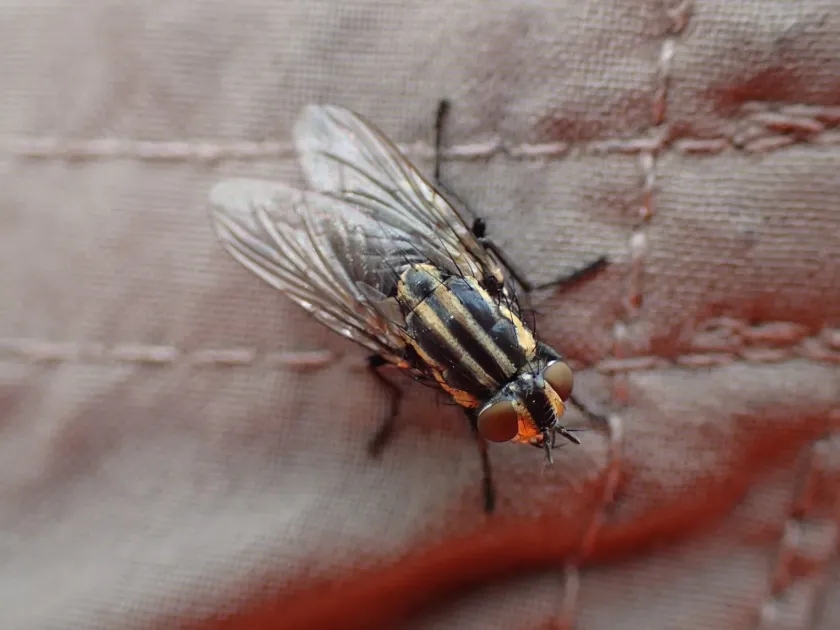
Miller's flesh fly (Sarcophaga milleri) belongs to the family Sarcophagidae, order Diptera. These insects are characterized by their grey color with distinct longitudinal stripes on the thorax and a checkerboard pattern on the abdomen.
Adult flies have a well-developed lapping mouthpart. A key identifying feature of the species is the specific structure of the male genitalia, which requires microscopic examination by specialists for accurate field identification.
The larvae of this species undergo three developmental stages, feeding primarily on organic substrates. They have a typical conical shape for higher flies, lacking a distinct head but possessing strong mouth hooks for feeding.
The life cycle includes egg, three larval instars, puparium, and adult stages. Sarcophaga milleri often exhibits ovoviviparity, giving larvae a significant advantage in rapidly colonizing available food sources.
Optimal conditions for adults include a moderate climate and access to protein sources. In agricultural environments, they are frequently found near farms, organic waste storage, and on crops already weakened by other pests.
What it damages
The primary damage is caused by the larvae, which are facultative saprophages and parasitoids. While they thrive on decaying organic matter, they can attack weakened agricultural crop tissues under specific conditions.
The pest may damage vegetable and field crops if the plants have pre-existing mechanical damage or are undergoing tissue decay. Larvae penetrate stems and fruits, accelerating decomposition and rendering the harvest unsellable.
This species poses the greatest risk to crops grown in high humidity and poor ventilation. Infested areas become hotspots for secondary fungal and bacterial infections, significantly reducing the quality and yield of the produce.
In agronomic practice, there is a clear correlation between the presence of Sarcophaga milleri larvae and prior damage by other phytophagous insects. The flies are attracted to the odors emitted by decaying plant tissues.
The economic impact involves the spoilage of produce during storage and transportation. In field conditions, a mass outbreak can lead to the death of entire plant clusters, causing significant financial losses.
When it appears
Seasonal activity is directly dependent on temperature and humidity. Adult activity begins in mid-spring, peaking in mid-summer when stable, warm weather promotes rapid larval development.
The species can complete several generations throughout the growing season, which complicates control efforts. Development cycles accelerate significantly as temperatures approach 25-28 degrees Celsius.
As autumn approaches, adult activity declines, and the insects transition into diapause as puparia, usually hidden in the upper soil layers or beneath crop residues. Overwintering is primarily in the pupal stage.
New generations often emerge during crop ripening, making protection during this period critical. Population monitoring is performed using pheromone traps and regular visual inspection of crops.
The high plasticity of the species allows it to recover its population quickly when conditions improve. Agronomists must monitor weather trends closely to plan timely and effective protective interventions.
Signs of infestation
The main sign of infestation is the discovery of larvae within stems or fruits, which begin to soften and emit a distinct odor. Often, small holes on the surface of plant parts indicate larval entry.
- Presence of larvae within plant tissue.
- Areas of tissue softening or decay.
- A characteristic sour or rotting smell from affected areas.
- Wilting or premature yellowing of plant organs.
- Presence of adult flies near infestation sites.
When fruits are infested, the internal tissue turns into a semi-liquid mass, which is a hallmark of Sarcophaga milleri activity. This leads to rapid decay and loss of commercial value.
Tunnels in the root collar or lower stem cause tissue necrosis, which can result in plant instability and lodging. This often interferes with mechanized harvesting and overall crop vigor.
Early diagnosis is difficult, making routine scouting essential. If signs of rot are observed, immediate phytosanitary assessment is required to determine if the larvae are the primary or secondary cause.
Control measures
Effective management is based on adhering to good agricultural practices. It is crucial to remove and destroy all crop residues promptly, as they serve as primary breeding and feeding sites for the flies.
Controlling other primary pests is a vital preventive measure, as they create the initial injuries that attract flesh flies. Maintaining healthy plants is the best defense against infestation.
In greenhouse environments, strictly controlling humidity and providing consistent ventilation is essential. Lowering air humidity significantly reduces larval survival and inhibits their development in plant tissues.
Chemical control includes the application of insecticides during the peak adult flight period. Only registered and approved products for specific crops should be used in accordance with local regulations.
Biological control, including the encouragement of natural enemies, can help balance the ecosystem. Proper crop rotation is also necessary to disrupt the life cycle and prevent the build-up of the pest in the soil.
Taxonomy
- Latin name
- Sarcophaga milleri
- Order
- Diptera (flies)
- Family
- Sarcophagidae
- EPPO code
- SARCML
Discussion
No discussions yet — be the first.