
Flesh fly
Sarcophaga haemorrhoidalis
Description
How to identify
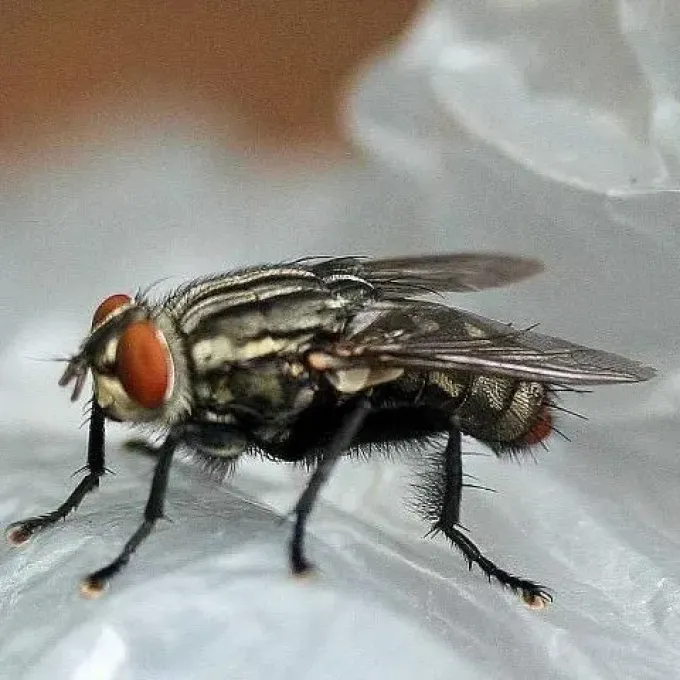
The flesh fly is a member of the Sarcophagidae family within the order Diptera. This species is easily identified by its grey body, featuring distinct dark longitudinal stripes on the thorax and a characteristic checkerboard pattern on the abdomen.
Adult flies typically range from 10 to 14 mm in length. A key diagnostic feature is the red or orange tip of the abdomen, which is a specific characteristic for Sarcophaga haemorrhoidalis.
The eyes of the fly are reddish, and the body is covered in stiff black bristles, giving it a rugged, bristly appearance. They possess a sponging mouthpart adapted for feeding on organic substances.
Unlike many other flies, this species is larviparous, meaning the female deposits live larvae rather than eggs directly onto the food source, allowing for rapid colonization.
The life cycle involves complete metamorphosis, with three larval instars, followed by pupation in soil or organic matter before the adult fly emerges.
##damage##While primarily synanthropic, these flies can cause indirect damage to agricultural crops, particularly those that have begun to rot or were injured by other pests.
In large-scale vegetable farming, they act as vectors for pathogenic microorganisms, facilitating the spread of decay and bacteria among healthy produce.
The presence of these flies in storage facilities is highly problematic, as they can quickly infest large quantities of harvested produce that is already showing signs of decay.
Infestation by larvae renders the produce unfit for market and human consumption, leading to significant economic losses and a decline in product quality.
Their role in nature as decomposers becomes a liability near agricultural centers, where waste management is critical to prevent the population from exploding.
When it appears
Adult activity is highest during the warmer months, typically spanning from late spring to early autumn, depending on regional climatic conditions.
Optimal conditions for reproduction include temperatures above 20 degrees Celsius, which accelerate the metabolic rate and shorten the generation time significantly.
As the weather cools in autumn, the flies prepare for winter by pupating in protected soil environments, where they survive until the following season.
Environmental factors like humidity and heat are crucial for their development; cooler, wetter conditions often lead to a decline in their activity levels.
Mass migration to fields and facilities often coincides with the peak harvest season, when abundant organic refuse provides the perfect breeding ground.
Signs of infestation
The most obvious sign of infestation is the presence of numerous adult flies clustering around rotting plant matter, compost piles, or discarded produce.
Inspection of damaged fruits or vegetables often reveals active, moving larvae feeding on the decaying tissues of the host material.
The presence of fecal spots on crates, storage containers, or product surfaces is a reliable indicator of high fly activity in the vicinity.
A foul, pungent odor often associated with decaying matter is a strong indication that an active colony of larvae is developing in the area.
During sorting and packaging, finding larvae emerging from produce is a clear sign that the batch has been compromised by this species.
Control measures
The most effective strategy is rigorous sanitation, which includes the rapid disposal or deep burial of rotting plant residues and waste from the fields.
Regular cleaning and disinfection of storage facilities and shipping containers are essential to destroy potential pupation sites and larval food sources.
Installing fine-mesh screens over warehouse ventilation openings prevents adult flies from entering areas where harvested produce is held.
The use of sticky traps and specialized bait stations with food-based attractants helps monitor and reduce the adult population in production areas.
Implementing crop rotation and ensuring rapid post-harvest removal of spoiled produce drastically reduces the appeal of the farm to flesh flies.
Taxonomy
- Latin name
- Sarcophaga haemorrhoidalis
- Order
- Diptera (flies)
- Family
- Sarcophagidae
- EPPO code
- SARCHA
Discussion
No discussions yet — be the first.