
Sarcophaga carnaria
Sarcophaga carnaria
Description
How to identify
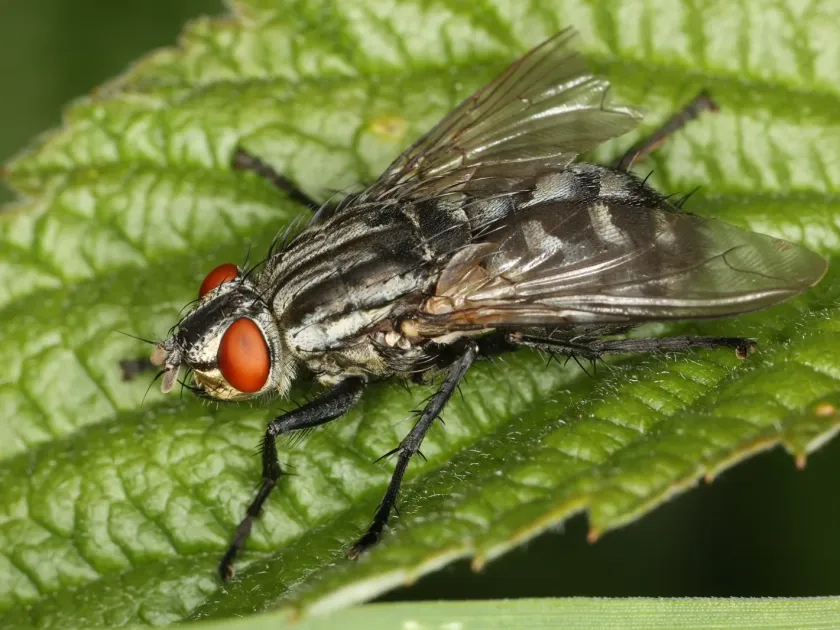
Sarcophaga carnaria, commonly known as the common flesh fly, belongs to the order Diptera and the family Sarcophagidae. These flies are easily identifiable by their size, ranging from 10 to 16 mm, and their distinct grey coloration.
Key morphological features include three dark longitudinal stripes on the thorax and a distinct checkerboard-like pattern on the abdomen. Their eyes are typically bright red, which makes them stand out among other species.
Unlike many other flies, this species is ovoviviparous. This means the female does not lay eggs, but deposits live larvae directly onto the decaying substrate, ensuring immediate access to food for the offspring.
These flies are diurnal and highly mobile, often appearing in areas where organic matter is readily available for both feeding and reproduction.
Their flight is strong and characterized by a low-pitched humming sound, which is a result of their robust wing structure and rapid movement patterns during the warm season.
What it damages
Sarcophaga carnaria acts primarily as a secondary pest in agricultural settings. While they do not usually attack healthy, intact plant tissues, they readily infest wounded, overripe, or decaying fruit and vegetables.
The larvae are opportunistic feeders. When they colonize a fruit, they tunnel into the pulp, which accelerates the decomposition process and leads to rapid spoilage of the produce.
Beyond the direct physical destruction of tissue, these flies are vectors for various bacteria and fungi. They transfer pathogens from contaminated decaying organic waste to healthy crops.
Vegetable crops such as tomatoes, peppers, and melons are particularly vulnerable if they are resting on the ground or have sustained mechanical damage from harvesting tools or weather events.
In post-harvest storage facilities, these flies can cause significant economic losses if the environment becomes humid or if there is an accumulation of waste, leading to large-scale rot.
When it appears
The activity of these flies is strictly seasonal, beginning in late spring as temperatures rise and persisting until the onset of the colder autumn months.
The peak period of activity is typically mid-to-late summer (July and August), when ambient temperatures provide optimal conditions for the rapid development of their larval stages.
During warm weather, the flies are constantly looking for sites to reproduce. Their presence is highly correlated with the lifecycle of agricultural production and harvest stages.
As the season progresses, they seek out sites with high organic concentration. If temperatures drop in autumn, their activity levels decrease significantly as they enter diapause or seek overwintering sites.
The speed of their generation cycle is extremely sensitive to temperature, which means hot and humid conditions significantly shorten the time needed for population explosions.
Signs of infestation
The presence of adult Sarcophaga carnaria is the most obvious sign. You will often see them resting near compost piles, trash bins, or damaged areas of plants on the field.
Damaged fruit will show signs of soft, sunken spots. Upon closer inspection of these areas, you may find the larvae actively feeding inside the rotting tissues of the produce.
A foul, putrid odor emanating from a patch of vegetables or storage area is a major indicator that decay is underway and that flesh flies have likely infested the material.
Small dark specks on the surface of leaves or fruit, which are fly excrement, serve as a clear sign of high fly activity and potential contamination of the crop surface.
If you notice an unusual movement within a damaged fruit, it is likely the presence of maggots, which requires urgent removal and sanitation to stop the spread.
Control measures
Sanitation is the cornerstone of controlling Sarcophaga carnaria. Eliminating the attractants that draw them in is the most effective way to prevent infestation.
- Promptly remove and dispose of all fallen, damaged, or rotting fruit.
- Ensure that compost areas are properly covered or maintained to prevent fly access.
- Use commercial fly traps or bait stations to monitor and reduce the population of adults.
- Maintain strict hygiene in packing houses and storage facilities to prevent decay.
- Keep storage areas dry and well-ventilated to discourage larval development.
In cases of severe infestation, targeted insecticide application may be necessary, but this should be done with care to avoid harming beneficial insects or contaminating produce.
Always verify the pre-harvest interval (PHI) for any chemicals used to ensure the safety of the harvested crops for human consumption.
Integrated Pest Management (IPM) practices, including proper crop rotation and the physical protection of produce, are far more sustainable than relying solely on chemical intervention.
Taxonomy
- Latin name
- Sarcophaga carnaria
- Order
- Diptera (flies)
- Family
- Sarcophagidae
- EPPO code
- SARCCA
Discussion
No discussions yet — be the first.