
Flesh fly
Sarcophaga
Description
How to identify
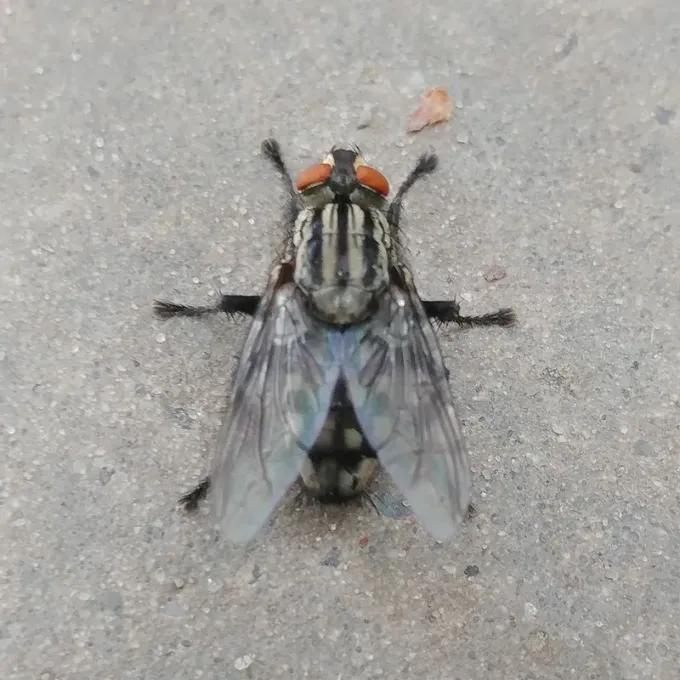
The flesh fly, belonging to the Sarcophagidae family, is a large insect characterized by a distinct grey coloration. The adult's body is covered with dense bristles, and three dark longitudinal stripes are clearly visible on the thorax.
The eyes of the fly usually have a reddish tint, and the abdomen is adorned with a characteristic checkerboard or mottled pattern. Adult size varies from 10 to 20 millimeters, depending on the species and larval nutrition.
A distinctive feature of the Sarcophaga genus is ovoviviparity. Unlike most flies, they give birth to live larvae instead of laying eggs, which significantly increases their survival rate in diverse environments.
The larvae are cylindrical with a narrowed anterior part. They possess powerful mouthparts adapted for consuming organic substrates, including plant tissues that have already begun to decay or been mechanically damaged.
Systematically, these flies belong to the order Diptera. While most species are saprophages, some can develop in the damaged tissues of agricultural crops, acting as secondary pests.
What it damages
Although flesh flies are primarily known as scavengers, in agronomic practice, they can damage vegetables and fruit crops that have mechanical injuries or existing rot. They often colonize tissues already weakened by primary pests.
Larvae colonize fruits, root vegetables, and stems, leading to accelerated decomposition. This process makes the produce unfit for consumption or storage, significantly reducing market value.
The main harm manifests as the loss of quality and the development of unpleasant odors in the affected produce. This contamination often makes affected crops dangerous to store alongside healthy batches.
In greenhouse settings, flies can breed in decaying plant debris. This creates a secondary source of infection and pests, requiring strict sanitation protocols to maintain a healthy growing environment.
While direct impact on healthy plants is rare, high humidity and adverse weather conditions during harvest can lead to increased larval activity in fruits that have small surface injuries.
When it appears
The activity cycle of the flesh fly is closely linked to temperature. Mass emergence of adults usually begins in late spring, once the average daily temperature exceeds 15 degrees Celsius.
Peak population density is typically observed during summer months when high humidity promotes the decay of organic matter, providing a suitable substrate for larval development.
Multiple generations can occur within a single season. The number of generations directly depends on regional climatic conditions and the availability of food sources for the larvae.
In autumn, activity gradually declines as the population prepares for overwintering. Overwintering usually occurs at the pupal or adult stage in protected environments like soil, compost heaps, or plant debris.
For agronomists, it is crucial to monitor periods of warm, rainy weather, as these conditions significantly increase the risk of secondary colonization by flesh flies on damaged crops.
Signs of infestation
The first sign of infestation is the appearance of soft, rotting areas on fruits or stems that previously showed traces of damage from rodents or other insect pests.
Upon inspecting the affected areas, one can notice the active movement of white or yellowish larvae that quickly burrow into plant tissues, destroying their internal structure.
A strong odor of decay in areas with accumulated organic waste is a clear signal of flesh fly presence, as these insects are highly attracted to decomposing materials.
The appearance of damaged plants changes: tissues become waterlogged, darken, and lose turgor. Frequently, the development of secondary fungal infections is observed around the affected zone.
Adult flies are often visible near waste collection points, characterized by their active, buzzing flight, which helps them locate fresh sources of organic matter for their offspring.
Control measures
The basis of control is proper agrotechnology: maintaining strict cleanliness in fields and greenhouses. It is essential to promptly remove any rotting fruits and plant debris that serve as larval food sources.
Preventive measures against primary pests are crucial to ensure that plant surfaces remain intact, preventing flesh flies from penetrating the interior tissues of fruits and stems.
Deep autumn plowing is an effective cultural practice. It destroys overwintering sites for pupae, significantly reducing the population pressure for the upcoming growing season.
- Using bait traps for adults to monitor population levels.
- Regular ventilation of greenhouses to reduce humidity and prevent decay.
- Implementing crop rotation to prevent the accumulation of pests in the soil.
Chemical control is an auxiliary measure and should be used only when justified. The best results are achieved by combining sanitation with the removal of attractants, effectively depriving the flies of their breeding grounds.
Taxonomy
- Latin name
- Sarcophaga
- Order
- Diptera (flies)
- Family
- Sarcophagidae
- EPPO code
- SARCSP
Discussion
No discussions yet — be the first.