
Sugarcane mealybug
Saccharicoccus
Description
How to identify
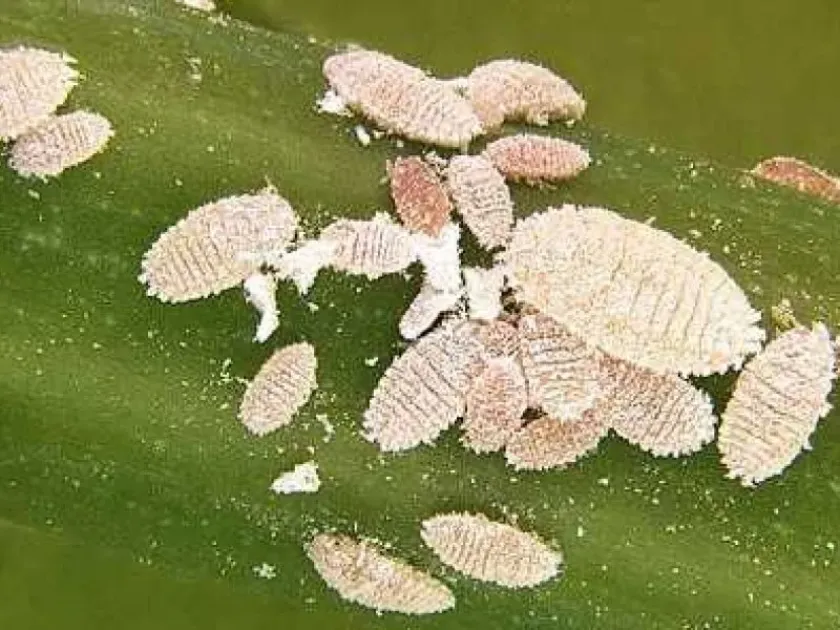
The sugarcane mealybug, Saccharicoccus sacchari, is a significant insect pest belonging to the Pseudococcidae family. These insects are characterized by their small, soft bodies covered with a white, waxy secretion that gives them a flour-like appearance.
Adult females are typically oval-shaped and sessile, often found in colonies tucked away beneath the leaf sheaths of the sugarcane plant. This protected environment makes them difficult to spot during initial scouting missions.
The taxonomic classification places them within the order Hemiptera. Their morphological features, such as specific limb structures and antennae, are adapted for maintaining a firm grip on the smooth, waxy surface of sugarcane stalks.
Young nymphs, known as crawlers, are highly mobile and are the primary agents for dispersal within and between fields. They move actively to find suitable feeding sites, usually settling near the nodes or under leaf sheaths.
While primarily associated with sugarcane, the species is capable of surviving on various other grass hosts, ensuring its persistence in the agroecosystem even when the main crop is absent or dormant.
What it damages
The primary damage is caused by both nymphs and adults feeding on the sap of the sugarcane stalk. By extracting essential nutrients, they disrupt the plant's metabolic processes and reduce its overall vigor.
The direct impact involves a reduction in the stalk's sugar content, which is detrimental to the harvest value. Infected plants often show stunted growth, reduced internode length, and overall lower biomass production.
Furthermore, the excretion of honeydew promotes the growth of sooty mold on the plant surface. This black fungal layer interferes with photosynthesis, weakening the plant even further and potentially lowering yield quality.
Sustained feeding provides entry points for opportunistic plant pathogens, including fungi and bacteria that can cause stalk rots. In cases of high infestation, this can lead to plant death and significant economic losses.
The impact is compounded during drought conditions, where the physiological stress on the plant makes it significantly less capable of recovering from the nutritional loss caused by the mealybug population.
When it appears
In tropical and subtropical regions, Saccharicoccus sacchari thrives throughout the year. Its development is highly dependent on ambient temperature and humidity, which dictate the number of generations per season.
Populations tend to peak during hot, dry weather patterns. While heavy rains can physically dislodge nymphs and suppress populations, optimal environmental conditions allow them to multiply rapidly and cover large areas.
Females lay eggs within waxy ovisacs, protecting the offspring from predators and environmental factors. The lifecycle duration can fluctuate, allowing for several generations within a single sugarcane growth cycle.
Ants often play a critical role in the population dynamics by protecting the mealybugs from natural enemies in exchange for the honeydew. This symbiotic relationship ensures higher survival rates for the colony.
Spread across plantations often occurs via the movement of infested planting material or through wind dispersal of crawlers. Rapid colonization can be observed in young ratoon crops following harvest.
Signs of infestation
Initial signs of infestation often include the appearance of white, cottony masses in the leaf axils or under the leaf sheaths. Careful inspection of these areas is essential to confirm the presence of the pest.
An increase in ant activity on the stalks is a strong secondary indicator. The presence of black sooty mold on the leaves and stems often points to a underlying mealybug colony that needs immediate investigation.
- White, mealy wax deposits at the stalk nodes.
- Presence of black sooty mold on leaf surfaces.
- Stunted or deformed sugarcane stalks.
- Yellowing and premature senescence of lower leaves.
- Increased ant activity around the plant base.
Severe infestations often result in the death of the apical meristem or terminal bud. This leads to a loss of uniformity in the field and a drastic reduction in the quality of cane used for vegetative propagation.
When selecting planting material, the presence of these white colonies on seed canes is a clear red flag. Such material should be rejected to prevent the introduction of the pest into clean fields.
Control measures
The most effective strategy for managing the sugarcane mealybug starts with the selection of clean, healthy seed cane. Treating planting material with hot water or appropriate systemic insecticides is a standard preventative measure.
Agronomic practices, such as maintaining proper spacing and weed control, help ensure optimal airflow and plant health. Proper irrigation management reduces plant stress, helping the crop withstand pest pressure.
Biological control methods involve promoting natural enemies, including ladybird beetles and parasitic wasps. Preserving these beneficial insects is vital for keeping mealybug populations below economic injury levels.
Chemical intervention is possible using systemic insecticides applied during the early stages of cane growth. Care must be taken to ensure thorough coverage, often requiring the use of surfactants to penetrate the waxy protective layer.
Regular field scouting using pheromone traps and random plant inspections is critical. Detecting the pest early allows for targeted interventions rather than expensive and ecologically harmful broad-spectrum applications.
Taxonomy
- Latin name
- Saccharicoccus
- Order
- Hemiptera (bugs, aphids, leafhoppers)
- Family
- Pseudococcidae
- EPPO code
- SCCKSP
Discussion
No discussions yet — be the first.