
Robust nematode
Rotylenchus robustus
Description
How to identify
Rotylenchus robustus belongs to the Hoplolaimidae family within the Tylenchida order. It is a migratory semi-endoparasitic nematode characterized by a robust, sturdy body and a well-developed stylet.
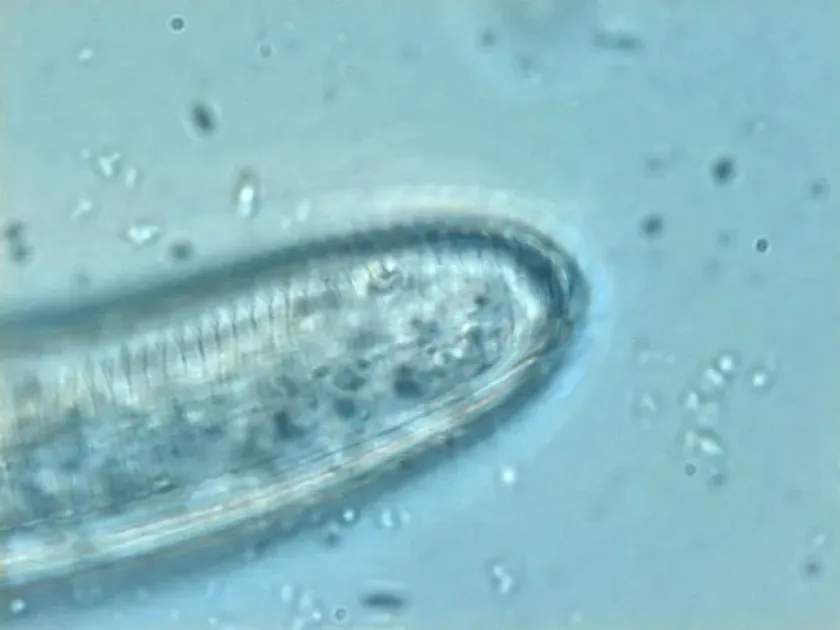
Adult specimens measure approximately 1.2 to 1.5 mm in length. The head region is distinct, and the esophagus features a robust median bulb, enabling the nematode to penetrate plant root tissues effectively.
Females possess well-defined reproductive organs and a characteristic tail with a hyaline region. Males are visually similar to females but exhibit a slimmer body and a bursa that covers the tail.
Identification in the field is difficult and requires microscopic analysis, often involving specialized staining and soil sample extraction methods to accurately distinguish it from related species.
This pest prefers light, sandy soils where improved aeration facilitates the movement of individuals through the soil matrix and enhances their ability to locate suitable host roots.
What it damages
Rotylenchus robustus is a polyphagous parasite affecting a wide range of crops. It causes significant damage to vegetables, cereals, and orchard crops, including onions, carrots, potatoes, strawberries, and coniferous trees.
The nematodes feed on root cells by inserting their anterior portion into the tissue. This feeding behavior causes severe destruction to the vascular system, impairing the plant's ability to transport water and nutrients.
Heavy infestations result in stunted plant growth, leaf yellowing, and premature senescence of the above-ground parts. The root system typically appears weakened, showing necrotic lesions and reduced lateral branching.
In infested fields, patchiness is a common symptom: plants in specific zones exhibit delayed development compared to the rest of the field, creating visible gaps in the crop stand.
In nursery settings, the parasite causes specific root damage to coniferous seedlings, preventing the establishment of a healthy root system and often leading to total crop failure.
When it appears
The life cycle of Rotylenchus robustus occurs both within the soil and inside the roots. As a migratory parasite, it can leave the root whenever the resource is depleted or environmental conditions become unfavorable.
Peak activity occurs during spring and autumn, provided there is adequate soil moisture and moderate temperatures. The nematode survives adverse conditions in the egg or larval stage within the soil or plant debris.
Reproduction is sexual, with females laying eggs directly into the soil or onto the surface of the root system. Eggs hatch into larvae, which undergo four molts before reaching the adult stage.
The duration of the life cycle is highly dependent on climate and the availability of a susceptible host plant, with development accelerating in warmer conditions.
Human activity is a primary vector for the spread of this nematode. Contaminated agricultural machinery, irrigation water, and infected plant propagules facilitate its migration to new, clean areas.
Signs of infestation
The primary symptom of infestation is uneven crop growth across a field. Stunted development is frequently accompanied by chlorosis that persists even after adequate fertilization.
Examination of the root system often reveals brown lesions or necrotic spots caused by mechanical damage and cellular destruction inflicted by the nematode's stylet.
Secondary infections, such as fungal or bacterial rots, often enter through the wounds caused by the nematodes, masking the true cause of the plant's decline.
In fruit trees and ornamental shrubs, symptoms may manifest as wilting during the hottest parts of the day, indicating a dysfunction in water uptake through the compromised root system.
Laboratory diagnosis using the Baermann funnel technique remains the only reliable method to confirm the presence and density of Rotylenchus robustus populations in the field.
Control measures
Crop rotation is a fundamental management strategy, incorporating non-host plants into the cycle to reduce nematode population levels over time.
Thermal soil treatment or steam sterilization is highly effective in greenhouses and closed environments, providing a clean start for sensitive crops.
The use of nematicides is generally reserved for situations with severe infestations, as these chemicals are highly toxic and require strict adherence to regulatory guidelines and safety protocols.
Utilizing certified, nematode-free planting material is essential to prevent the introduction of the pest into uninfested soil. Cleaning equipment thoroughly between fields is also critical.
Biological control agents, such as certain entomopathogenic fungi, are showing promising results in suppressing nematode population densities as part of an integrated pest management (IPM) strategy.
Taxonomy
- Latin name
- Rotylenchus robustus
- Order
- Nematodes
- Family
- Hoplolaimidae
- EPPO code
- ROTLRO
Discussion
No discussions yet — be the first.