
Reniform nematode
Rotylenchulus reniformis
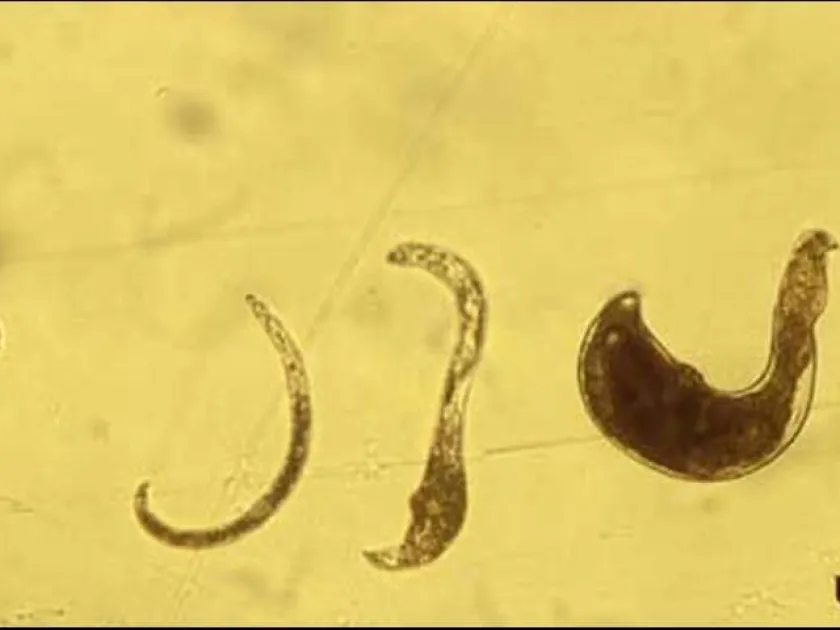
Description
How to identify
The reniform nematode Rotylenchulus reniformis is a highly destructive plant-parasitic nematode belonging to the order Tylenchida and the family Hoplolaimidae. It is recognized as a semi-endoparasite, with a unique life cycle involving both soil-dwelling and root-embedded stages.
There is a distinct sexual dimorphism in this species. While males are vermiform and do not feed on roots, immature females are highly motile and invade the host plant roots. Once embedded, they swell into a kidney or reniform shape, which serves as the diagnostic morphological feature.
The total life cycle is relatively short, typically spanning about 17 to 29 days under optimal conditions of approximately 30°C. This rapid reproduction rate allows populations to build up to damaging levels within a single growing season.
These nematodes exhibit remarkable environmental plasticity, allowing them to persist in a wide variety of soil types. They are resilient and can survive for months in soil even without a host, waiting for suitable conditions to re-emerge.
Global dissemination occurs primarily through the movement of infested soil attached to farm equipment, vehicles, and the distribution of infected nursery stock or planting material.
What it damages
The host range of Rotylenchulus reniformis is exceptionally broad, affecting over 300 plant species. Key crops at risk include cotton, soybeans, pineapples, various vegetables, and several fruit-bearing woody perennials.
The nematode damages plants by piercing the root cortex to feed on the pericycle or endodermis cells. This feeding process triggers the formation of specialized "feeding sites" within the root, which drains the plant's energy resources.
The primary impact of the infestation is the reduction of the root system's efficiency in water and nutrient uptake. Consequently, plants exhibit systemic symptoms such as stunted growth, wilting during peak temperatures, and general poor health.
Secondary damage is often severe, as the entry points created by the nematode provide easy access for opportunistic soil-borne fungi and bacteria, leading to complex disease interactions like Fusarium wilt.
In high-density infestations, crop failure is common. The economic impact is profound, especially in tropical and subtropical regions where the nematode thrives due to the conducive climate.
Signs of infestation
Detection is often difficult during the early stages of infestation, as symptoms are frequently mistaken for moisture stress or nutrient deficiencies. The most common sign is the uneven growth of crops, resulting in distinct patches of stunted plants.
Leaves of infected plants often show signs of chlorosis, yellowing, and drooping. If the plant survives to the reproductive stage, it often produces smaller fruits or fewer blossoms, leading to a significant yield drop.
Upon examination of the root system, one may observe a stunted root architecture. A characteristic sign of R. reniformis is the presence of fine soil particles adhering to the roots due to the gelatinous matrix produced by the adult females.
Necrotic lesions may appear at the sites where females have penetrated the root tissue, eventually leading to root decay if the population pressure is sufficiently high.
Definitive identification requires laboratory analysis of soil and root samples. Diagnostic methods involve extracting the nematodes from the soil and identifying them under a microscope based on the female's reniform shape.
Control measures
Effective management begins with strict crop rotation. Cultivating non-host or resistant crops disrupts the nematode's reproductive cycle and significantly lowers the soil population density for subsequent years.
Good agricultural practices, including deep tillage and rigorous weed management, are essential to minimize alternative hosts for the nematode during fallow periods or between cropping seasons.
The use of certified nematode-free planting material is the first line of defense against the introduction of this pest into clean fields. Strict quarantine measures should be applied to prevent soil movement from infested areas.
Chemical control, utilizing nematicides, is an option for intensive farming systems, although it must be implemented carefully to manage risks and comply with agricultural safety regulations.
Breeding for host-plant resistance remains the most sustainable approach. Developing varieties that can tolerate or resist nematode feeding offers the most effective long-term protection for global agriculture.
Taxonomy
- Latin name
- Rotylenchulus reniformis
- Order
- Nematodes
- Family
- Hoplolaimidae
- EPPO code
- ROTYRE
Discussion
No discussions yet — be the first.