
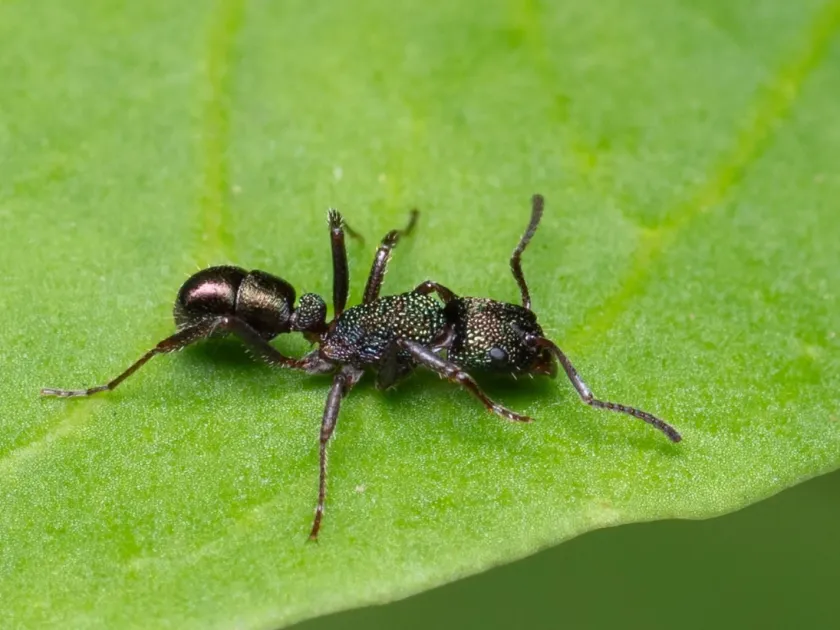
Green metallic ant
Rhytidoponera metallica
Description
How to identify
The green metallic ant (Rhytidoponera metallica) belongs to the order Hymenoptera and the family Formicidae. It is characterized by a distinctive, shimmering metallic exoskeleton, which ranges in color from bright emerald green to bronze or purple, depending on the lighting.
Worker ants typically measure between 5 to 7 mm in length. A defining biological feature of this species is its mobile stinger, which is used for both predatory activities and defense, as well as its well-developed vision, which aids in foraging.
These ants build their nests in the soil, often beneath stones, logs, or within decaying plant material. Unlike some invasive ant species, they maintain smaller, more localized colony structures, which can make their nests difficult to pinpoint.
The biology of the green metallic ant is highly dependent on ambient temperature, as they are thermophilic insects. Their activity levels, reproduction rates, and foraging speed significantly increase during warm, sunny weather conditions.
They undergo complete metamorphosis (holometabolism), consisting of egg, larva, pupa, and adult stages. The duration of these stages is strongly influenced by soil moisture levels and heat, which ultimately determines the overall density of the local population.
What it damages
While the green metallic ant is not a primary herbivore, it causes severe indirect damage by acting as a protective agent for honeydew-producing pests. They actively tend to aphids, mealybugs, and scale insects, protecting them from natural predators to ensure a steady food supply.
By excavating nests near the base of young seedlings and saplings, these ants can physically damage delicate root systems. This structural interference causes root dessication and weakens the plant's ability to absorb essential nutrients and water.
The species has been observed damaging ripening fruits with thin skins, such as berries or stone fruits, by creating small lesions. These punctures can become entry points for secondary bacterial or fungal infections, leading to rapid post-harvest decay.
In greenhouses and nurseries, their presence alters soil aeration levels significantly. Excessive soil disturbance can lead to unstable growing conditions for small plants, negatively impacting the efficiency of irrigation and nutrient delivery systems.
Their defensive nature can also impede agricultural work. Because they are aggressive and possess a sting, they make it difficult for workers to perform tasks like pruning, weeding, or harvesting, thus reducing the overall labor efficiency in the garden.
Signs of infestation
The primary sign of an infestation is the regular movement of workers with a metallic sheen along plant stems, especially where aphid colonies are present. These ants maintain consistent foraging trails that become visible as soil paths leading to the base of plants.
Accumulations of loose, granular soil near the plant base are clear indicators of subterranean nests. These mounds are often found in shaded, humid spots under leaves or mulch, which the ants prefer for their nesting sites.
Leaves showing signs of curling, sticky honeydew deposits, and subsequent development of sooty mold are strong indirect indicators. The ants actively transport and shield the pests that create these conditions, keeping them safe from natural enemies.
A noticeable decline in the health of young seedlings, manifested as stunted growth or chlorosis, often points to root-zone disturbance caused by ants. Excavating the soil around the affected root area often reveals the presence of galleries and ant larvae.
A reduction in the presence of natural beneficial insects, such as ladybugs, is a common indicator of a green metallic ant takeover. These ants aggressively hunt and expel other beneficial predators to monopolize the honeydew-producing pests on the plants.
Control measures
Effective management involves a multi-pronged approach that targets the ant-pest symbiosis. Using sticky glue bands around tree trunks effectively breaks the path for workers, preventing them from reaching the canopy to manage aphid populations.
Frequent soil cultivation and weeding around the root zone disrupt ant nest architecture. By regularly disturbing their nesting sites, you force the colony to relocate away from sensitive crops, reducing their impact on the roots.
The use of liquid baits containing low concentrations of boric acid is highly effective for colony control. Workers ingest the bait and carry it back to the nest, where it eventually affects the queen and the entire brood.
If the infestation is severe, localized application of authorized insecticides near entry points can be utilized. It is crucial to perform these treatments in a way that minimizes drift and protects non-target beneficial insects in the vicinity.
- Applying sticky tree barriers;
- Regular soil tilling to break nest structures;
- Deployment of boric acid-based bait stations;
- Sanitation to remove honeydew-producing pest habitats;
- Interplanting with ant-repellent aromatic herbs.
Taxonomy
- Latin name
- Rhytidoponera metallica
- Order
- Hymenoptera
- Family
- Formicidae
- EPPO code
- RYTPME
Discussion
No discussions yet — be the first.