
Rhytidoponera
Rhytidoponera
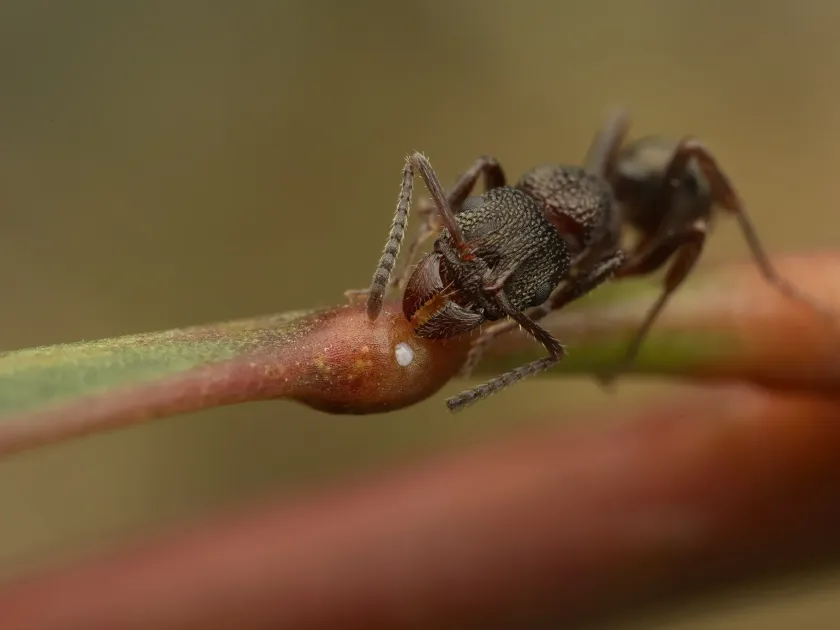
Description
How to identify
Rhytidoponera is a genus of medium to large ants belonging to the subfamily Ponerinae, recognized by their metallic sheen and distinctively sculptured body texture.
These ants are notably aggressive and possess a functional stinger, capable of delivering a painful sting when they feel threatened or their nest is disturbed.
The workers range from 5 to 10 mm in length, and their coloration typically spans from dark brown to black, occasionally with reddish tints.
Unlike many other ant species, they do not form massive colonies, often preferring smaller, more manageable groups residing in the soil or under debris.
The queen of this genus is often morphologically similar to the workers, which is a common trait among these primitive ant species.
What it damages
The primary agricultural concern with Rhytidoponera is their symbiotic relationship with aphids, mealybugs, and scale insects, which they actively protect from predators.
By excavating nests near the base of plants, these ants can physically damage delicate root systems, leading to stunted growth or wilting of young seedlings.
In greenhouses and nurseries, they can nest directly inside pots or trays, causing severe moisture loss and structural damage to the growing medium.
They also facilitate the spread of plant viruses by moving honeydew-producing pests from one healthy plant to another across the field or bench.
Root zone disturbance often leads to secondary fungal infections, which are further exacerbated by the constant movement of ants in the soil.
When it appears
Rhytidoponera activity typically peaks during the warmer months, beginning in early spring as the soil temperature rises and lasting until mid-autumn.
The peak period of their foraging activity aligns with the vegetative growth stages of crops when aphid populations are also at their highest.
In climate-controlled environments like greenhouses, these ants can remain active throughout the entire year if temperatures are kept consistently warm.
The seasonal life cycle is tightly coupled with brood production; the colony requires significantly more protein-rich food during the spring and summer breeding seasons.
In regions with cold winters, they retreat deeper into the soil to reach more stable temperatures, entering a period of diapause until spring.
Signs of infestation
A frequent sign of infestation is the consistent presence of ants trailing up stems or congregating on the undersides of leaves near pest colonies.
Unexpected clusters of aphids or mealybugs on plants are strong indicators that these ants are tending the pests and deterring natural enemies.
Small mounds of excavated soil or visible entrance holes around the base of plants are clear evidence of nesting activity in the root zone.
Wilting of young, healthy-looking seedlings without other clear symptoms often points to root system disruption caused by ant tunnels.
Increased foraging activity during early morning or evening hours is a reliable observation for locating nest sites near high-value crops.
Control measures
The most effective strategy involves using slow-acting insecticide baits that workers carry back to the nest, successfully eliminating the queen.
Regular cultivation, hoeing, and weeding are recommended to destroy nesting sites and discourage colonies from establishing themselves in the crop area.
Applying sticky barriers or specialized ant tape to the trunks of trees prevents ants from accessing the canopy to protect aphid populations.
Biological control, such as using entomopathogenic nematodes, can be applied to the soil to safely reduce the ant population without chemical runoff.
- Use of boric acid-based bait stations;
- Frequent soil irrigation to disrupt tunnel networks;
- Application of approved insecticides following integrated pest management protocols.
Taxonomy
- Latin name
- Rhytidoponera
- Order
- Hymenoptera
- Family
- Formicidae
- EPPO code
- RYTPSP
Discussion
No discussions yet — be the first.