
Caddisfly
Rhyacophila nubila
Description
How to identify
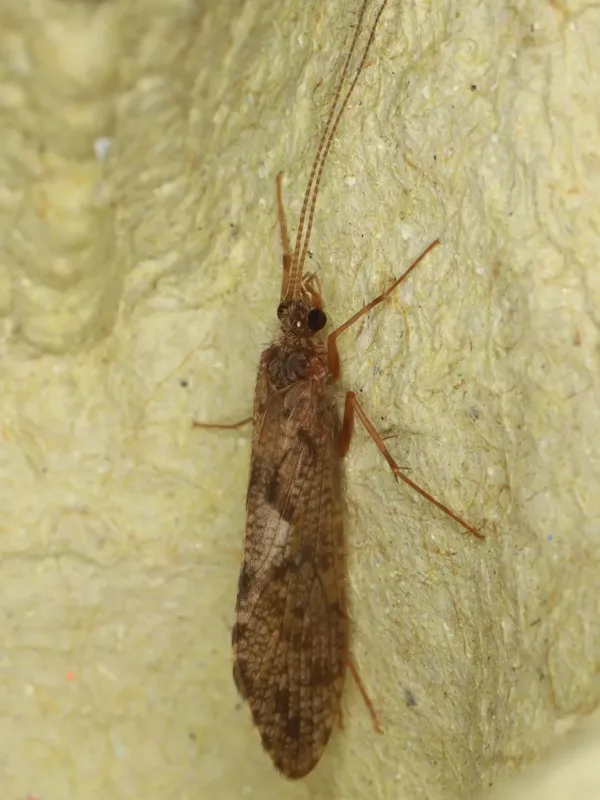
The common caddisfly, scientifically known as Rhyacophila nubila, belongs to the order Trichoptera and the family Rhyacophilidae. Adult specimens possess two pairs of hairy, membranous wings that fold roof-like over the body when the insect is at rest.
The larvae of this specific species are predatory and do not construct portable cases from organic debris like many other caddisfly species. They feature an elongated body with a well-developed thoracic region and strong mandibles designed for hunting and capturing prey in fast-flowing water.
The life cycle encompasses four distinct stages: egg, larva, pupa, and imago. Females deposit eggs directly into the water or on submerged substrates. Larval development spans several stages before the insect enters the pupal stage within a protective cocoon anchored to stones.
Adults are primarily nocturnal and are frequently attracted to artificial lighting. Their lifespan is relatively short, as their primary biological purpose is mating and oviposition, whereas the larval stage is the most prolonged and active phase of their development.
Rhyacophila nubila is highly sensitive to water quality and is typically found in clean, oxygen-rich streams. Their presence in irrigation water is often a direct result of the proximity of pristine aquatic habitats to cultivated fields.
What it damages
While caddisflies are generally considered vital components of aquatic biodiversity, they can occasionally act as agricultural pests, particularly when environmental conditions cause their populations to shift into cultivated aquatic systems like rice paddies or hydroponic farms.
The primary damage occurs when larvae are introduced through irrigation channels and begin feeding on young, tender seedlings. Their predatory behavior can result in mechanical injury to the stems and roots of vulnerable plants submerged in water.
These feeding activities can stunt plant growth and create entry points for secondary fungal and bacterial infections. In severe cases, the cumulative damage can significantly reduce the overall stand density of the affected crop.
If natural prey becomes scarce within the local stream or canal, the larvae may turn to vegetation. This dietary shift is often exacerbated in environments where human interference has reduced the native aquatic flora and fauna that usually serve as the larvae's food source.
Beyond plant damage, the accumulation of larvae and their cocoons can lead to the obstruction of fine irrigation mesh and pipe systems, disrupting the essential water supply required for proper crop management.
Control measures
The most effective management strategy involves the installation of fine-mesh filtration systems at the intake points of irrigation channels to physically block the entry of larvae into agricultural plots. This prevents the initial colonization of the crops.
Implementing periodic drying intervals for irrigation systems and fields can significantly decrease larval populations, as Rhyacophila nubila relies on consistent water flow and submerged conditions to complete its life cycle.
Chemical control should be employed only as a last resort due to the potential risk to other beneficial aquatic organisms. Any chosen insecticide must be selective and specifically approved for use in irrigation-related contexts to prevent environmental harm.
Biological control methods include fostering healthy populations of insectivorous fish and amphibians in surrounding water bodies. These natural predators are highly efficient at regulating caddisfly numbers and maintaining the ecological balance of the area.
Proactive monitoring of nearby streams and the maintenance of clean irrigation infrastructure are essential to mitigating the risk. By reducing organic debris and ensuring water purity, farmers can discourage the mass proliferation of caddisfly larvae.
Taxonomy
- Latin name
- Rhyacophila nubila
- Family
- Rhyacophilidae
- EPPO code
- RYACNU
Discussion
No discussions yet — be the first.