
Rhyacia cutworm
Rhyacia
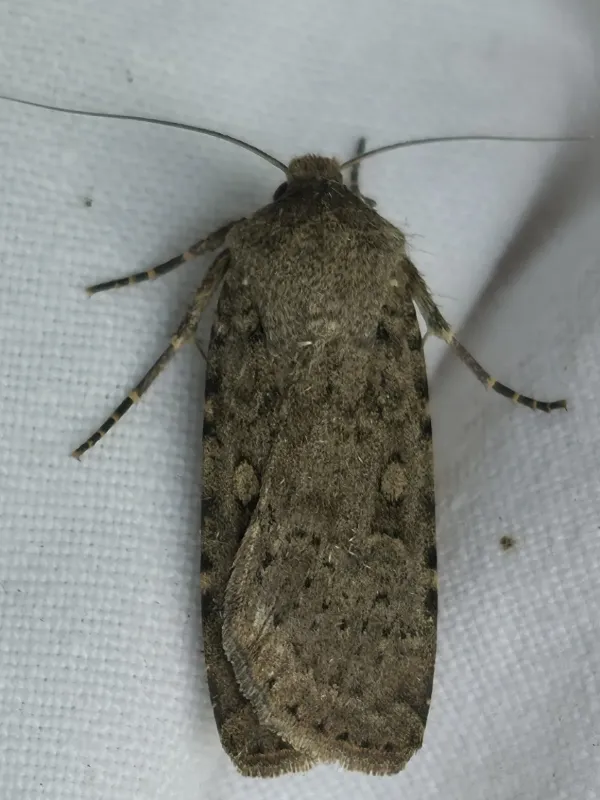
Description
How to identify
The Rhyacia genus belongs to the Noctuidae family, part of the Lepidoptera order. Adult specimens are medium-sized moths with wingspans featuring protective brownish-grey or brown patterns, which provide excellent camouflage against soil and plant debris backgrounds.
The larvae, known as cutworms, have a typical morphology for soil-dwelling pests: their bodies are thick, smooth, and colored in earthy tones ranging from grey to dull brown, rendering them nearly invisible in the topsoil.
The larvae possess powerful chewing mouthparts capable of cutting through the stems of young plants at their base with ease. Depending on the specific species, larvae may feature unique dorsal markings that assist entomologists in precise identification.
The insect life cycle follows a complete metamorphosis: egg, larva (cutworm), pupa, and imago. Hibernation typically occurs at the larval stage within the soil, which ensures survival against harsh winter temperatures.
Pupation occurs directly in the soil within protective earthen chambers constructed by the larvae prior to transformation, which complicates the detection of the pest during this developmental phase.
What it damages
This pest is a polyphage, meaning it feeds on a wide range of cultivated and wild plants. Significant damage is often inflicted on cereal crops, maize, sunflowers, and sugar beets.
During the early growth stages, larvae exhibit peak activity, cutting through tender stems at the root neck. This leads to plant lodging and eventual death as the plant's nutrient transport is severed.
The pest is dangerous due to its voracity; a single larva can destroy multiple seedlings in a single night by moving along crop rows. High population density can lead to total loss of crops across vast fields.
Beyond direct cutting, older larvae may damage roots and the lower foliage, reducing the overall vitality of the crop and facilitating the entry of secondary fungal or bacterial infections.
Damage caused by cutworms often results in substantial thinning of crops, necessitating replanting or reseeding, which significantly increases production costs for farmers.
When it appears
The flight of the first generation of moths typically begins in late spring or early summer when stable positive temperatures are established. The adults are exclusively nocturnal and twilight-active.
Egg-laying primarily occurs on the soil surface or the lower parts of weeds, which serve as the primary food source for young larvae. Monitoring flight initiation using light traps or pheromone lures is essential for timely intervention.
The period of maximum damage corresponds to the active growth phase of the larvae during summer months. During this time, they are most ravenous and inflict severe losses on field crops.
Depending on the climatic zone, the species may complete one or two generations per season, extending the period of vulnerability for agricultural crops.
In autumn, late-stage larvae retreat into the soil to a depth of 10–25 centimeters to hibernate, which makes them susceptible to soil tillage practices conducted during this time.
Signs of infestation
The primary sign of field infestation is the appearance of wilting or lodged plant patches that appear cut at the soil surface.
- Finding fat, curled-up larvae in the soil at a depth of 2–5 cm when inspecting damaged seedlings.
- The sudden appearance of gaps in crop rows that grow rapidly in size.
- Damaged plant parts showing ragged edges or being completely eaten down to the base.
- Noticeable moth activity during the evening, as they are attracted to artificial light sources.
- Presence of larval frass as small granular pellets near host plants, indicating intense feeding activity.
Control measures
The primary control method is deep autumn plowing, which brings larvae to the surface, where they are consumed by birds or perish due to adverse weather conditions.
Strict weed control in fields and surrounding buffer zones is necessary, as weeds serve as critical reservoirs for moth egg-laying.
Upon reaching the economic threshold of damage, chemical insecticides, preferably pyrethroids or organophosphates, should be applied as evening sprays to maximize efficacy.
Biological control includes the use of bacteria-based preparations, which effectively suppress larval development without causing environmental chemical pollution.
Inter-row cultivation during peak pupation periods is an effective mechanical method that destroys a significant portion of the pest population.
Taxonomy
- Latin name
- Rhyacia
- Order
- Lepidoptera (butterflies)
- Family
- Noctuidae
- EPPO code
- RHYISP
Discussion
No discussions yet — be the first.