
Oarfish
Regalecus
Description
How to identify
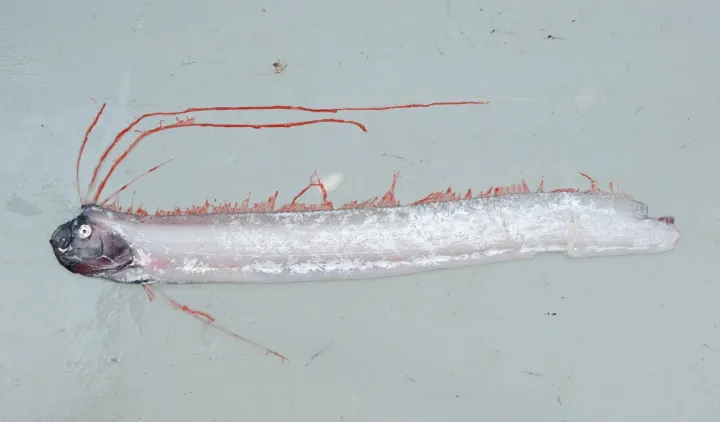
The oarfish (Regalecus glesne), also known as the king of herrings, is a species of giant, pelagic, ray-finned fish from the order Lampriformes.
It is known for its distinct ribbon-like body and long, red dorsal fin rays that form a crown-like crest on its head.
This species is found in deep ocean waters worldwide, living at significant depths far away from any agricultural environments.
The oarfish is strictly a marine organism, physically unable to survive in terrestrial environments or freshwater systems near farms.
Its biological adaptation to extreme pressure makes it impossible for this fish to inhabit or interact with soil-based plant cultivation.
What it damages
The oarfish does not damage crops and poses zero risk to any agricultural industry, as it is a predator of small marine organisms.
Its diet consists of zooplankton, small fish, and squids, and it has absolutely no requirement or interest in feeding on plant tissues.
There are no recorded instances of this fish species causing economic or biological loss in crop production or greenhouse management.
Because it lacks the physiological mechanisms to interact with land plants, it cannot be categorized as a pest or a threat to vegetation.
Any classification of the oarfish as a crop pest is inaccurate and lacks any basis in agricultural or entomological science.
Control measures
No protection measures are necessary for crops regarding the oarfish, as it presents no threat to agricultural productivity or plant health.
Agricultural consultants and farmers should focus efforts on controlling actual threats such as insect pests, pathogens, and invasive terrestrial species.
There is no reason to develop or implement control protocols, chemical treatments, or biological deterrents against this marine animal.
Resources should be allocated toward proven integrated pest management strategies that address real economic losses in the farming sector.
Standard field monitoring for pests should prioritize known plant-damaging organisms relevant to the specific geographic and climatic region.
Taxonomy
- Latin name
- Regalecus
- Family
- Regalecidae
- EPPO code
- REGASP
Discussion
No discussions yet — be the first.