
Tropical mealybug
Rastrococcus tropicasiaticus
Description
How to identify
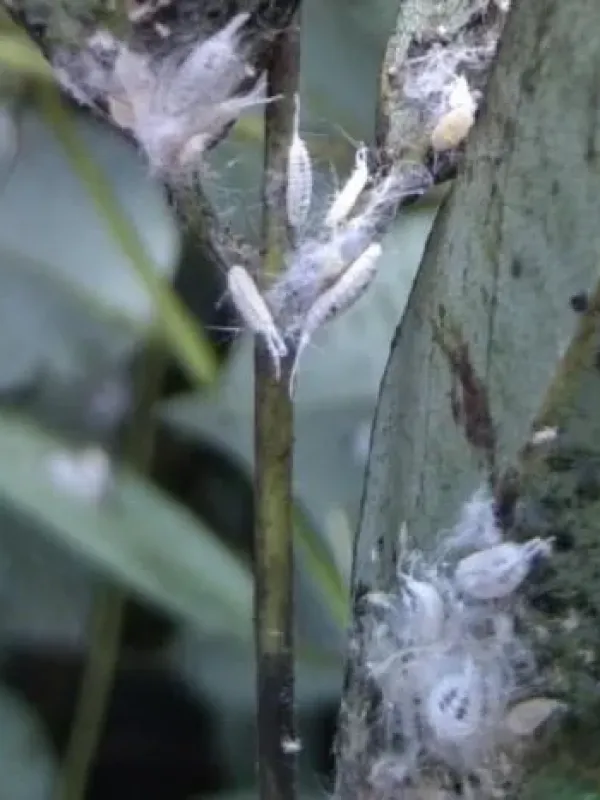
The tropical mealybug (Rastrococcus tropicasiaticus) is a destructive pest belonging to the family Pseudococcidae, order Hemiptera. It is characterized by a white waxy coating that protects the insect from environmental stress.
Adult females are oval-shaped and stationary, often found in clusters covered in cotton-like waxy secretions, which is their most recognizable feature in a field or greenhouse environment.
The males are much smaller and possess wings, allowing them to travel to find females for mating, while the females remain attached to the plant surface to feed on sap.
Identification is often performed by observing these white, fuzzy masses on the undersides of leaves or along the nodes and junctions of the host plant's stems.
Being a tropical species, its life cycle is continuous in warm climates, making it a persistent threat that can reproduce rapidly throughout the year without a winter diapause.
What it damages
This pest is a polyphagous insect that infests a vast range of tropical and subtropical plants, including citrus, mango, banana, and various ornamental flora.
By inserting their stylets into the plant tissue, they extract vital phloem sap, which causes the plant to lose nutrients, resulting in stunted growth and chlorosis.
The excretion of honeydew promotes the growth of sooty mold, a black fungal layer that covers leaves and interferes with the plant's ability to perform photosynthesis efficiently.
Infestations lead to severe leaf drop, blossom abortion, and malformed fruit, which drastically reduces the market value and yield of the affected commercial crops.
Prolonged feeding by large colonies can cause the death of young branches and lead to the overall decline and eventual mortality of the infested plant.
Signs of infestation
The earliest sign of infestation is the appearance of white, fluffy deposits, particularly in protected areas such as leaf axils and the underside of leaves near the veins.
Leaves will begin to turn yellow, curl downwards, and eventually wilt, indicating that the plant's vascular system is under significant stress from sap extraction.
The presence of a sticky substance (honeydew) on the leaves or the surrounding soil surface is a common indicator that a mealybug colony is present nearby.
Sooty mold growth, appearing as a dark, soot-like film on leaves and stems, usually accompanies an established mealybug colony and is a strong secondary symptom.
A general lack of vigor in the plant, such as poor fruit set or stunted development of new foliage, often signals that the infestation has reached a critical stage.
Control measures
Effective management relies on integrated pest management (IPM) strategies, starting with strict quarantine procedures for any new plant material entering a site.
Chemical control involving systemic insecticides is often necessary to reach the insects hidden within the waxy secretions, which contact sprays cannot penetrate.
- Regular monitoring using sticky traps and visual inspection of high-risk areas.
- Introduction of natural enemies such as ladybeetles or parasitoid wasps.
- Application of horticultural oils to suffocate the insects by blocking their spiracles.
Systematic applications are required because the protective wax layer and overlapping generations mean that single treatments are rarely sufficient to eliminate the entire population.
Pruning and removing heavily infested plant parts can significantly reduce the pest population density before moving to broader chemical or biological interventions.
Taxonomy
- Latin name
- Rastrococcus tropicasiaticus
- Order
- Hemiptera (bugs, aphids, leafhoppers)
- Family
- Pseudococcidae
- EPPO code
- RASTTO
Discussion
No discussions yet — be the first.