
Rangia clam
Rangia cuneata
Description
How to identify
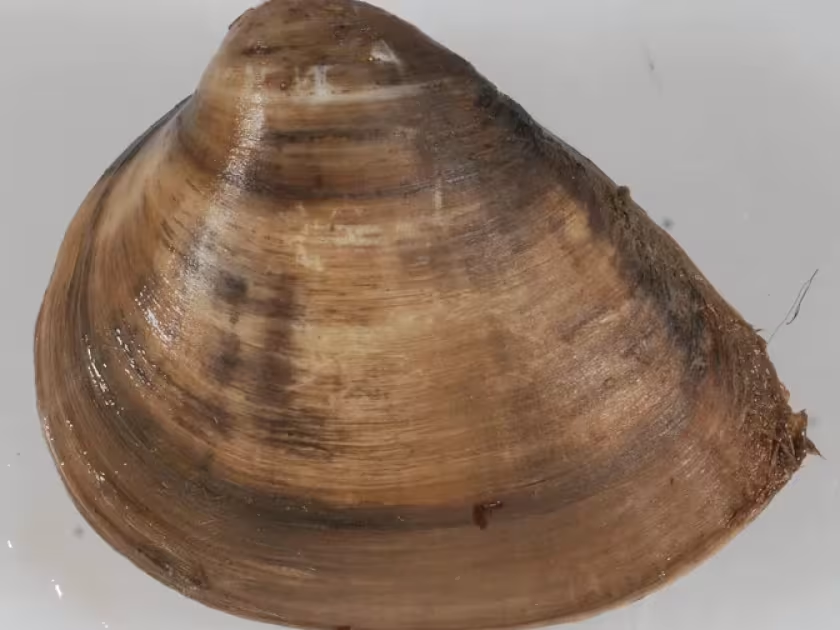
Rangia cuneata, commonly known as the Rangia clam, is a bivalve mollusk belonging to the Mactridae family. It is easily identified by its distinct triangular, wedge-shaped shell.
The shells are typically thick, with a brownish to gray exterior and are marked by prominent concentric lines that represent periods of growth.
These mollusks are highly adaptable, capable of surviving in various salinity levels, ranging from freshwater to brackish water environments such as estuaries.
They live buried in the sediment of the riverbed or canal bottom, using their siphons to filter nutrients from the water column for survival.
Due to their high fecundity and resilience, they have become a significant invasive species in many parts of the world, impacting various water systems.
What it damages
Rangia cuneata is a major issue for agricultural water infrastructure, as it tends to settle inside irrigation pipes, pumps, and water intake structures.
Massive colonies of these clams can completely obstruct water flow, leading to significant drops in water pressure and failures in irrigation delivery.
The accumulation of living and dead clams creates blockages that demand expensive maintenance and result in operational downtime during the crop season.
The shells have an abrasive texture that causes severe wear and tear on pump impellers and other sensitive hydraulic components within the network.
Furthermore, their biological presence can alter water quality, affecting the nutrient balance and potentially promoting the growth of unwanted algae.
When it appears
Activity levels for Rangia cuneata are heavily influenced by water temperature, with peak reproduction and settlement occurring in warmer months.
Larval stages are released into the water column and are transported by currents to new locations where they eventually settle and begin their growth.
Spring and summer are critical times when the dispersal of larvae is at its highest, leading to rapid colonisation of exposed surfaces in water channels.
While their metabolic rate decreases during colder winter months, the adult colonies remain embedded in the infrastructure throughout the entire year.
Persistent environmental conditions, such as stable water levels and appropriate salinity, allow populations to thrive and sustain themselves indefinitely.
Signs of infestation
Reduced water pressure at the irrigation nozzles is often the first visible symptom of a large-scale infestation within the piping system.
Audible grinding or rattling noises coming from water pumps are indicative of debris or mollusk shells interfering with the pump's mechanical parts.
Frequent clogging of intake screens and strainers that are designed to remove particulate matter from the irrigation supply indicate high clam density.
Presence of shell fragments deposited at the ends of irrigation lines serves as definitive evidence that a colony exists further upstream in the network.
Visual inspection of underwater infrastructure often reveals dense beds of clams attached to submerged surfaces of intake towers and sluice gates.
Control measures
Effective management requires a combination of physical removal and preventative engineering to keep larvae out of the irrigation network.
Installing fine-mesh intake filters is essential for preventing the entry of larval and juvenile stages into the main irrigation pipes.
Maintenance schedules should include periodic high-pressure flushing of the entire network to dislodge and clear out any accumulated sediment or colonies.
In some cases, ultrasound technology is used to deter settling, as high-frequency vibrations can discourage mollusks from attaching to surfaces.
- Use of mechanical screening and automated self-cleaning filters.
- Draining and drying canals during off-seasons to eradicate colonies.
- Regular inspection and monitoring of pump station health.
Taxonomy
- Latin name
- Rangia cuneata
- Family
- Mactridae
- EPPO code
- RANICU
Discussion
No discussions yet — be the first.