
Rachiplusia
Rachiplusia
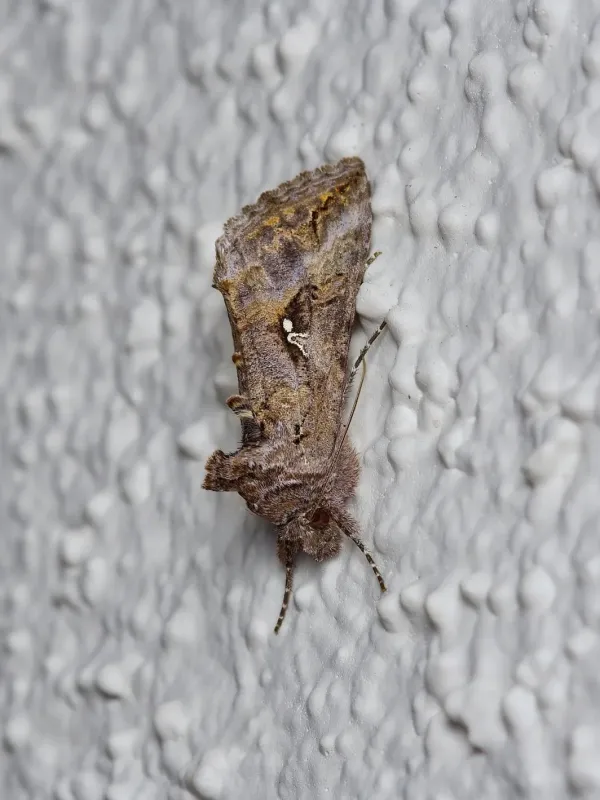
Description
How to identify
Rachiplusia is a genus of moths belonging to the Noctuidae family (subfamily Plusiinae). These nocturnal insects are known for their distinct forewing patterns, often featuring metallic silver or gold markings resembling Greek letters.
The larvae, or caterpillars, are characterized by a reduced number of prolegs compared to other noctuid species, which results in their unique looping gait when moving across leaves.
Adult moths are primarily active at night, spending daylight hours hiding within dense foliage or under plant debris, making them difficult to detect during standard field scouting.
The life cycle follows complete metamorphosis: egg, larva, pupa, and adult. Development speed is highly dependent on environmental temperature and humidity levels.
Identification at the larval stage is confirmed by the specific arrangement of setae on the body and the limited number of abdominal prolegs compared to common cutworms.
What it damages
Rachiplusia species are polyphagous pests, capable of feeding on a wide variety of crops, including soybeans, legumes, various vegetables, and several ornamental plants.
The larvae consume leaf tissue, creating irregular holes. In cases of high infestation, they are capable of severe defoliation, leaving only the primary veins of the leaves intact.
By reducing the total photosynthetic area of the plant, the pest inhibits overall growth, delays maturation, and significantly lowers the potential yield of the affected crop.
In addition to foliage, larvae may feed on reproductive parts such as flower buds and developing pods, which directly impacts the quality and quantity of the harvest.
The presence of feeding wounds also creates entry points for secondary pathogens, such as bacteria and fungi, which can exacerbate the damage to the host plant.
When it appears
Pest activity begins with the onset of warmer temperatures in late spring, as overwintering pupae emerge as adult moths to begin the breeding cycle.
Summer months provide the most favorable conditions for rapid population growth, often allowing for multiple generations to develop throughout the growing season.
Each generation cycle typically lasts several weeks, during which the larvae go through several developmental stages before pupating inside silk cocoons on leaves or in soil debris.
Population density often peaks toward the end of summer, necessitating careful monitoring of fields to prevent widespread damage during the critical development stages of crops.
As autumn approaches, the insect prepares for overwintering, with pupae entering a state of diapause in protected soil environments until the next favorable season.
Signs of infestation
Early symptoms of an infestation include the appearance of small, irregular holes in the leaf canopy, which gradually increase in size as the larvae mature.
Scouts can find small eggs laid individually or in clusters on the undersides of leaves, which is a primary indicator of an establishing population.
The presence of granular frass (excrement) on leaves and on the ground beneath the plant canopy confirms the presence of actively feeding larvae.
Visual identification of the looping movement of caterpillars is a reliable indicator of Plusiinae presence when disturbed during the early morning or evening hours.
Monitoring using pheromone traps is the most effective way to detect the arrival of adult moths and predict potential outbreaks before significant damage occurs.
Control measures
Cultural control methods, such as deep tillage after harvest, are effective in destroying overwintering pupae and reducing the overall population for the following season.
Maintaining clean fields by removing weeds that serve as alternative hosts significantly reduces the survival rate of the larvae during the early stages of the season.
Biological control, including the application of B. thuringiensis-based insecticides, offers an effective and eco-friendly solution for managing early-instar larvae.
Chemical intervention should be reserved for periods when the economic threshold of infestation is reached, utilizing targeted, low-toxicity insecticides to protect beneficial insects.
Integrated Pest Management (IPM) practices, including regular pheromone monitoring and crop rotation, are essential for long-term control of Rachiplusia populations.
Taxonomy
- Latin name
- Rachiplusia
- Order
- Lepidoptera (butterflies)
- Family
- Noctuidae
- EPPO code
- RACHSP
Discussion
No discussions yet — be the first.