
Bordered sallow
Pyrrhia bifasciata
Description
How to identify
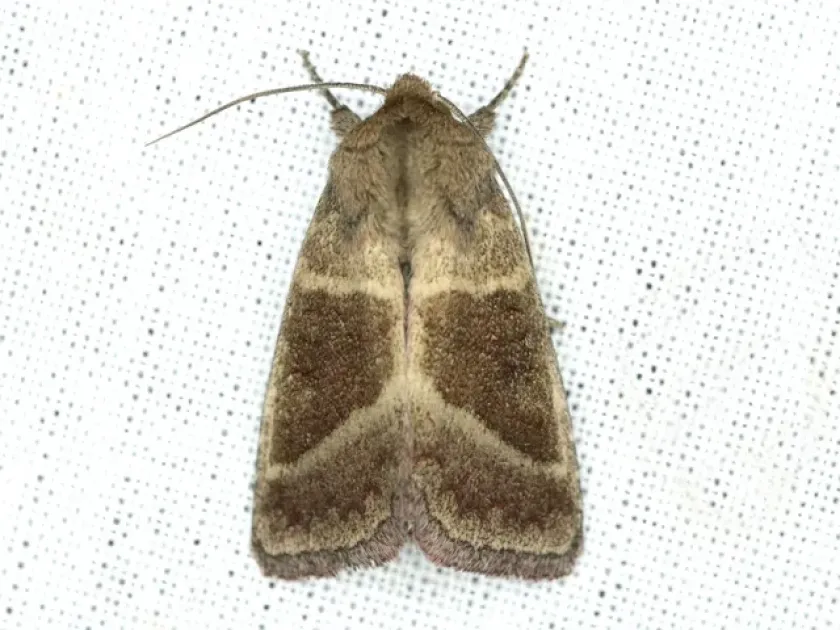
The bordered sallow (Pyrrhia bifasciata) is a moth belonging to the family Noctuidae. The adult moth has a wingspan of approximately 30-35 mm. Its forewings exhibit a characteristic ochre-yellow or reddish-brown coloration with two distinct darker transverse bands, which serves as a key identification feature.
The larvae (caterpillars) of this species are robust, typically green or brownish with longitudinal light-colored stripes. They possess small dark tubercules and fine hairs, providing effective camouflage among the leaves and flower buds of their host plants.
The pupae are reddish-brown and hibernate in the soil. They are equipped with a cremaster at the tip of the abdomen, which is a structural feature used for stabilization during the overwintering phase in the upper soil layers.
As a member of the Noctuidae family, this moth follows a complete metamorphosis cycle. The adults are primarily nocturnal, remaining hidden in dense foliage or under plant debris during the daylight hours to avoid predation.
Developmental rates are heavily influenced by environmental temperature and moisture levels. Depending on the climatic zone, the species may produce one or two generations per season, impacting the timing of crop infestations.
What it damages
The damage is caused primarily by the larval stage. Caterpillars possess strong chewing mouthparts and feed on a variety of plants, including legumes, solanaceous crops, and various ornamental species.
The larvae are particularly destructive to the reproductive organs of plants, such as flower buds, blooms, and developing fruit. This direct damage often results in significant yield reduction and loss of market value for the harvested produce.
Young larvae feed on the leaf epidermis, creating small windows in the foliage. As they grow, they begin to consume entire sections of the leaf, leading to extensive skeletalized patterns and reduced photosynthetic capacity.
Feeding wounds created by the larvae often facilitate the entry of secondary pathogens, including bacteria and fungi, which can lead to further plant decay and overall crop health decline.
In cases of high infestation, the cumulative impact of larvae feeding can cause stunted growth and even complete failure of flower or fruit set, leading to substantial economic impact for the farmer.
When it appears
Adult moth activity typically begins in late spring or early summer, depending on regional weather patterns. This is when females lay eggs on host plants, usually on the undersides of leaves or near the buds.
Larval development generally occurs during the summer months. This period is critical for crop monitoring, as the feeding activity of the larvae can quickly escalate if left unchecked.
A second generation may occur in warmer regions, extending the period of risk through late summer and early autumn, which can affect late-harvested varieties of crops.
The transition to the pupal stage occurs as temperatures drop in autumn. Hibernation takes place in the soil, protected from winter extremes by the top layer of earth and surface vegetation.
Monitoring the flight of adults using pheromone traps or light traps provides essential data for predicting the timing of larval emergence and scheduling protective interventions.
Signs of infestation
One of the earliest signs of a Pyrrhia bifasciata infestation is the presence of frass (larval excrement) on the leaves. These small dark pellets are clear indicators that larvae are feeding in the upper canopy.
- Holes or missing parts in flower buds and blooms.
- Irregular feeding patterns on the leaf edges or surfaces.
- Webbing connecting leaves or floral parts, providing shelter for larvae.
- Visible entry holes in developing fruits or seed pods.
Inspecting the plants at dusk or night is the most effective way to observe the larvae actively feeding. During the day, they remain well-hidden, often tucked deep inside floral structures or protected plant crevices.
Plants undergoing heavy stress due to larvae feeding may show signs of premature wilting or yellowing, which serves as a secondary warning for field agronomists.
When flower buds fail to open or fall off prematurely, it is often a sign of damage caused by the larvae feeding on the developing internal structures.
Control measures
Effective pest management involves agronomic practices such as deep autumn plowing to disturb the soil and expose overwintering pupae to predators and adverse environmental conditions.
Biological control methods include the use of beneficial insects like Trichogramma wasps, which parasitize the moth's eggs and help maintain population levels below the economic injury threshold.
Chemical control should be implemented only when scouting confirms that pest populations exceed the economic threshold. Insecticides should be chosen based on local regulations and specific crop requirements.
Evening applications of insecticides are highly recommended, as the larvae are most active and exposed at this time, ensuring better coverage and higher efficacy of the active ingredients.
Implementing a crop rotation strategy and maintaining clean field borders help reduce the overall infestation pressure by minimizing suitable habitats for the moth to reproduce and hibernate.
Taxonomy
- Latin name
- Pyrrhia bifasciata
- Order
- Lepidoptera (butterflies)
- Family
- Noctuidae
- EPPO code
- PYHIBP
Discussion
No discussions yet — be the first.