
Cotton bollworm
Pyrrhia
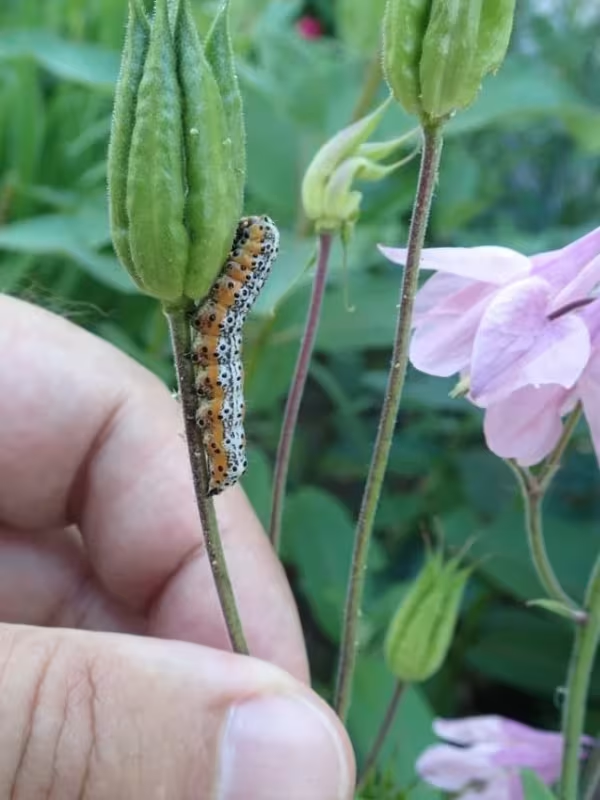
Description
How to identify
The cotton bollworm (Helicoverpa armigera) is a member of the order Lepidoptera and the family Noctuidae. The adult moth has a wingspan of approximately 35-40 mm, with coloration varying from light yellowish-brown to dark reddish-brown.
The forewings are marked with dark transverse lines and a distinct dark spot in the center. The hindwings are lighter in color with a broad, dark border along the outer edge, which serves as a key characteristic for field identification.
Larvae go through five or six instars. Younger larvae are often pale green, while older ones darken to brown, grey, or even black, often featuring prominent longitudinal stripes along the body, which aids in camouflage.
The pupa is smooth and dark brown, typically measuring about 20 mm in length. It overwinters in the soil, often at depths of 5 to 15 centimeters, which is a critical phase for evaluating the potential population density for the upcoming season.
Microscopic examination of the larvae reveals small, coarse spines on the skin, distinguishing this species from many other similar noctuid pests. This physical characteristic is useful for accurate species determination by agronomists.
What it damages
The cotton bollworm is a highly polyphagous pest, capable of feeding on over 100 different plant species. Economically significant hosts include cotton, tomatoes, corn, soybeans, chickpeas, and sunflowers.
Early-instar larvae primarily feed on tender leaf tissue, causing minor skeletonization. As they mature, they shift their feeding behavior to target generative organs, including flower buds, blossoms, and developing fruits, which causes the most severe yield loss.
In corn crops, the larvae damage silks and tunnel into the ears, consuming the developing kernels. This creates entry points for fungal pathogens, such as Aspergillus or Fusarium, leading to grain rot and contamination.
On tomatoes and other fruit crops, larvae bore deep into the fruit. This damage is devastating, as it often leads to secondary infections and rapid rot, making the produce entirely unmarketable and causing significant economic hardship.
Damage to the terminal growth points of plants like cotton results in stunted growth and excessive branching, which delays maturity and reduces overall lint yield. Extensive damage can destroy a large percentage of the reproductive potential of a field.
When it appears
The emergence of the first generation of moths typically coincides with the arrival of warm spring weather. Depending on the latitude and climate, this activity usually begins between May and June, marking the start of the monitoring period.
The cotton bollworm can produce multiple generations per year, with the number of cycles largely dependent on temperature and photoperiod. In warmer regions, up to four or more generations can occur within a single growing season.
Adult moths are primarily nocturnal, showing peak activity in the evening. They actively search for host plants to deposit eggs, typically selecting the upper foliage, flower buds, or fruiting bodies to ensure immediate food access for emerging larvae.
The total duration of a single life cycle is roughly one month in the peak of summer. This rapid development allows populations to build up quickly, especially in irrigated fields where host plants provide a continuous source of succulent food.
As temperatures drop in autumn, larvae prepare for the next season by pupating in the soil. This pupal stage serves as a dormant phase, enabling the population to survive winter conditions and emerge to complete the lifecycle in the following spring.
Signs of infestation
The earliest signs of infestation are small, light-colored patches on leaves caused by the feeding of newly hatched larvae. Finding small, spherical, pale yellow eggs on the underside of leaves confirms an active egg-laying phase.
The presence of frass (larval excrement) on leaves or fruit surfaces is a definitive indicator of older larvae. Damaged flower buds often wilt, turn yellow, and drop prematurely, which is highly visible during regular field walks.
Boreholes in tomatoes or corn ears, surrounded by brown frass, clearly indicate that a larva has entered the fruit. This feeding creates internal cavities that are often filled with decaying plant matter and larvae.
Using light traps or pheromone traps is highly effective for detecting the presence of adults before significant egg-laying occurs. Pheromone traps specifically target male moths, providing a reliable count to help schedule insecticide treatments.
Careful inspection of potential host sites is essential. Checking the interior of buds and the tips of ears can reveal larvae that are hidden from view, allowing for earlier intervention before they move to more damaging stages.
Control measures
Cultural control methods, such as deep plowing in autumn, are effective in disturbing the soil and exposing pupae to predators and adverse weather. Weed management is also vital, as wild host plants often harbor early-season populations.
Biological control through the release of Trichogramma wasps during the peak egg-laying period has proven highly successful. These parasitic wasps lay their own eggs inside the bollworm eggs, preventing the larvae from hatching.
Chemical control must be timed precisely with the larval life cycle. Applications are most effective against first and second-instar larvae; once a larva bores into the fruit, it becomes significantly more difficult to reach with contact insecticides.
To delay the development of resistance to pesticides, it is standard practice to rotate insecticides with different modes of action, such as synthetic pyrethroids, organophosphates, and chitin synthesis inhibitors.
Integrated Pest Management (IPM) strategies, which combine pheromone monitoring, biological releases, and selective chemical sprays, offer the most sustainable approach for managing cotton bollworm populations while protecting beneficial insects.
Taxonomy
- Latin name
- Pyrrhia
- Order
- Lepidoptera (butterflies)
- Family
- Noctuidae
- EPPO code
- PYHISP
Discussion
No discussions yet — be the first.