
Pteromalus eurymi
Pteromalus eurymi
Description
How to identify
Pteromalus eurymi is a member of the Pteromalidae family within the Hymenoptera order. In agronomy, it is recognized as a significant parasitoid wasp that contributes to the natural regulation of insect populations.
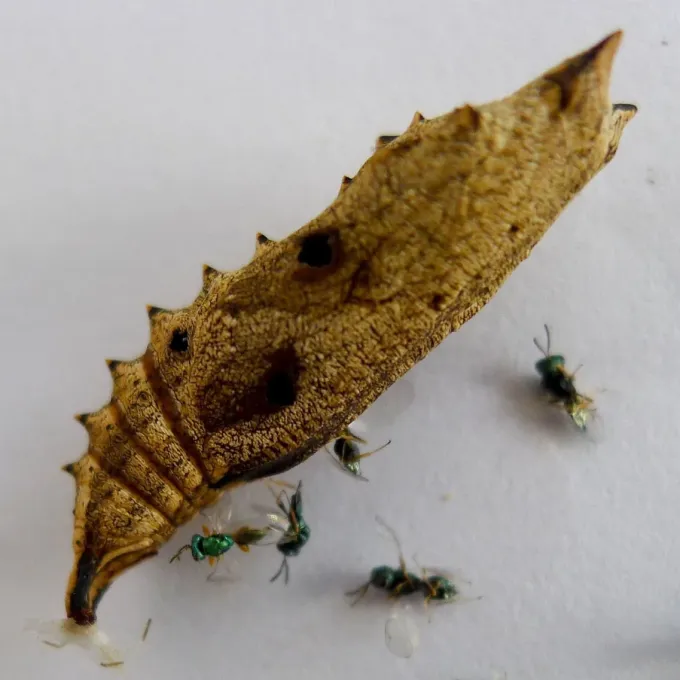
These wasps are minute, often featuring a metallic sheen typical of chalcidoid wasps. Due to their extremely small size, identifying them in the field requires specialized entomological observation tools.
The species has a complex relationship with its hosts, specifically targeting various lepidopteran species that threaten agricultural productivity. It is a critical component of integrated pest management.
Its biological cycle follows complete metamorphosis, including egg, larval, pupal, and adult stages. The development of the larva occurs inside or on the body of the host insect.
Morphological identification is based on the specific wing venation patterns and antenna structure. Detailed microscopic examination is required to distinguish this species from other related parasitoids.
What it damages
Pteromalus eurymi does not cause damage to crops; instead, it is a highly beneficial organism. It targets larvae of various pests that feed on grain and legume crops, effectively reducing their density.
The host insects controlled by this wasp are responsible for significant foliage and seed loss. By parasitizing these pests, the wasp acts as a natural guardian of crop health and yield stability.
The range of affected hosts includes several key lepidopteran species that damage field crops. The wasp injects eggs into the host, leading to the destruction of the pest larvae.
Without this parasitoid, the population of herbivorous insects would likely exceed economic injury levels much faster, leading to severe crop destruction and increased financial losses for farmers.
The economic value of this wasp lies in its ability to prevent large-scale pest outbreaks, minimizing the need for artificial interventions in agricultural fields.
When it appears
The activity of Pteromalus eurymi begins in the spring as temperatures rise, synchronized with the appearance of its target hosts. The timing of its emergence is crucial for effective population control.
During the summer months, the wasp reaches its peak activity, reproducing and dispersing across fields. Multiple generations can occur within a single growing season, depending on the climatic conditions.
As autumn arrives and temperatures drop, the wasps enter a dormant stage (diapause). They typically overwinter as pupae or adults in protected environments like soil, debris, or nearby field margins.
The rate of population growth is directly linked to the accumulation of growing degree days. Warmer, stable climates favor faster generation cycles, increasing the efficacy of the wasp as a control agent.
Early spring activity allows the parasitoid to colonize new generations of pests early, providing continuous protection throughout the growing season of the host crops.
Signs of infestation
The absence of significant damage on crops is the primary sign of an active Pteromalus eurymi population. This suggests that natural enemies are successfully managing pest density.
Field inspections may reveal lethargic or dead pest larvae showing signs of parasitism. These hosts often serve as the developmental substrate for the next generation of the wasp.
Exit holes found on the remains of dead pest pupae are definitive markers of successful parasitization. These small holes are created by emerging adult wasps after they complete their transformation.
A downward trend in the pest population within fields where no broad-spectrum insecticides have been used is a strong indicator of successful biological control by the species.
Agronomists often use these field indicators to determine if chemical intervention is necessary, or if the natural parasitoid population is sufficient to manage the existing threat.
Control measures
To conserve Pteromalus eurymi populations, it is essential to avoid the use of broad-spectrum insecticides. These chemicals are highly toxic to parasitoid wasps and can disrupt natural pest control.
Maintaining floral borders and hedgerows around fields provides nectar sources for adult wasps, increasing their lifespan and reproductive success. These habitats serve as vital refuges.
Adopting integrated pest management (IPM) practices, including the use of selective bio-pesticides, helps protect the wasp while still managing pest outbreaks effectively.
Crop rotation and proper soil management strategies can create environmental conditions that favor beneficial insect populations over harmful pests, fostering a more sustainable agricultural ecosystem.
- Minimize the use of highly toxic chemical pesticides.
- Establish non-crop areas to support beneficial insect life cycles.
- Monitor field conditions to apply treatments only when strictly necessary.
Taxonomy
- Latin name
- Pteromalus eurymi
- Order
- Hymenoptera
- Family
- Pteromalidae
- EPPO code
- PTEREU
Discussion
No discussions yet — be the first.