
Black-bellied sandgrouse
Pterocles orientalis
Description
How to identify
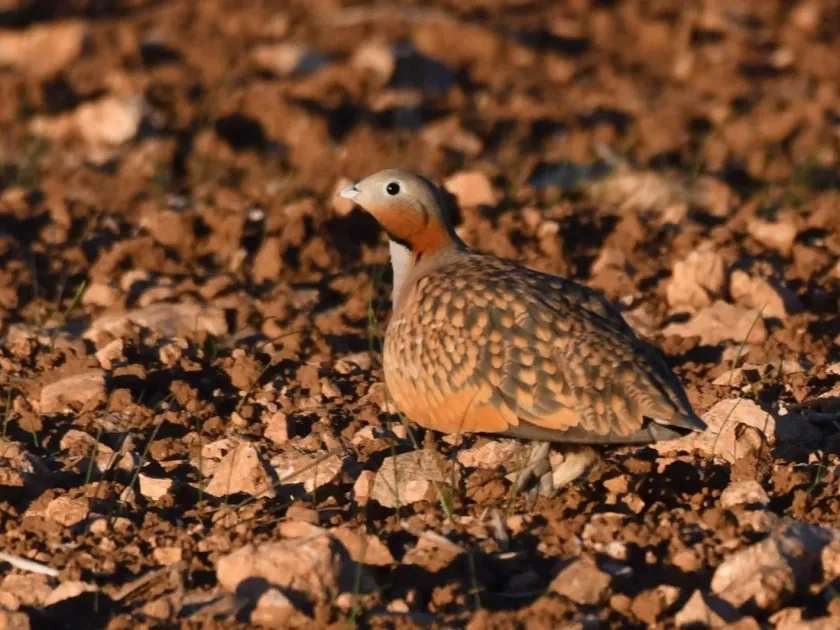
The black-bellied sandgrouse (Pterocles orientalis) is a medium-sized bird belonging to the Pteroclidae family. These birds are highly adapted to arid environments, possessing a cryptic plumage that provides excellent camouflage against sandy and dry soil surfaces.
The male is distinguished by a prominent black patch on its belly, while its breast and head display a grayish-ochre coloration. The females are paler and more heavily marked with spots, which helps them remain inconspicuous during their nesting period on open ground.
Their flight is rapid and direct, characterized by long, pointed wings that allow them to cover vast distances between nesting sites and feeding areas. This agility makes them difficult to track for farmers, as they can suddenly appear in large numbers in areas where food sources are abundant.
Biologically, they are heavily reliant on daily water access, which influences their travel patterns. Their tendency to form large flocks makes them particularly destructive in agricultural landscapes, as their collective feeding behavior can cause significant localized damage to crops in a very short time.
The sandgrouse’s feet are short and feathered, adapted for ground walking rather than perching. This morphological feature is crucial for understanding how they forage on seeds directly from the soil surface, effectively acting as pests during the early stages of crop development.
What it damages
The black-bellied sandgrouse causes substantial damage to grain crops, particularly during the sowing and germination phases. They are highly efficient at detecting and consuming sown seeds before they have a chance to establish themselves as seedlings, leading to poor crop stands.
Wheat, barley, and millet are among the primary targets for this species. When a flock descends onto a newly seeded field, they can consume a large percentage of the sown grain, often forcing farmers to perform costly reseeding operations to maintain the required plant density.
In addition to seed consumption, the birds can uproot young, delicate seedlings. By digging into the soft soil to reach the seed remnants, they inadvertently destroy the plant's developing root system, leading to wilting and death of the emerging crop.
During dry seasons, the nutritional stress leads these birds to feed on a wider variety of crops, including legumes and forage grasses. This shift in diet expands their impact beyond just cereal grains and can threaten the productivity of multiple crop types within a single farming operation.
Repeated foraging activity by flocks leads to the trampling and compacting of the soil surface. This compaction hinders proper root growth and water infiltration, which are critical for plant development, thereby reducing the overall yield potential of the fields affected by their presence.
When it appears
The birds are most active during the spring sowing season, which aligns with the highest availability of seeds on the soil surface. This is the period when agricultural fields are most vulnerable to avian predation, requiring vigilant monitoring and protective measures.
A second peak in activity can occur during the grain ripening phase, as the birds seek out accessible seeds. While they prefer sown fields, they may also target crops that have lodged or are otherwise accessible, providing an easy food source during the summer months.
As the season progresses into autumn and winter, the activity of these birds on agricultural land typically declines. They tend to migrate or shift their foraging focus towards wild grasses and seeds, moving away from cultivated fields once the harvest is complete.
Seasonal weather patterns are key indicators for potential outbreaks. Prolonged droughts accelerate the arrival of sandgrouse flocks in fields, as they search for alternative food sources when natural vegetation in arid areas fails to produce sufficient seed.
Effective pest management relies on understanding these seasonal cycles. By identifying the timing of migration and peak foraging times, farmers can deploy deterrents precisely when the risk to their crops is highest, ensuring more efficient resource management.
Signs of infestation
One of the clearest signs of a black-bellied sandgrouse infestation is the presence of numerous small, shallow pits in the soil. These pits are created by the birds as they use their beaks to excavate seeds, often leaving a distinct pattern across the field.
Footprints are a vital diagnostic tool for identification. The tracks show a three-toed pattern without a prominent hind toe, which differentiates them from many other common agricultural bird pests, allowing for quick confirmation of the species involved.
The presence of seed hulls and fragments scattered around these feeding pits indicates active foraging. If these remains are found near areas with missing or stunted seedlings, it confirms that the damage to the stand was caused by avian activity.
Flock behavior, including loud vocalizations and the sight of low-flying groups moving across fields, serves as a major warning sign. Since these birds are highly mobile, visual scouting during the early morning or late evening hours is the most effective way to detect them.
Regular field inspections should look for patchy areas of thin or missing stands. When these patches are coupled with soil disturbances, it necessitates immediate intervention to prevent the flock from extending their feeding territory further across the field.
Control measures
Acoustic deterrents are a primary method of control. Systems that broadcast the calls of local raptors, such as eagles or falcons, are effective, provided they are rotated to prevent the birds from habituating to the same sounds over time.
Visual deterrents, such as realistic predator models or reflective streamers, can be placed around the perimeter of the fields. To be successful, these tools must be moved frequently, as sandgrouse are intelligent enough to learn that stationary objects pose no real threat.
Good agricultural practices, such as increasing the depth of seed placement to 4–6 cm, can significantly reduce the accessibility of seeds to foraging birds. Heavy rolling after sowing ensures a firmer seedbed, making it physically harder for the birds to reach the seeds.
Creating decoy feeding sites on the fringes of the farm, away from the main production areas, can serve as an effective way to divert the flocks. This strategy, combined with protective measures, keeps the birds occupied in areas where their impact is minimized.
An integrated approach that combines cultural, physical, and acoustic methods is the most sustainable way to protect crops. Continuous monitoring and a fast response to the first signs of activity are essential to preventing major economic losses in the field.
Taxonomy
- Latin name
- Pterocles orientalis
- Family
- Pteroclididae
- EPPO code
- PRKLOR
Discussion
No discussions yet — be the first.