
Pseudocuma longicornis
Pseudocuma longicornis
Description
How to identify
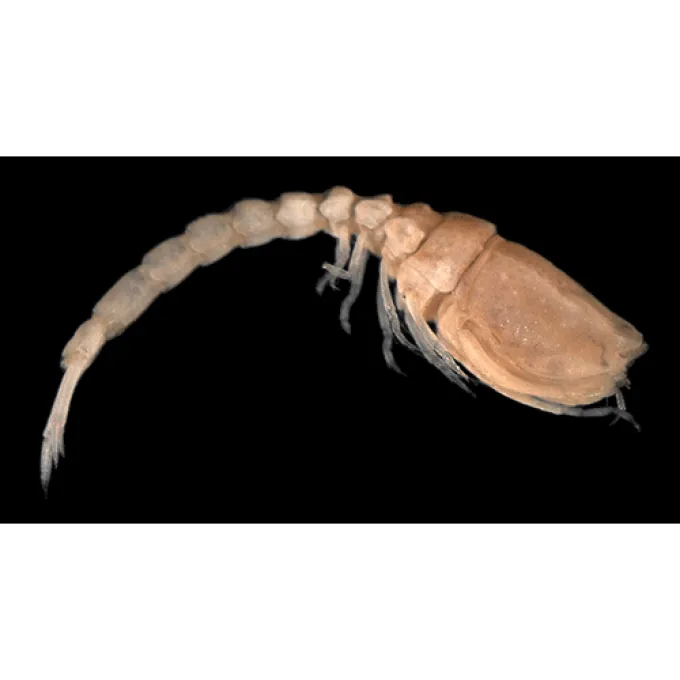
Pseudocuma longicornis belongs to the order Cumacea, within the family Pseudocumidae. They are small crustaceans characterized by a distinct body shape.
The body is divided into a carapace-covered cephalothorax and a slender, segmented abdomen that ends with a telson.
These organisms possess long antennae, which is the primary feature used for their taxonomic identification.
They are typical benthic organisms, usually found in marine and brackish waters where they burrow into the substrate.
Due to their physiological requirements, they cannot survive outside of an aquatic environment.
What it damages
This species is not an agricultural pest and does not cause damage to crops, vegetables, or fruit plants.
They feed primarily on detritus and organic particles present in the seabed sediment, playing a role in marine decomposition.
There is no interaction between Pseudocuma longicornis and terrestrial agriculture, as their ecological niches are entirely separate.
Any reports identifying this creature as a crop pest are factually incorrect and indicate a misidentification of the specimen.
Since they do not impact crop health or yield, they hold no significance in economic entomology or plant pathology.
When it appears
The lifecycle of Pseudocuma longicornis occurs continuously throughout the year within marine habitats.
Reproductive activity often peaks during warmer seasons when nutrient availability in the benthos increases.
Females carry their developing eggs in a brood pouch located on the underside of their body until they hatch into larvae.
Larval stages go through several molting cycles before reaching the adult phase of their development.
During colder months, their metabolism slows down, and they tend to remain buried deeper in the sediment to survive.
Control measures
There are no control measures required for Pseudocuma longicornis, as they are not harmful to agricultural systems.
The use of pesticides or any other control agents against this species is strictly unnecessary and environmentally unsound.
Agronomists should ensure that pest management programs target actual crop-damaging insects and pathogens.
If these crustaceans are found in water bodies near farms, they serve as a component of the local aquatic ecosystem rather than a threat.
Proper identification is the key to avoiding unnecessary interventions and maintaining ecological balance in agricultural areas.
Taxonomy
- Latin name
- Pseudocuma longicornis
- Family
- Pseudocumatidae
- EPPO code
- PCUMLO
Discussion
No discussions yet — be the first.