
Pseudococcus onustus mealybug
Pseudococcus onustus
Description
How to identify
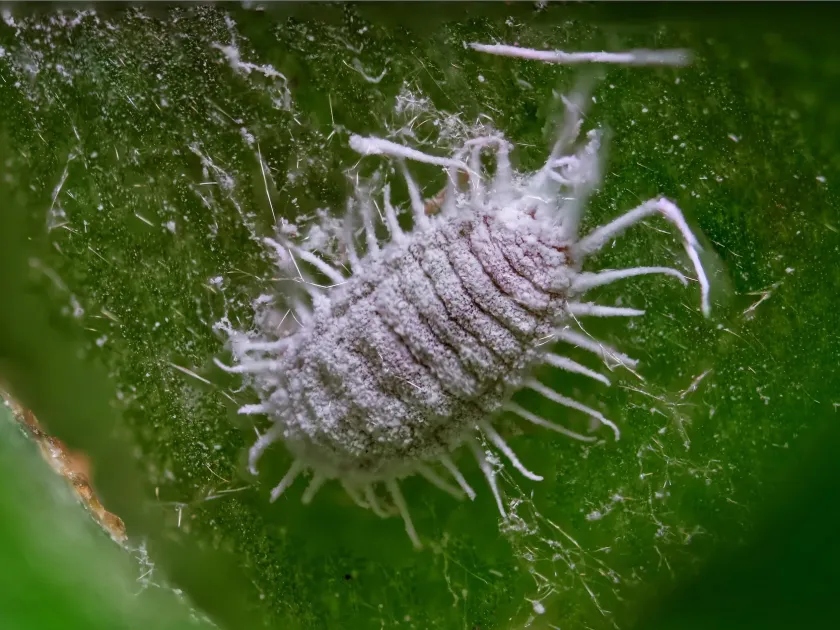
The mealybug Pseudococcus onustus is a member of the Pseudococcidae family within the order Hemiptera. These insects are characterized by a waxy, white, powder-like covering that resembles flour or cotton wool.
Adult females are oval-shaped and move very slowly, while the first-instar nymphs, known as crawlers, are highly mobile and easily disperse throughout the plant.
Specific identification of this species is based on the microscopic structure of their waxy filaments and dermal structures. In practice, they are often grouped with other common mealybug species.
These pests prefer sheltered habitats on the host plant, particularly leaf axils, underneath bark flakes, or within the root zone, making them difficult to detect early.
Males are rarely seen; they are winged and short-lived, with their primary function being the search for and fertilization of the females.
What it damages
Pseudococcus onustus attacks a wide variety of ornamental and agricultural plants. By inserting their piercing-sucking mouthparts, they extract essential plant sap.
Typical damage includes stunted growth, leaf deformation, yellowing, and premature senescence of buds and flowers. The plant's overall health and vigor are severely compromised.
They secrete honeydew, a sugary substance that promotes the growth of sooty mold, which coats leaves and blocks sunlight, further inhibiting the plant's photosynthesis.
Severe infestations can lead to the death of the plant due to physiological exhaustion. This is especially true for young seedlings or plants kept in greenhouse conditions.
The constant drain of nutrients results in chlorosis and loss of foliage, significantly reducing the plant's aesthetic and commercial value.
When it appears
The life cycle of this mealybug is largely temperature-dependent. In controlled environments like greenhouses, reproduction can occur continuously throughout the year.
In outdoor settings, activity increases as temperatures rise in the spring. Optimal development occurs between 22 and 26 degrees Celsius.
A single generation can complete its development in three to six weeks depending on humidity levels and the availability of a suitable host plant.
Females produce white, fibrous ovisacs that house and protect their eggs from desiccation and environmental stressors until the nymphs hatch.
Population peaks are typically observed during the summer months when warm, stable weather conditions favor rapid multiplication and colonization of new host areas.
Signs of infestation
The primary sign of an infestation is the presence of white, cottony masses on stems, twigs, and leaf junctions, which are actually the egg-laying nests.
Plants often exhibit general decline, with yellowing leaves and distorted growth. Sticky residues (honeydew) on foliage are a classic indicator of sucking insect activity.
The presence of a black, sooty coating on the leaves indicates the development of secondary fungal infections triggered by mealybug secretions.
Upon closer inspection of the soil or root ball, one might find white, mealy colonies, indicating that the infestation has moved to the root system.
Sudden shedding of leaves and lack of new shoot development are common symptoms of an advanced infestation that has already stressed the plant.
Control measures
The most effective method for controlling Pseudococcus onustus is the use of systemic insecticides, which are absorbed by the plant and kill the insects upon feeding.
Early infestations can be managed by mechanical removal using cotton swabs dipped in isopropyl alcohol, ensuring that the waxy protective layer is breached.
Regular monitoring of all plants is essential, as these pests are easily spread via contact or equipment, often going unnoticed until the population is large.
- Application of systemic pesticides such as imidacloprid or acetamiprid.
- Introduction of natural predators or biological control agents like parasitic wasps.
- Isolation of infested plants to prevent further spread within the collection.
- Sanitary pruning of heavily infested plant parts to reduce the pest population.
Preventive care includes maintaining proper humidity and air circulation and isolating any new plant additions to ensure they are free from pests before introducing them to the main group.
Taxonomy
- Latin name
- Pseudococcus onustus
- Order
- Hemiptera (bugs, aphids, leafhoppers)
- Family
- Pseudococcidae
- EPPO code
- PSECON
Discussion
No discussions yet — be the first.