
Indian spiny turbot
Psettodes erumei
Description
How to identify
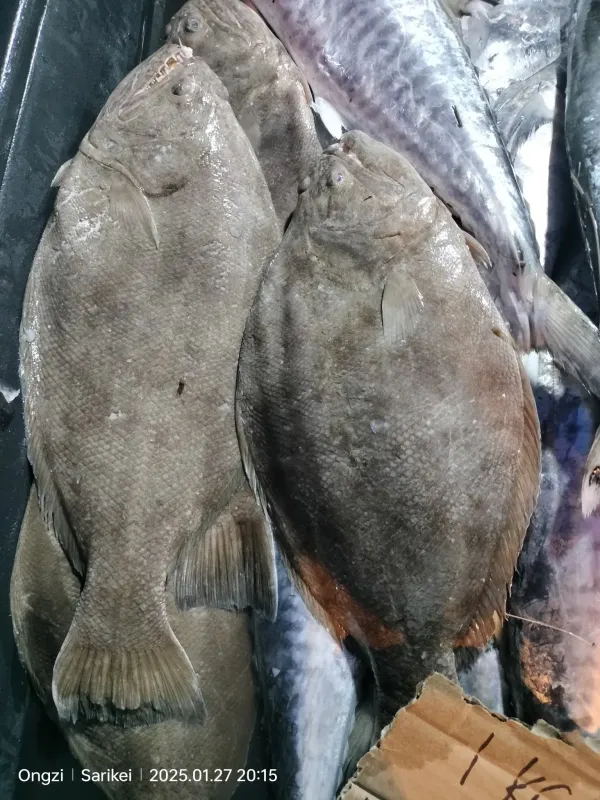
The Indian spiny turbot (Psettodes erumei) is a distinct species belonging to the family Psettodidae, representing one of the most ancestral lineages within the order Pleuronectiformes.
Unlike more advanced flatfish, this species maintains a more symmetrical body shape, and its eyes are not fully migrated to one side of the head, a sign of its evolutionary transition.
The fish is characterized by a large mouth with strong, sharp teeth, allowing it to function effectively as an active predator rather than a passive bottom feeder.
Its name is derived from the sharp, spiny rays present in the dorsal and anal fins, which are used as a defense mechanism against potential predators.
They typically inhabit sandy or muddy bottoms, where their mottled coloration provides camouflage, though they are capable of swimming in the water column.
What it damages
The Indian spiny turbot is a marine organism and does not cause any damage to agricultural crops, plants, or terrestrial environments.
It occupies a niche as a marine carnivore, feeding on smaller fish, crustaceans, and other marine invertebrates found in its natural habitat.
There is no economic or agricultural impact caused by this species, as it has no contact with arable land or cultivation systems.
Confusion between this species and agricultural pests is strictly misidentified, as its entire life cycle is restricted to saline oceanic waters.
The role of this species is purely ecological, serving as a predator within the complex food web of tropical and subtropical coastal regions.
When it appears
Seasonal patterns for the Indian spiny turbot are governed by fluctuations in water temperature and the availability of prey species in their coastal range.
Spawning activities typically peak during warmer months, which ensure optimal conditions for the development of larvae and fry in nutrient-rich coastal waters.
Migratory behavior is frequently observed in response to changing oceanic currents, with populations moving to shallower or deeper zones based on seasonal cycles.
Feeding intensity is higher during the summer months when the productivity of the marine ecosystem increases the abundance of prey.
During colder periods, the population generally retreats to deeper offshore waters where environmental conditions are more stable.
Control measures
Since the Indian spiny turbot is not a pest, no agricultural control measures are applicable or necessary.
Conservation and management of this species are handled by marine resource departments, focusing on sustainable fishing practices.
No pesticides, herbicides, or biological agents are used in relation to this species, as it does not interfere with human land-based food production.
Efforts to study the population are geared toward protecting marine biodiversity rather than controlling its numbers as a nuisance species.
Regulations regarding the species are limited to local fisheries legislation meant to maintain the health of the marine ecosystem.
Taxonomy
- Latin name
- Psettodes erumei
- Family
- Psettodidae
- EPPO code
- PSTOER
Discussion
No discussions yet — be the first.