
Prionotropis
Prionotropis
Description
How to identify
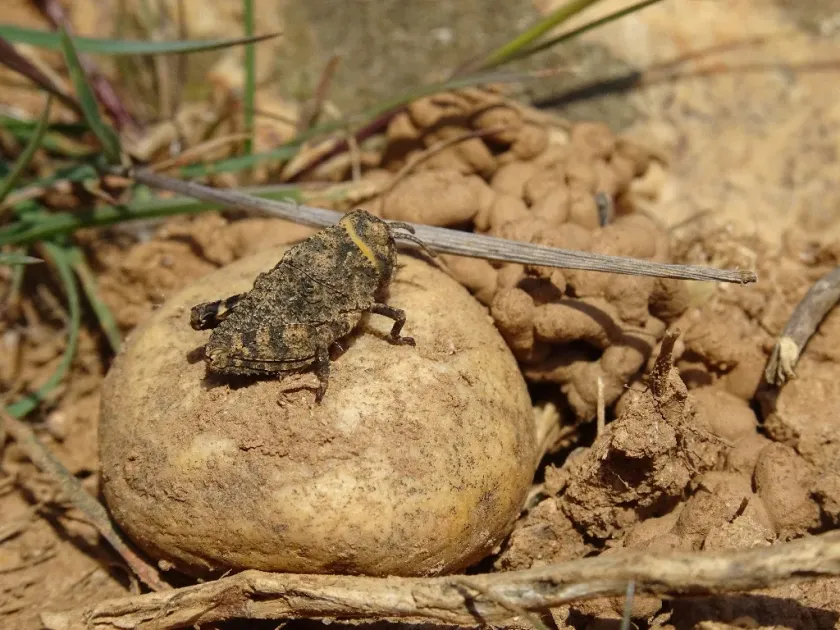
Prionotropis is a genus of insects belonging to the family Pamphagidae. These grasshoppers are characterized by their robust bodies and a distinct, often elevated, dorsal crest on the pronotum.
Their coloration is typically cryptic, ranging from dusty grey to earthy brown, which allows them to blend in seamlessly with dry soil and sparse vegetation in their natural arid habitats.
They possess powerful mandibles suited for chewing, allowing them to consume tough plant tissues, which distinguishes them from many other grass-feeding insects.
While many species in this genus have reduced wings, limiting their long-distance migration capabilities, they can still cause severe localized damage to crops in their vicinity.
The life cycle involves incomplete metamorphosis, with nymphs resembling miniature, wingless adults, progressively growing through several instars before reaching maturity.
What it damages
This pest is highly polyphagous, meaning it can feed on a wide variety of plant species, causing significant damage to agriculture in semi-arid environments.
The main crops targeted include cereals such as wheat and barley, especially during the early stages of plant development when they are most vulnerable.
Additionally, Prionotropis can impact rangelands and pastures by consuming forage grasses, which decreases the total biomass available for livestock.
The feeding damage includes irregular leaf margins, stem girdling, and the destruction of reproductive plant parts, leading to reduced grain yield and quality.
In high populations, these insects can lead to the thinning of crop stands, which makes the fields more susceptible to drought stress and diseases.
When it appears
Nymph emergence typically occurs during the early spring, synchronized with the onset of favorable temperatures and the start of plant vegetative growth.
The peak feeding intensity usually occurs during the mid-summer months, when adult populations are active and reaching their reproductive stage.
In autumn, females deposit their eggs in the soil, protected by a hard casing called an egg pod, which serves as a shield through the harsh winter months.
The species generally follows an annual life cycle, but population densities are highly dependent on the climatic conditions of the previous winter and spring.
Warm and dry weather patterns are particularly conducive to higher survival rates for nymphs, often leading to increased pest pressure later in the season.
Signs of infestation
One of the most noticeable signs of a Prionotropis infestation is the presence of jagged, uneven leaf edges, indicating heavy chewing damage.
Large quantities of fecal pellets found at the base of the plants are a clear indication that a colony of grasshoppers is actively feeding in the area.
In fields with high pest numbers, visual inspection will reveal the insects resting on the soil surface or climbing on stalks during the cooler parts of the day.
Stunted growth or missing foliage on the margins of the field is a typical indicator that the pest has begun moving from uncultivated areas into the crops.
If the population is large enough, a distinct rustling sound can be heard in the fields, providing an auditory cue of their presence and activity level.
Control measures
Mechanical control, particularly deep autumn plowing, is an effective strategy to destroy egg pods located in the upper layers of the soil.
Managing field margins and removing dense weed vegetation can help reduce the suitability of the habitat for the grasshoppers to congregate and breed.
Chemical control using insecticides (such as pyrethroids) is recommended if the population density exceeds the economic threshold to prevent major yield losses.
Integrated Pest Management (IPM) practices, including the use of entomopathogenic fungi, are increasingly being explored for long-term population suppression.
Regular monitoring of field edges and neighboring fallow land is essential to detect outbreaks early, allowing for targeted treatments rather than broad-spectrum application.
Taxonomy
- Latin name
- Prionotropis
- Order
- Orthoptera (locusts)
- Family
- Pamphagidae
- EPPO code
- PRNTSP
Discussion
No discussions yet — be the first.