
Freshwater crab
Potamon
Description
How to identify
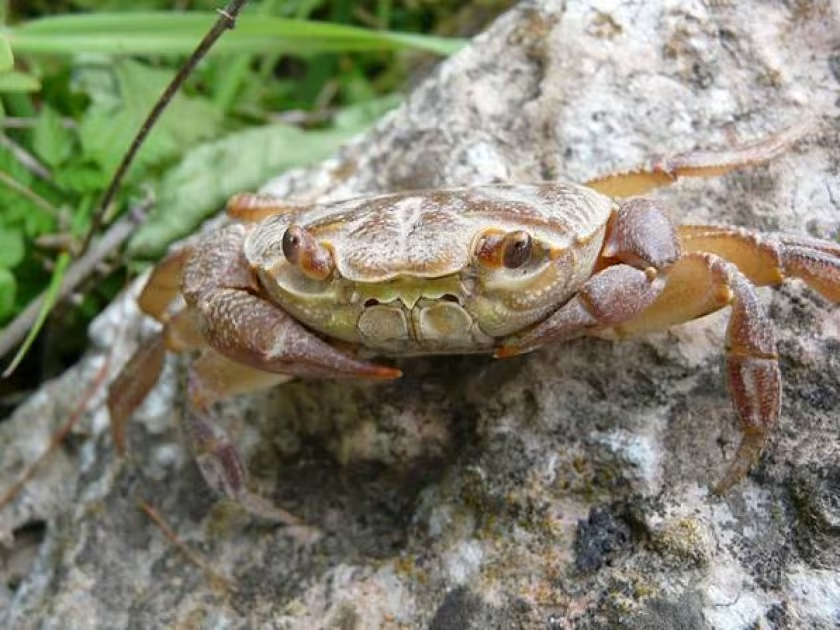
The genus Potamon belongs to the family Potamidae within the order Decapoda. These freshwater crabs are robust crustaceans, highly adapted to both aquatic and terrestrial environments near water sources.
They possess a hard exoskeleton and powerful claws, which they use for defense, feeding, and excavating extensive burrowing systems in mud and soil.
The coloration of these crabs is typically muted, ranging from brown to dark green, which provides excellent camouflage against their natural habitat.
Adult crabs can vary in size, but their anatomical structure makes them very resilient to fluctuating environmental conditions near agricultural zones.
Their life cycle involves the female carrying fertilized eggs until hatching, which ensures that offspring have a survival advantage in controlled environments like flooded fields.
What it damages
In agricultural settings, Potamon is primarily recognized as a significant pest of rice cultivation, where it causes severe structural and biological damage.
The crabs feed on young rice seedlings, cutting them at the base and causing substantial crop loss during the early stages of plant development.
Their burrowing behavior is highly destructive to irrigation infrastructure; by drilling into embankments and dikes, they cause water leakage and loss of irrigation efficiency.
Root systems are also negatively impacted by the crabs' soil-disturbing activities, which can lead to plant wilting and secondary pathogen infestation.
Large-scale infestations can cause total destruction of crops on specific field sections, necessitating replanting and substantial operational expenditure.
When it appears
The active season for these crabs aligns with warmer temperatures, as they are ectothermic organisms that require heat for optimal metabolic function.
During the rice planting season, when fields are intentionally flooded, the crabs migrate into these areas, creating a high-risk scenario for the vulnerable seedlings.
Reproduction cycles typically occur in late spring and summer, leading to increased activity and population pressure during the peak growing season.
In hot and dry conditions, they retreat into deep burrows to escape desiccation, maintaining their presence in the field even when water levels fluctuate.
As autumn approaches and temperatures drop, their activity levels decrease as they move towards lower depths in canals or soil to enter a dormant state.
Signs of infestation
The most prominent sign of an infestation is the presence of cleanly cut rice stems, often found near the water level or in the upper layer of the mud.
Holes and tunnels on the slopes of irrigation ditches and across the field dikes are clear indicators that the site is infested with Potamon crabs.
Unexplained water loss from rice paddies, accompanied by observable damage to the structural integrity of the surrounding earthworks, points to crab activity.
Field staff may frequently spot the crabs themselves, especially during the early morning or twilight hours, or find shed exoskeletons along the field edges.
Turbid water conditions in localized areas within the paddy often suggest that crabs are actively moving through and disturbing the submerged soil.
Control measures
Effective management requires the reinforcement of irrigation embankments using physical barriers like fine mesh or geomembranes to prevent burrowing.
Mechanical trapping is widely used to monitor and suppress crab populations in smaller or highly affected rice-growing plots without chemical usage.
Water level manipulation, such as temporary drying of fields at critical stages, can disrupt the crabs' life cycle, provided it does not harm the rice crop.
Maintaining clean and clear channel margins helps reduce the availability of natural hiding spots and reduces the overall attractiveness of the site to the pest.
Integrated pest management strategies focusing on physical and cultural control are prioritized to minimize the need for chemical intervention in sensitive ecosystems.
Taxonomy
- Latin name
- Potamon
- Family
- Potamidae
- EPPO code
- POTMSP
Discussion
No discussions yet — be the first.