
German polizonium
Polyzonium germanicum
Description
How to identify
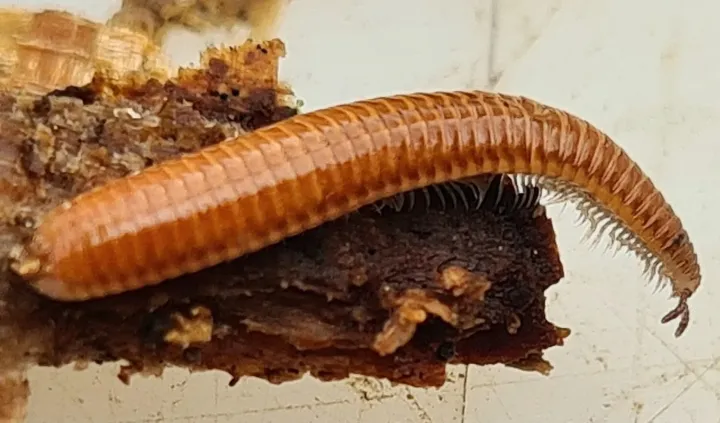
The German polizonium (Polyzonium germanicum) is a small millipede species belonging to the order Polyzoniida. These organisms are easily recognized by their distinctively arched bodies.
The physical appearance of the adult varies from yellowish-pink to a bright orange hue, often standing out against dark soil or damp organic matter.
Their bodies are composed of numerous segments, with each segment bearing two pairs of legs, allowing for slow but steady movement through soil crevices.
When threatened, they produce a chemical secretion from specialized glands along their bodies, which emits a strong, pungent odor as a natural defense mechanism.
They are primarily nocturnal or shade-loving creatures, preferring high-humidity environments such as leaf litter, decaying wood, or damp, shaded garden patches.
What it damages
The damage caused by the German polizonium occurs mainly when their natural food sources, such as decaying leaves and soil organic matter, are insufficient.
They frequently target the underground parts of vegetables, including seedlings and tender root systems, which can lead to stunted growth or complete plant death.
Small-fruit crops like strawberries are particularly vulnerable, as the millipedes feed on the berries when they touch the damp ground, leaving unsightly holes.
In greenhouses where soil moisture is kept high, these millipedes can thrive and cause significant damage to the roots of young transplants by gnawing through the epidermis.
Seeds that are rich in moisture and starch can also be consumed by these pests before they have a chance to germinate properly, leading to sparse crop establishment.
When it appears
The activity of the German polizonium is highly seasonal and is directly correlated with environmental moisture levels during the spring and autumn months.
Following the spring thaw, when the ground begins to warm and retain moisture, the millipedes emerge and become active in the upper soil layers.
The peak of their harmful activity is reached during rainy periods in summer, as constant moisture allows them to move freely across the surface to feed on crops.
As winter approaches, they retreat into deeper soil levels or crawl under logs and dense vegetation to survive the colder temperatures in a semi-dormant state.
During periods of intense drought, their activity drops significantly, and they concentrate in localized damp pockets, making them harder to detect but still present.
Signs of infestation
The first signs of a German polizonium infestation are often small, neat, rounded holes in the skin of low-hanging fruits or near the stem base of vegetable plants.
Gardeners may observe the millipedes themselves by lifting damp mulch, leaves, or boards; they typically curl into a spiral shape when disturbed.
Unexpected wilting of seedlings, despite adequate soil moisture, often points to hidden root damage caused by these soil-dwelling pests.
A distinct, somewhat medicinal or chemical scent detected during manual soil turning can be an indicator of their presence in high concentrations.
The presence of decayed organic matter near crop roots creates a perfect environment, and finding them in such spots is a strong sign that they are likely attacking crops.
Control measures
Effective management begins with sanitation: removing decaying plant matter, excess mulch, and debris from the garden reduces the millipedes' primary habitat and food source.
Maintaining proper drainage in garden beds is crucial, as avoiding excessive surface moisture makes the environment less attractive for these moisture-dependent pests.
- Regular hoeing to disrupt soil surface paths and encourage faster topsoil drying.
- Placement of trap boards or potato slices to gather and remove them manually.
- Use of protective barriers like fabric or mulch that does not retain excessive moisture.
- Targeted application of biological or chemical soil-safe pesticides if populations exceed economic thresholds.
- Clearing surrounding weeds to improve ventilation and reduce the humidity levels near the crop roots.
While chemical controls are available, they should be used judiciously, prioritizing treatments that are safe for edible crops and do not harm beneficial soil fauna.
Implementing a crop rotation system helps to avoid buildup in specific areas of the garden, reducing the likelihood of severe damage to any one particular vegetable type.
Taxonomy
- Latin name
- Polyzonium germanicum
- Family
- Polyzoniidae
- EPPO code
- POLZGE
Discussion
No discussions yet — be the first.