
Bristly millipede
Polyxenus lagurus
Description
How to identify
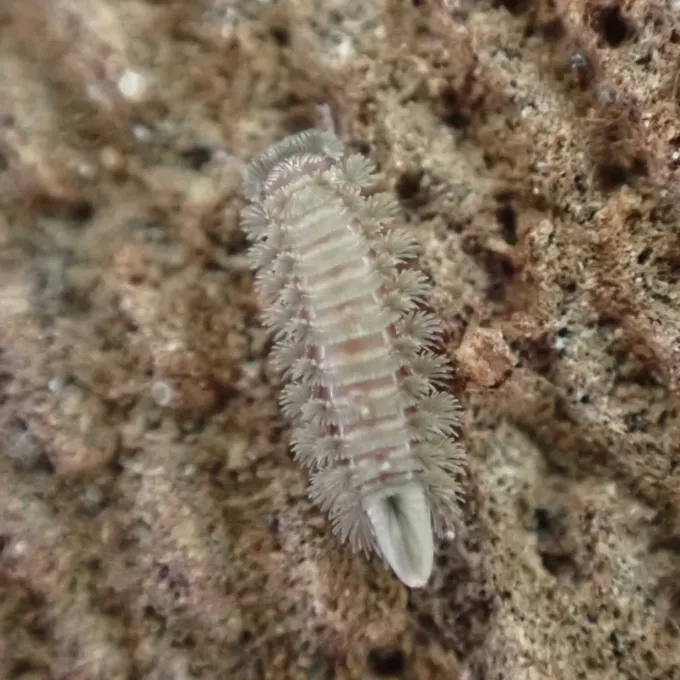
The Polyxenus lagurus, commonly known as the bristly millipede, is a minute arthropod belonging to the class Diplopoda. Adults are typically 3-4 mm long and are covered in dense tufts of scales and bristles, giving them a distinct fuzzy appearance.
Their coloration ranges from grey to brown, providing excellent camouflage against tree bark, leaf litter, and soil surfaces. A characteristic feature is the posterior tuft of long hairs that resembles a tail, which they use as a defensive mechanism against predators.
Unlike many other millipedes, they lack a heavily calcified exoskeleton, making their bodies soft and flexible. They possess well-developed antennae that are essential for navigating their environment and locating food sources.
They are relatively slow-moving creatures that prefer secretive lifestyles. They are primarily nocturnal or crepuscular, avoiding direct sunlight by hiding in crevices or beneath decaying organic matter during the day.
Reproduction is egg-based, with females depositing clutches in protected sites. The development involves several molting stages, with juveniles gradually increasing in size while maintaining their characteristic bristle-covered appearance.
What it damages
While often considered saprophagous—feeding on decaying plant matter—the bristly millipede can become a significant pest when populations reach high densities. They are particularly problematic in nurseries and young plantations.
They feed on young, tender plant tissues, including buds, emerging leaves, and fresh bark. This feeding activity can stunt the growth of young seedlings and weaken the overall vitality of the plant.
Feeding wounds created by these millipedes serve as entry points for secondary pathogens, such as fungi and bacteria. These infections often lead to more severe damage than the initial physical harm caused by the insects.
Root damage is also possible when millipedes enter the upper soil layers. They may feed on the delicate epidermis of young roots, disrupting water and nutrient uptake, which results in chlorosis and wilting.
In ornamental horticulture, their presence can be economically damaging as they can disfigure buds and shoots, rendering plants unsalable or requiring intensive restorative care.
When it appears
The activity patterns of Polyxenus lagurus are heavily influenced by humidity and temperature. They are most active during spring and autumn when moisture levels in the environment are favorable.
During the peak of summer, they seek refuge deep within the soil or in cool, damp leaf litter to escape desiccation. Conversely, they hibernate in protected sites like tree bark crevices or building foundations during winter.
Spring emergence typically begins when soil temperatures consistently rise above 5°C. This is a critical period for plant development, as the millipedes are active exactly when buds are swelling and breaking.
Rainfall is a major driver of their movement; after a period of wet weather, populations often surface, leading to a visible increase in activity on the ground and trunks of trees.
Because their life cycle is continuous and non-synchronized, individuals of different life stages are present throughout the growing season, necessitating ongoing vigilance by growers.
Signs of infestation
Early signs of infestation include tiny, irregular punctures on tender leaves and shoots. Upon closer inspection, one may find small amounts of "dust" or cast-off bristles near the damaged sites.
Plants often exhibit signs of physiological stress, including slow growth and localized wilting. During peak activity, it is possible to find small, fuzzy millipedes clustered in cracks or under leaves.
- Small, irregular holes in the cotyledons or young leaves.
- Visible damage to the bark at the base of young tree trunks.
- Stunted growth of nursery stock despite regular fertilization and irrigation.
Monitoring at night with a flashlight can reveal the millipedes moving across the surface of the soil or climbing up stems in search of food.
If you see a grey, dusty appearance on the surface of nursery pots or tree trunks, this may indicate a high density of these millipedes hiding in crevices.
Control measures
Effective management begins with strict sanitation practices. Removing accumulated leaf litter, organic debris, and decaying wood from the garden or greenhouse eliminates primary shelters and breeding sites.
Regulating humidity is essential for control. In greenhouses, improving drainage and ensuring adequate ventilation prevents the creation of the damp microclimate that these millipedes prefer.
For chemical control, contact insecticides applied to the soil surface or the base of stems can be effective during high-activity periods. Always ensure applications are timed with the pest's presence.
Physical barriers, such as specialized glue bands or sticky traps placed on tree trunks, prevent the millipedes from migrating from the ground to the foliage and buds of susceptible trees.
Biological control relies on promoting a healthy ecosystem by protecting natural predators, such as ground beetles and certain predatory mites, which can significantly reduce the population of Polyxenus lagurus.
Taxonomy
- Latin name
- Polyxenus lagurus
- Family
- Polyxenidae
- EPPO code
- PLYXLA
Discussion
No discussions yet — be the first.