
Amazon ant
Polyergus rufescens
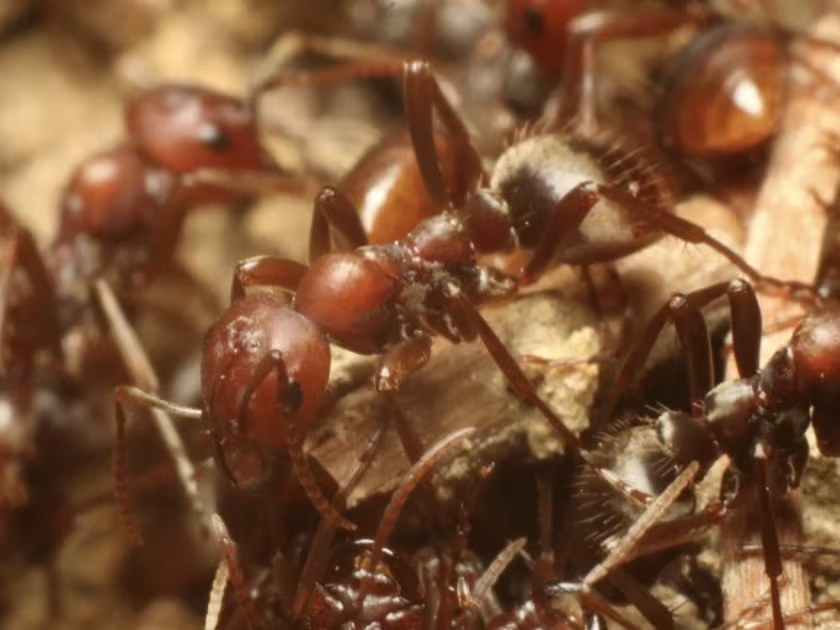
Description
How to identify
The Amazon ant (Polyergus rufescens) is a species of slave-making ant belonging to the family Formicidae. They are easily recognized by their reddish-brown color and sharp, sickle-shaped mandibles, which are evolved specifically for combat and colony raiding rather than labor.
These ants are obligate social parasites. This means they are completely dependent on slave ants from other species, typically the Formica genus. Without their captives to forage, clean, and feed the brood, the Amazon ant colony cannot survive.
Physically, they resemble standard field ants, but their specialized physiology makes them inept at nest construction or foraging. They spend most of their time deep within the stolen nest, relying on the labor of the enslaved workers to maintain the colony's infrastructure.
Identifying them can be challenging because they are often hidden underground. When spotted on the surface, it is usually during a coordinated raid, where a long, busy column of these ants travels to a neighboring nest to steal larvae and pupae.
An infestation is often detected not by the Amazon ants themselves, but by the unusually high activity of other ant species and increased aphid populations on the garden plants they protect.
What it damages
While Amazon ants do not consume plant material, they act as an indirect pest by creating a protected environment for aphids. They guard the slave ants, who in turn farm aphids for honeydew, effectively shielding them from natural predators.
This protection leads to massive aphid infestations that sap nutrients from plants, causing leaf curling, wilting, and stunted growth. The resulting honeydew excretions often promote the growth of sooty mold, which severely hinders the plant's photosynthesis.
The presence of large, active ant colonies also disturbs the soil structure near the root zones of plants. Continuous tunneling can damage young roots and lead to excessive drying of the soil, stressing the garden crops.
In addition to aphids, these ants can facilitate the spread of other pests that share a symbiotic relationship with them, such as mealybugs or scale insects, creating a long-term decline in plant health.
The aggression of the Amazon ants also disrupts the local ecological balance, often driving away beneficial insects like hoverflies and ladybugs that would otherwise help control garden pests naturally.
When it appears
Amazon ant activity is heavily temperature-dependent, beginning in late spring when the soil warms up. This timing usually coincides with the critical early growth stages of garden crops and the appearance of the first aphid generations.
The peak raiding season occurs during the late spring and early summer. During these months, the ants are highly active on the surface, organizing columns to invade and pillage neighboring ant colonies to replenish their labor force.
By mid-summer, surface activity often declines as the colony focus shifts to internal nest maintenance and brood rearing. During this time, they remain mostly hidden unless the colony is disturbed or food resources become scarce.
As autumn arrives and temperatures drop, the colony retreats deeper into the earth. They spend the winter in a state of semi-dormancy, far below the frost line, waiting for the return of warmer spring weather.
Strategic pest control is most effective during the spring months, as this allows gardeners to intercept the colony before they become firmly established and fully engage in their seasonal raiding habits.
Control measures
Controlling Amazon ants is complex due to their parasitic nature and reliance on enslaved workers. Standard topical treatments are rarely effective because the main nest entrance is often shielded, and the queen is well-protected.
- Using slow-acting bait stations that allow the workers to carry poisoned food back to the colony to eliminate the queen.
- Applying insecticidal dust or liquid barriers around known entry points of the colony in the garden.
- Implementing sticky bands on fruit trees to break the cycle of aphid protection and ant traffic.
- Promoting a natural garden ecosystem that supports aphid predators, which helps reduce the necessity for ant protection.
- Manual destruction of the nest, though this is often difficult to locate without following their trails during a raid.
A consistent, multi-stage approach is usually required to successfully manage an infestation and prevent these ants from significantly damaging the garden's productivity.
Taxonomy
- Latin name
- Polyergus rufescens
- Order
- Hymenoptera
- Family
- Formicidae
- EPPO code
- POLRRU
Discussion
No discussions yet — be the first.