
Polydesma umbricola
Polydesma umbricola
Description
How to identify
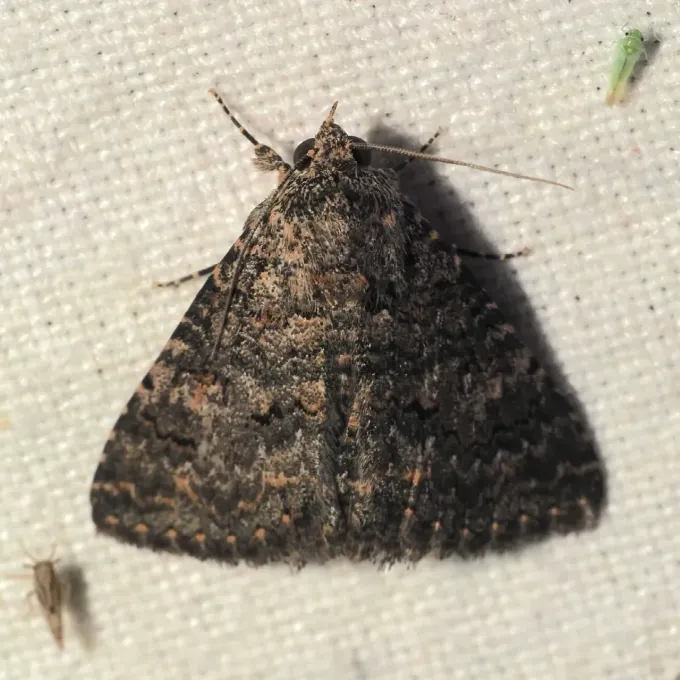
Polydesma umbricola is a moth species belonging to the Erebidae family. As a nocturnal insect, the adult moth is perfectly adapted to environments with dense vegetation, utilizing camouflage to remain hidden during the day.
The wings of the adult moth display intricate patterns of brown, gray, and earthy tones, allowing it to blend seamlessly into tree bark or dry foliage. Its body is covered in thick scales, providing both protection and insulation.
The larvae, or caterpillars, feature protective coloration that often shifts as they mature. They possess robust, chewing mouthparts typical of the Erebidae family, designed for efficient consumption of plant tissue.
Pupae usually develop in protected environments such as the soil or within rolled-up leaves. Identifying this pest is often difficult due to its elusive behavior and nocturnal activity patterns.
The life cycle is strictly nocturnal, making it challenging to spot adults without the use of specialized light traps or pheromone-based monitoring tools.
What it damages
Polydesma umbricola larvae are polyphagous, causing significant damage to a wide variety of woody plants and shrubs. In some regions, they can migrate to agricultural crops located near woodlands or abandoned fields.
The damage primarily occurs when larvae feed on leaves. Young caterpillars skeletonize the leaf tissue, while older individuals consume entire leaves, leaving only veins, which inhibits the plant's ability to photosynthesize.
In addition to foliage, high populations can cause damage to young buds and shoots. This disruption hinders the plant's structural development and reduces its overall biomass and yield potential.
For nurseries and young orchards, infestations are particularly dangerous. Excessive loss of green leaf area weakens the plants, making them susceptible to winter kill and secondary pathogens.
In industrial settings, pest outbreaks lead to reduced harvest quality and quantity, as plants divert energy into recovery rather than the production of fruits or seeds.
When it appears
The development of Polydesma umbricola is highly dependent on regional climate conditions. Adult activity typically begins as spring temperatures stabilize and continues into the summer.
Depending on local weather, the species can complete one or multiple generations annually. Warm autumn weather can prolong the pest's activity period, allowing for a better survival rate before winter.
Larval feeding peaks during the plant's phase of maximum growth, which is when the vegetation is most vulnerable to external damage and requires the most energy for development.
Winter is generally spent in the pupal stage or as hibernating adults hidden in bark crevices, beneath leaf litter, or in the upper soil layers to escape harsh weather.
Emergence from dormancy is synchronized with the budding of host plants, ensuring that young larvae have immediate access to fresh nutritional sources upon hatching.
Signs of infestation
The earliest signs of an infestation include the appearance of irregular, small holes in leaves, which gradually expand as the larvae grow larger and increase their consumption.
The presence of larval excrement (frass) on the surface of leaves or beneath the canopy is a clear indicator that feeding is occurring and that immediate inspection is needed.
Larvae often weave thin silk webbing to roll or fold leaves, creating protective shelters. Finding these structures is a critical diagnostic sign of a pest presence in your orchard or field.
Wilting of shoots, stunted plant growth, and premature leaf drop are warning signs of a heavy infestation that may require urgent professional intervention.
Observing adult moths fluttering near artificial lights at night provides an early warning to agronomists, allowing for timely planning of protective measures.
Control measures
Effective management of Polydesma umbricola requires an integrated pest management (IPM) approach that balances biological, mechanical, and chemical solutions.
Routine monitoring using light traps is essential for tracking population levels and determining the optimal timing for intervention before significant crop damage occurs.
Biological control involves the use of microbial insecticides, such as Bacillus-based products, which effectively target young larvae while being harmless to non-target beneficial insects.
Chemical applications should be executed responsibly, adhering to regulatory standards, to ensure long-term efficacy and prevent the development of pest resistance to common insecticides.
- Cleanliness in the orchard, including removing old bark and clearing plant debris.
- Encouraging natural predators such as birds and parasitoid wasps.
- Applying treatments during cool, low-wind hours to maximize efficiency.
Taxonomy
- Latin name
- Polydesma umbricola
- Order
- Lepidoptera (butterflies)
- Family
- Noctuidae
- EPPO code
- PLDSUM
Discussion
No discussions yet — be the first.