
Grey Arches
Polia nebulosa
Description
How to identify
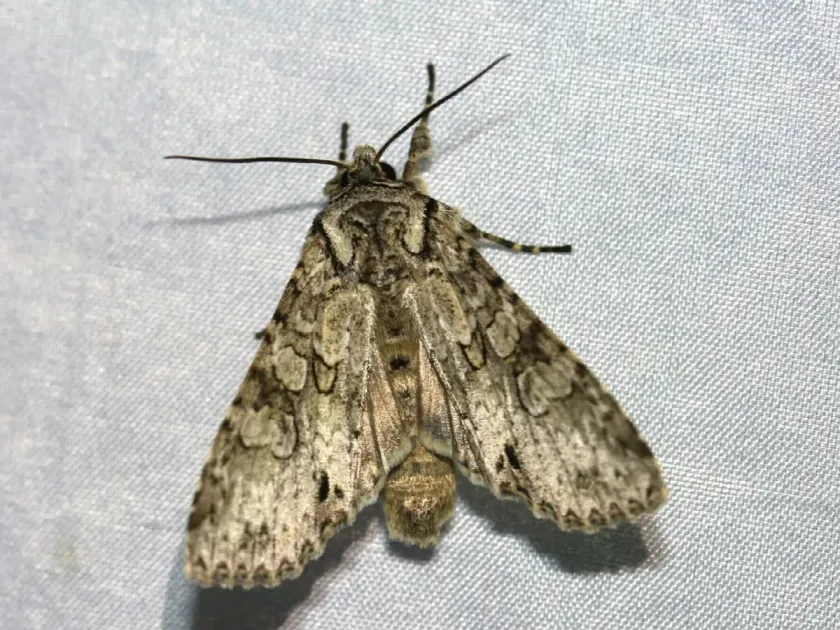
The Grey Arches (Polia nebulosa) is a moth belonging to the family Noctuidae. Adult moths have a wingspan of approximately 45–55 millimeters and are known for their intricate grey and brown patterned wings, which provide excellent camouflage against tree bark and soil.
The larvae, or caterpillars, are stout and can grow up to 50 millimeters long. Their coloration is variable, ranging from brownish to grey-green, often with distinct markings that blend in perfectly with their environment, making them difficult to spot during the day.
Pupae are reddish-brown, shiny, and are typically found in the soil, usually within a few centimeters of the surface, where they successfully overwinter until the following spring or early summer.
The adults are nocturnal, with peak activity during twilight and night hours. Mating and egg-laying occur at night, and eggs are usually deposited in clusters on the undersides of leaves of host plants.
The life cycle undergoes complete metamorphosis, including egg, larva, pupa, and adult stages. Depending on the local climate and temperature, this species can produce one or two generations per year.
What it damages
This moth is a polyphagous pest, meaning its larvae feed on a wide variety of plants. It impacts many common vegetable crops, garden plants, and even deciduous trees and shrubs.
Key agricultural crops affected include cabbage, beets, potatoes, and carrots. The caterpillars often cause significant damage by defoliating leaves and boring into roots or fruits, making them unsuitable for consumption or long-term storage.
In garden settings, the larvae also attack fruit trees like apple and cherry, causing damage to buds, young leaves, and developing fruitlets. This feeding activity reduces the overall vigor of the host plant.
The nocturnal feeding behavior makes early detection challenging, as the caterpillars spend daylight hours hidden in the soil or under leaf debris, returning to the foliage only under the cover of darkness.
Damage caused by the larvae often leads to secondary infections by bacteria and fungi, which can cause rotting of roots and fruits, potentially resulting in the loss of a significant portion of the harvest.
When it appears
Adult moth emergence typically begins in late spring, around June. Farmers should utilize monitoring tools such as pheromone traps during this period to track population levels.
The larval activity peaks during the summer months, specifically July and August. This is the period when caterpillars are most voracious and cause the most visible damage to crops and garden plants.
In warmer regions, a second generation may appear towards late summer, potentially causing issues until September. Late-maturing crops are particularly vulnerable during this second wave of larval activity.
Pupation occurs in late summer or autumn as temperatures drop. The pupae enter a dormant state in the soil, ensuring the species survives the winter months.
Understanding these seasonal patterns is critical for timing control measures. Treating younger caterpillars is significantly more effective than attempting to control fully grown, more resistant larvae.
Signs of infestation
The primary indication of infestation is skeletonized or heavily eaten foliage. Early-stage larvae start by creating small holes in leaves, which expand as the caterpillars grow larger.
Frass (caterpillar excrement) found on the leaves or the soil surface is a clear sign of recent feeding activity. Dark, granular pellets are common indicators that the pest is active in the area.
Damage to tubers or root vegetables manifests as irregular, deep tunnels. These entry points are often exploited by soil-borne pathogens, leading to premature decay and loss of harvest quality.
Sudden wilting of healthy-looking plants can sometimes be traced back to larvae feeding on the stem base or roots, which destroys the plant's vascular integrity.
Discovering reddish-brown pupae in the soil during autumn digging or tilling is a strong indicator that the population is overwintering in that specific area, necessitating preventative action next season.
Control measures
Cultural control is highly effective; deep autumn tillage exposes overwintering pupae to the surface, making them susceptible to frost and predation by birds.
Maintaining a weed-free environment is essential, as many common weeds serve as alternative host plants and starting points for moth egg-laying before they move to main crops.
Biological control, including the use of microbial insecticides like Bacillus thuringiensis, offers an effective way to manage caterpillar populations while minimizing harm to beneficial insects and the environment.
Chemical control should be targeted and applied during evening hours to maximize contact with the nocturnal larvae. It is crucial to rotate insecticides to avoid the development of pest resistance.
- Deploy light traps to monitor and reduce adult moth populations.
- Use pheromone traps for early warning of population surges.
- Remove and destroy plant debris after harvest to reduce overwintering sites.
- Apply bio-insecticides during peak egg-hatch to catch young larvae.
Taxonomy
- Latin name
- Polia nebulosa
- Order
- Lepidoptera (butterflies)
- Family
- Noctuidae
- EPPO code
- POLINE
Discussion
No discussions yet — be the first.