
California harvester ant
Pogonomyrmex californicus
Description
How to identify
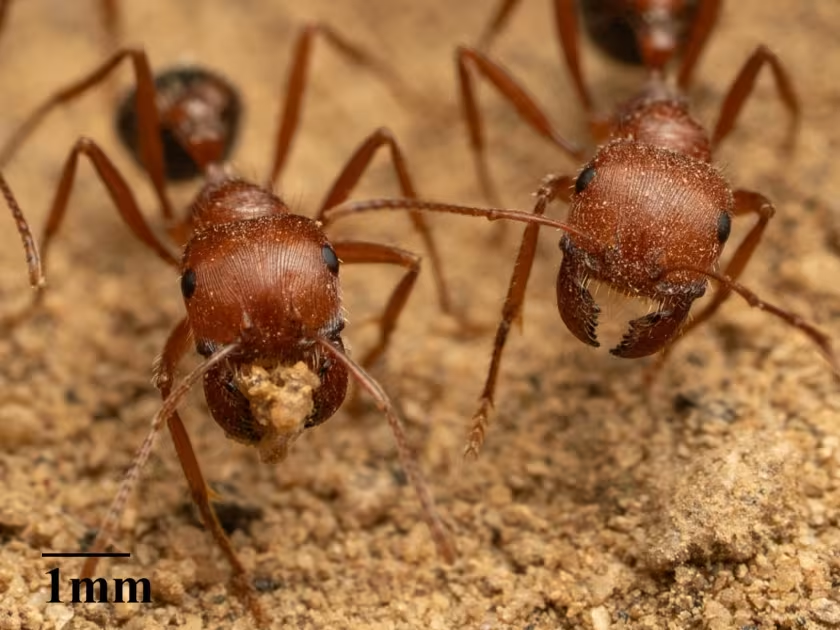
The California harvester ant, Pogonomyrmex californicus, is a member of the Hymenoptera order and the Formicidae family. They are typically reddish-brown to orange in color.
A distinctive feature of this species is the presence of specialized hairs on the underside of their heads, known as a psammophore, which helps them transport seeds.
Both queens and workers possess a powerful stinger. Their venom is potent, and a sting can be extremely painful, often causing significant localized inflammation in humans.
These ants are highly adapted to arid environments and build complex underground nests, usually identified by a cleared, circular area around the entrance.
A single colony can last for many years, housing one or more queens that produce thousands of workers to maintain the nest and harvest food resources.
What it damages
The primary agricultural damage caused by these ants is the harvesting and consumption of crop seeds, leading to poor germination and stand loss.
They actively collect various types of seeds, including small grains and weed seeds, carrying them into deep storage galleries within their underground nest.
The cleared area around the nest entrance effectively removes all vegetation, creating bare patches in fields that reduce the total productive area.
These ants are known to tend aphids and other honeydew-producing insects, protecting them from predators to ensure a steady supply of sugar for the colony.
Their tunneling activities can disrupt the soil structure and dry out the root zones of plants, potentially causing wilting in sensitive crop stages.
When it appears
Colony activity typically begins in early spring once soil temperatures rise high enough to support the metabolic needs of the ants.
They are most active during the peak of summer, when foraging for seeds is intense to ensure adequate food reserves for the entire year.
Nuptial flights, which lead to the establishment of new colonies, often occur following rainfall events that soften the soil and increase ambient humidity.
Activity gradually slows down as autumn approaches and temperatures drop, at which point the ants move to deeper soil levels for winter dormancy.
While they are less active in winter, they do not enter true hibernation and may resume surface activity during unusually warm winter spells.
Signs of infestation
The most visible sign of an infestation is the presence of cleared, vegetation-free circles on the ground surrounding the nest entrance.
Direct observation of worker ants moving in trails, often carrying seeds or plant fragments, is a definitive indicator of their presence on a farm.
Small mounds of soil deposited near the entrance signify ongoing excavation and nest maintenance by the worker population.
Reduced plant populations and missing seeds shortly after planting are common indicators that harvester ants are foraging in those specific areas.
The presence of aphid colonies on plants adjacent to these bare ground patches is a common secondary symptom of harvester ant activity.
Control measures
Effective control involves the application of granular insecticides directly into the nest entrances and along the perimeter of the foraging zones.
The use of toxic bait formulated with seed-like substrates is highly recommended, as it allows for the destruction of the queen inside the colony.
Mechanical disruption, such as deep tilling or plowing, can effectively destroy nest architecture and discourage ants from settling in specific plots.
Biopesticides utilizing entomopathogenic fungi can be applied in specific soil conditions to reduce population density without heavy chemical usage.
- Regular monitoring of fields during the sensitive germination phase.
- Establishment of treated buffers around known nesting sites.
- Application of specialized ant baits following label directions.
Taxonomy
- Latin name
- Pogonomyrmex californicus
- Order
- Hymenoptera
- Family
- Formicidae
- EPPO code
- POGOCA
Discussion
No discussions yet — be the first.