
Pnyxia
Pnyxia
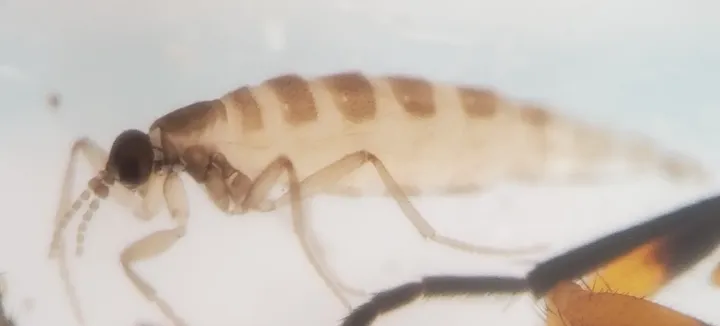
Description
How to identify
Pnyxia is a genus of small flies within the Sciaridae family, commonly known as fungus gnats. These insects are small, dark-colored, and often inconspicuous due to their size and tendency to stay near the soil surface.
These insects exhibit high polymorphism. Females of several species in this genus have reduced or absent wings, which makes them difficult to detect during standard scouting procedures in greenhouse production.
The larvae are transparent or milky-white in appearance, featuring a distinct, dark, shiny head capsule. Their size typically ranges from 3 to 5 millimeters, making them difficult to spot without close inspection of the soil.
Taxonomically, they belong to the order Diptera, suborder Nematocera. They are closely related to other fungus gnats that are notorious for damaging potted plants and greenhouse crops.
Identification of the specific species within the genus Pnyxia requires expert examination of the male genitalia and wing venation under a microscope, as they appear very similar to other sciarids.
What it damages
Pnyxia poses a significant threat to a wide range of crops, especially seedlings and young plants. The damage is primarily caused by larvae feeding on organic matter, roots, and root hairs.
Plants at the germination stage or young seedlings are the most vulnerable. Larval feeding often results in the destruction of the root system, causing the plant to lose its ability to absorb water and nutrients.
Common hosts include various vegetable transplants, decorative flowers, and tropical houseplants grown in peat-based substrates or composts that are kept consistently moist.
Adult flies do not damage plant tissues directly, but they are recognized vectors for various soil-borne pathogens, including Pythium and Fusarium, which cause root rot and wilting.
Infested plants exhibit stunted growth, yellowing foliage, and may eventually collapse. In greenhouse environments, this can lead to total crop failure if infestation occurs at an early stage.
When it appears
In greenhouse settings, Pnyxia does not follow a strict seasonal cycle. With adequate moisture and temperatures around +20°C to +25°C, they can reproduce continuously year-round.
Peak infestation levels usually occur during late winter and early spring, which coincides with the period of high demand for seed germination and seedling care in nurseries.
The duration of a single generation depends on the ambient temperature. In optimal greenhouse conditions, the entire life cycle from egg to adult can be completed in approximately 2 to 3 weeks.
Outdoor populations typically emerge in mid-spring as temperatures rise and remain active until late autumn, favoring moist, shaded environments with plenty of decaying organic matter.
Constant monitoring is necessary because the overlapping generations can lead to a rapid increase in population density, making effective control difficult once the threshold is crossed.
Signs of infestation
The presence of adult flies hovering over the soil surface or resting on the lower leaves of plants is the primary visual indicator of an active population.
Sudden wilting or "damping-off" of seedlings is a common sign of root system damage. When removed from the substrate, infested plants show missing root hairs or scarred stems.
A thin, slimy trail on the surface of the substrate or the inner walls of nursery pots can sometimes be observed, indicating significant larval activity in the upper soil layers.
The development of secondary fungal infections or root rot is often a consequence of larval damage, as the insects create open wounds that facilitate the entry of pathogens.
Yellow sticky traps placed near the base of the plants are the most effective method for detecting the arrival and tracking the population dynamics of adult flies.
Control measures
Effective management begins with proper irrigation practices. Avoiding overwatering and ensuring good drainage are critical to making the substrate less attractive for egg-laying.
Biological control is highly recommended. Entomopathogenic nematodes, such as Steinernema feltiae, are very effective at targeting and killing larvae within the soil profile.
Yellow sticky traps should be used in large numbers to capture adults, thereby disrupting the reproductive cycle and reducing the overall number of eggs deposited in the substrate.
Chemical control involving soil drenches with systemic insecticides may be used when biological methods are insufficient, but it requires careful application to avoid damaging sensitive young plants.
- Use sterile soil-less growing media.
- Maintain strict hygiene by removing all old plant debris.
- Inspect all incoming shipments of plants for signs of infestation.
Taxonomy
- Latin name
- Pnyxia
- Order
- Diptera (flies)
- Family
- Sciaridae
- EPPO code
- PNYXSP
Discussion
No discussions yet — be the first.