
Reed wainscot
Phragmatiphila
Description
How to identify
The Reed wainscot (Phragmatiphila nexa) is a moth belonging to the family Noctuidae, order Lepidoptera. It is a specialized insect primarily associated with wetland habitats.
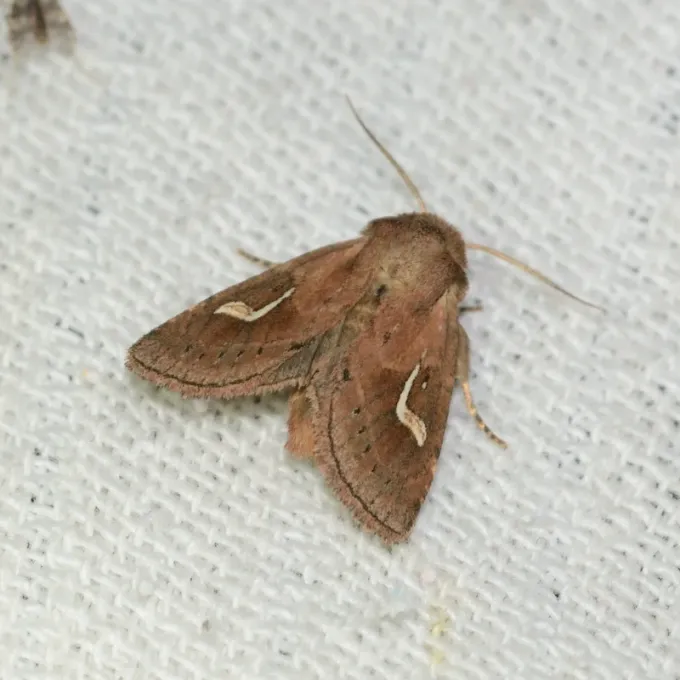
The adult moth has a wingspan of 25–30 mm. Its forewings are brownish-ochre with a distinctive pattern that provides excellent camouflage against dead reeds and grasses.
The larvae are typical noctuid caterpillars, reaching up to 35 mm in length. Their bodies are streamlined to allow movement within the narrow confines of stems.
The life cycle involves four stages: egg, larva, pupa, and adult. The insect typically has one generation per year, overwintering as a pupa or larva inside stems.
It prefers humid environments such as marshes, riverbanks, and the edges of irrigation channels, which act as natural reservoirs for the species.
What it damages
The primary hosts are species of the Poaceae (grass) family. While reed is the natural host, the pest poses a significant risk to adjacent cereal crops.
Crops such as corn, rice, and millet are particularly susceptible when cultivated in low-lying areas or near wetland margins.
The damage is caused by the larvae, which bore into the stems of the plants, feeding on the inner tissues and heart of the stem.
This internal feeding disrupts the plant's vascular system, leading to wilting, stunted growth, and death of the central shoot.
In mature plants, this damage can prevent proper ear formation, leading to significant yield losses due to reduced seed count or grain weight.
When it appears
Adult flight activity typically occurs from late June through August. This is the period when females lay eggs on the leaves and stems of host plants.
Larval emergence happens throughout mid-summer, coinciding with the rapid growth phase of the cereals, providing the larvae with abundant food resources.
The larvae feed actively until early autumn, when they reach maturity and prepare to pupate or enter diapause before the onset of winter.
Seasonal weather patterns, especially humidity levels, play a crucial role in the survival rate and population density of the moth.
In warmer, wetter seasons, the development of the larvae is accelerated, leading to more pronounced damage to the crops during the peak growing months.
Signs of infestation
A tell-tale sign of infestation is the appearance of a withered, yellowing central leaf, often referred to as "dead heart" symptom in cereals.
Small boreholes found on the lower parts of the stem indicate entry points, often surrounded by accumulations of frass (larval excrement).
Affected plants often appear stunted or wilted compared to their healthy neighbors, making the infestation visible in patches across the field.
Dissecting a damaged stem will reveal hollowed-out tissue and galleries created by the larva during its feeding process.
In extreme cases, the plant may snap at the point of damage, or the upper part of the stem may completely collapse, reducing the overall harvest efficiency.
Control measures
The most effective management strategy is cultural control, which involves removing reeds and wild grasses from the edges of fields and irrigation ditches.
Deep autumn tillage is essential to disturb the soil and destroy the pupae that overwinter in plant debris or just below the soil surface.
Crop rotation helps break the cycle of the pest by removing the host source from the field in successive seasons.
In severe infestations, the application of systemic insecticides during the peak period of larval hatch can provide effective control.
- Monitoring adult flight with pheromone traps.
- Ensuring proper water management in irrigation systems.
- Utilizing biological agents like Bacillus thuringiensis for early-stage larvae.
Taxonomy
- Latin name
- Phragmatiphila
- Order
- Lepidoptera (butterflies)
- Family
- Noctuidae
- EPPO code
- PHRGSP
Discussion
No discussions yet — be the first.