
Grapevine moth
Phalaenoides
Description
How to identify
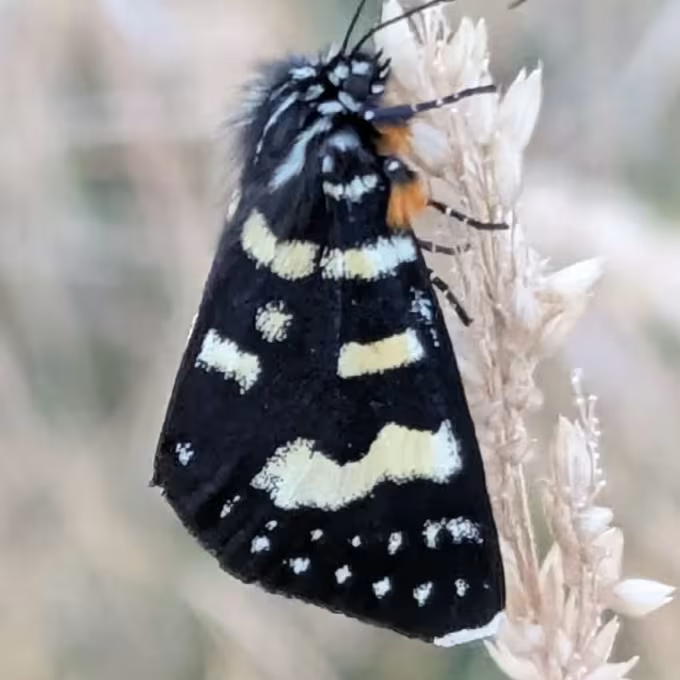
The grapevine moth (Phalaenoides glycine), while belonging to the Noctuidae family, is often compared to geometer moths due to the appearance and movement of its larvae. The adult moth features dark wings with distinct white or yellowish spots, providing excellent camouflage against tree bark.
The larvae are typically brightly colored with transverse stripes, making them somewhat conspicuous, yet they exhibit secretive behavior. Their bodies are cylindrical and equipped with well-developed prolegs, allowing them to move rapidly along the vine shoots.
The life cycle involves complete metamorphosis, consisting of egg, larva (caterpillar), pupa, and adult stages. Overwintering typically occurs in the pupal stage, buried in the soil or hidden in bark crevices.
In spring, as temperatures rise, adult moths emerge to mate and lay eggs on the undersides of leaves. The lifecycle duration depends heavily on local weather conditions, which dictate the number of generations per season.
Identification often relies on spotting the adults near the vineyard or noticing the specific feeding patterns on the foliage during the early stages of larval development.
What it damages
The primary host for this pest is the cultivated grapevine. Larvae are voracious feeders that can cause significant damage to the plant's foliage, potentially affecting the entire vine health.
Young larvae skeletonize the leaves, consuming the soft tissues between veins. Older larvae are capable of consuming entire leaves, leaving only the veins and petioles, which severely reduces the photosynthetic capacity of the vine.
Heavy defoliation negatively impacts the vine's ability to store energy for the winter, leading to poor bud development in the following season and reduced berry sugar content.
Damage to young shoots and buds early in the growing season can lead to direct yield loss. Furthermore, the feeding sites often become entry points for secondary pathogens and fungal diseases.
An infested vineyard may show stunted growth and poor fruit quality, as the plant directs energy toward leaf recovery rather than ripening the grapes.
When it appears
Activity generally begins in the spring when the vine buds break and active shoot growth commences. This period is critical, as the young growth is highly susceptible to larval feeding.
The peak of larval activity usually occurs during late spring and early summer. Monitoring for damage during this window is essential for successful pest management.
Multiple generations may occur in warmer climates, leading to a prolonged period of potential damage throughout the summer months. Constant observation is necessary to prevent population explosions.
By late summer, larvae descend to the soil to pupate. This transition period is crucial for implementing mechanical control measures, such as soil cultivation, to reduce the overwintering population.
Using pheromone traps or light traps can help vineyard managers track the population cycles of the adult moths and time interventions precisely to target the most vulnerable larval stages.
Signs of infestation
The first signs of infestation are characteristic jagged holes or "skeletonized" patches on the leaves. These patterns become more pronounced as the larvae grow and consume more tissue.
The presence of caterpillar droppings (frass) on the leaf surfaces or underneath the vine canopy is a clear indicator that larvae are actively feeding nearby.
Visual inspection at night, using a flashlight, is often the most reliable method for detecting the larvae, as they are primarily nocturnal and hide during the day.
Curling or wilting of young leaves and shoot tips may indicate larval presence, as they often target these soft, nutrient-rich tissues during their early developmental stages.
Increased activity of predatory insects or birds within the vineyard canopy may indirectly signal the presence of a caterpillar population, as they respond to the abundance of food.
Control measures
Deep cultivation of the soil around the base of the vines in autumn is an effective cultural control method that exposes and destroys overwintering pupae.
Maintaining a clean vineyard environment by managing weeds and removing debris denies the pests potential daytime shelters, making it harder for them to thrive.
Biological control agents, such as formulations of Bacillus thuringiensis, are highly effective and target-specific, providing control without disrupting beneficial insect populations.
Chemical insecticides should be used as a last resort, timed according to monitoring data to ensure maximum efficacy while minimizing the impact on the environment and non-target species.
- Regularly inspect the vines, especially the undersides of leaves.
- Install light or pheromone traps to monitor adult moth presence.
- Encourage natural predators like parasitic wasps and predatory beetles.
- Remove and destroy severely infested vine parts early in the season.
Taxonomy
- Latin name
- Phalaenoides
- Order
- Lepidoptera (butterflies)
- Family
- Noctuidae
- EPPO code
- PHLASP
Discussion
No discussions yet — be the first.