
Persectania
Persectania
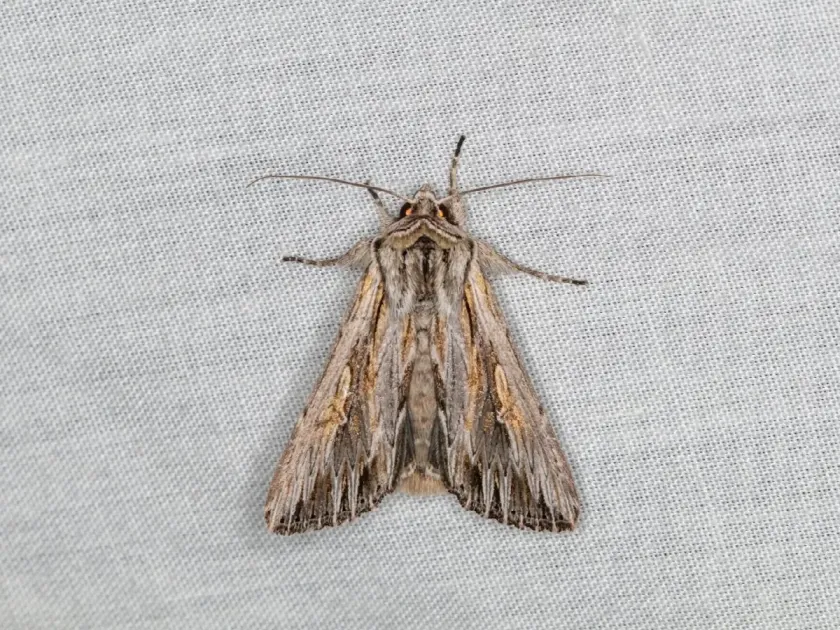
Description
How to identify
Persectania is a genus of moths belonging to the Noctuidae family, within the order Lepidoptera. These moths are nocturnal and often go unnoticed due to their cryptic coloration.
The larvae, known as caterpillars, exhibit longitudinal stripes on their bodies, which help them blend into the foliage of their host plants. The color can range from green to brown depending on the species and environmental factors.
The lifecycle follows a complete metamorphosis involving four distinct stages: egg, larva, pupa, and adult. This cycle allows the pest to adapt to various agricultural environments.
Pupation typically occurs in the soil or under surface debris, which provides necessary protection against cold winter temperatures and predators.
Identification is usually performed by entomologists by examining wing venation in adults and the specific markings on the caterpillars, which are essential for field diagnosis.
What it damages
Persectania species primarily target cereal crops, including wheat, barley, oats, and corn, causing significant economic impact in infested areas.
Young larvae feed on the leaf epidermis, creating small windows or notches. As they mature, they consume the entire leaf lamina, leaving only the primary veins, which reduces plant vigor.
During the heading stage, the caterpillars move to the reproductive parts of the plant, feeding on grain and severing stems or flower stalks, which leads to direct yield loss.
Severe infestations can lead to total defoliation of the crop, significantly limiting the plant's ability to undergo photosynthesis during critical growth stages.
The feeding wounds serve as entry points for various pathogens, potentially leading to fungal infections or secondary rot in the plant tissues.
When it appears
The activity begins in early spring when the overwintered larvae emerge from the soil as temperatures rise, signaling the start of the primary damage phase.
The most critical period for crops occurs during the vegetative growth and flowering stages when the insects are most active and feed voraciously on the lush tissues.
Adult moths of subsequent generations typically emerge during the summer months, leading to new waves of oviposition and larval development on the crop.
As autumn approaches and temperatures decline, the final generation of larvae prepares for diapause by retreating into the soil or under dense vegetation.
Favorable weather conditions, such as high moisture and temperate weather, play a major role in the successful development and increased population density of the pest.
Signs of infestation
Frass (larval excrement) found at the base of the plants or on the leaf surfaces is one of the earliest signs that a Persectania infestation is occurring.
Ragged edges on leaves or completely stripped stems are indicative of advanced feeding stages that require immediate attention from crop managers.
Using light traps or pheromone traps in the field is a standard method for monitoring the flight activity of adult moths and forecasting potential outbreaks.
Inspecting the base of the plants, particularly in the morning or evening, often reveals the presence of larvae hiding from direct sunlight.
Patches of stunted growth or wilted ears in a field are clear indicators that the crop is being targeted and needs a thorough field assessment.
Control measures
Deep plowing in the autumn is a traditional and highly effective method for disrupting the pupal stage and reducing the population of the next season's generation.
Effective weed management, especially around field margins, is crucial to eliminate alternative host plants and reduce the overall pest pressure.
Chemical control using insecticides is recommended when the density of the pest exceeds the established economic threshold, ensuring protection of the grain yield.
Biological control, such as encouraging the presence of natural predators and parasitoids, plays a significant role in managing population spikes naturally.
- Implement regular crop scouting and monitoring.
- Rotate crops to break the lifecycle.
- Apply biological control agents like Bacillus thuringiensis.
- Use localized chemical treatments if thresholds are met.
Taxonomy
- Latin name
- Persectania
- Order
- Lepidoptera (butterflies)
- Family
- Noctuidae
- EPPO code
- PERSSP
Discussion
No discussions yet — be the first.