
Variegated cutworm
Peridroma saucia
Description
How to identify
The variegated cutworm (Peridroma saucia) is a member of the Noctuidae family, widely known as one of the most destructive agricultural pests.
Adult moths have a wingspan of approximately 45–55 mm, characterized by mottled brown forewings with a distinct, variable pattern that provides excellent camouflage.
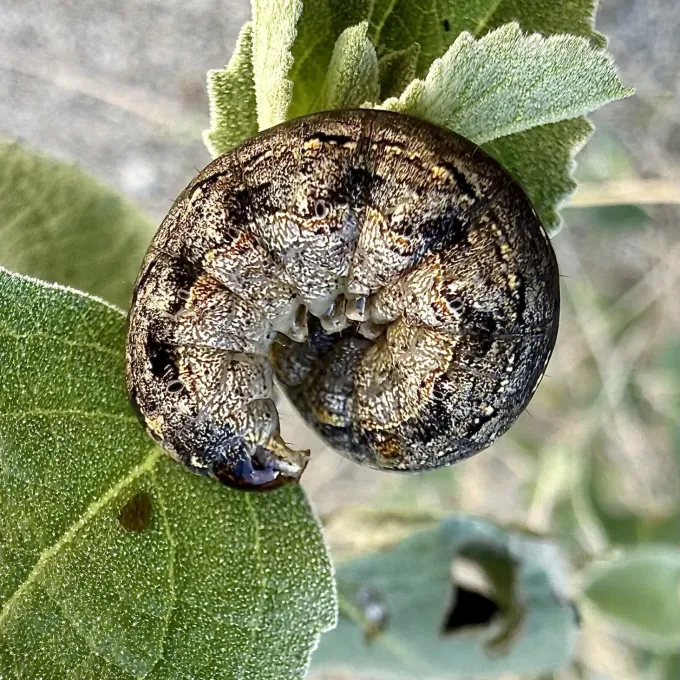
The larvae are stout, smooth-skinned caterpillars that can reach up to 5 cm in length, typically displaying various shades of gray or brown with yellowish markings.
They are known for their nocturnal behavior, remaining hidden beneath soil surface debris or in plant foliage during the bright daylight hours.
As a highly migratory species in some regions, they can suddenly appear in fields, making early detection and proactive monitoring essential for farmers.
What it damages
This species is a highly polyphagous pest, meaning it feeds on a vast array of crops including tomatoes, lettuce, cabbage, potatoes, and various legumes.
The caterpillars are notorious for their voracious appetite, causing severe defoliation and feeding on the stems and fruits of young plants.
They often cut off young seedlings at the soil surface, leading to entire rows of crops being destroyed in a matter of nights during severe outbreaks.
When feeding on fruits like tomatoes or berries, they create deep, messy cavities that render the produce unsalable and prone to secondary rot.
The economic impact of variegated cutworms can be devastating if populations are not managed during the early stages of the crop's development.
When it appears
The life cycle begins in spring, with moths emerging from pupae that have successfully overwintered in the soil or protected organic matter.
Depending on the latitude and climate, this insect can complete several generations per year, with activity peaking during the warmest summer months.
Eggs are laid in clusters on the foliage of host plants, and as temperatures rise, the hatching process occurs more rapidly, leading to increased pressure.
Late summer and early autumn represent a critical period, as the final generation feeds aggressively before entering the pupal stage for the winter.
Consistent warm nights and moderate humidity levels provide ideal conditions for mating and oviposition, significantly boosting the pest population.
Signs of infestation
Detection is often first indicated by the presence of irregular holes in leaves, which are typically found on the lower canopy of the plants.
Frass (caterpillar droppings) accumulating on the leaves or the soil surface underneath the plant is a clear sign of active infestation.
Stunted growth or wilting in individual plants may indicate that a larva has damaged the crown or the stem near the soil level.
During twilight or at night, farmers can use a flashlight to locate the larvae feeding actively on the foliage or stems.
- Tattered leaf margins.
- Seedlings severed at the base.
- Deep holes in ripening vegetables.
Control measures
Cultural practices such as clean cultivation and the removal of weeds are highly effective, as they limit the sites available for egg-laying.
Tilling the soil in the autumn and spring can significantly reduce the overwintering population by exposing pupae to predators and environmental stress.
Biological control agents, including parasitic wasps and nematodes, can be used to manage larvae populations without the need for broad-spectrum chemicals.
When chemical control is necessary, applications should be timed to target early-instar larvae, which are much more susceptible to insecticides than mature ones.
Maintaining a regular monitoring program using pheromone traps allows for precise timing of interventions, minimizing unnecessary pesticide use.
Taxonomy
- Latin name
- Peridroma saucia
- Order
- Lepidoptera (butterflies)
- Family
- Noctuidae
- EPPO code
- PERRSA
Discussion
No discussions yet — be the first.