
Pearly Underwing
Peridroma
Description
How to identify
The Pearly Underwing (Peridroma saucia) belongs to the Noctuidae family, order Lepidoptera. The adult is a nocturnal moth with a wingspan of 45–55 mm, characterized by grayish-brown forewings with a distinct pearly sheen.
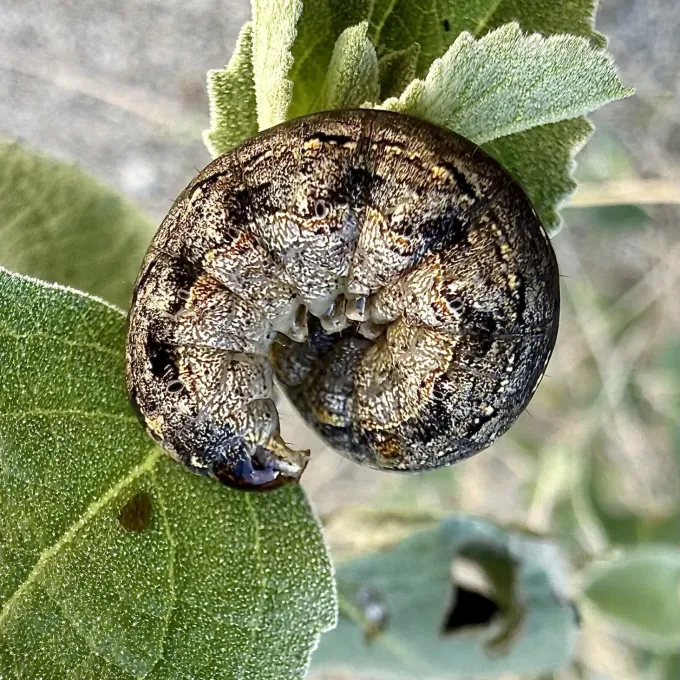
The larvae, known as cutworms, grow up to 40–50 mm in length. Their coloration is highly variable, ranging from grayish-brown to almost black, often featuring a row of light spots along the dorsal side for identification.
The pupa, which is shiny and dark brown, typically develops in the soil at depths of up to 10 cm. This life stage is the primary mechanism for overwintering in temperate climate zones.
The insect undergoes a complete metamorphosis including egg, larva, pupa, and imago stages. Depending on temperature, the species can produce multiple generations within a single growing season.
A key biological feature is the high migratory capacity of the adults, which enables the species to rapidly colonize vast agricultural areas over significant distances.
What it damages
This pest is a major polyphage, causing significant damage to a wide range of horticultural, agronomic, and ornamental crops. It is highly notorious for its impact on vegetables and field crops.
Host plants include tomatoes, potatoes, cabbage, corn, sugar beets, and various legumes. In greenhouses, the larvae pose a severe threat to young seedlings and transplants.
Early instar larvae feed primarily on leaf epidermis, creating characteristic holes, while older larvae can consume entire leaf blades, leading to severe defoliation.
In cases of mass infestation, larvae move to stems and fruits, boring deep holes into produce, which renders them unsellable and susceptible to secondary rot.
Root crops are also prone to damage, as larvae often sever the plant at the root collar, leading to rapid wilting and the total loss of individual plants in the field.
When it appears
The flight of the first generation adults typically begins in the spring when average daily temperatures remain above 10–12 degrees Celsius, usually occurring from May through June.
Larval activity peaks during the summer months, from mid-June to August, coinciding with egg-laying on the undersides of host plant leaves.
Under warm climatic conditions, the pest is capable of completing two or more generations, extending the period of potential risk for crops until late autumn.
Overwintering occurs primarily in the pupal stage within the soil, although in warmer southern regions, larvae may sometimes survive in crop debris.
Weather patterns, such as a mild and humid autumn, enhance pupal survival rates, leading to a higher population density in the subsequent agricultural season.
Signs of infestation
The initial sign of an infestation is skeletonized foliage, where only major veins remain. Careful inspection of the underside of leaves can reveal egg masses covered in moth scales.
The presence of larval frass (droppings) in leaf axils or on the soil surface is a reliable indicator that older instar larvae are active in the area.
Damage to the root collar results in sudden wilting and collapse of plants without visible signs of disease on the stem, which is a classic symptom of cutworm feeding.
During the night, the use of pheromone or light traps can detect adult presence, providing a timely warning for implementing protective measures.
- Chewed leaf edges and holes in foliage.
- Boreholes in tubers and fruits.
- Sudden wilting of plants in patches.
- Accumulation of larval excrement on leaves.
- Visible egg clusters on the underside of leaves.
Control measures
Cultural control methods include deep autumn plowing, which exposes pupae in the soil to surface predators and harsh weather conditions, significantly reducing overwintering populations.
Strict crop rotation and the systematic removal of weeds, which act as secondary hosts for larvae early in the season, are essential for effective management.
Biological control involves the use of entomophagous insects, such as Trichogramma wasps, which are highly effective at parasitizing egg masses during the peak adult flight period.
Chemical control should be implemented when scouting indicates the economic threshold has been reached, utilizing stomach or contact insecticides.
It is vital to rotate insecticides with different modes of action to prevent the development of resistance within the Pearly Underwing population.
Taxonomy
- Latin name
- Peridroma
- Order
- Lepidoptera (butterflies)
- Family
- Noctuidae
- EPPO code
- PERRSP
Discussion
No discussions yet — be the first.