
Peltoperla
Peltoperla
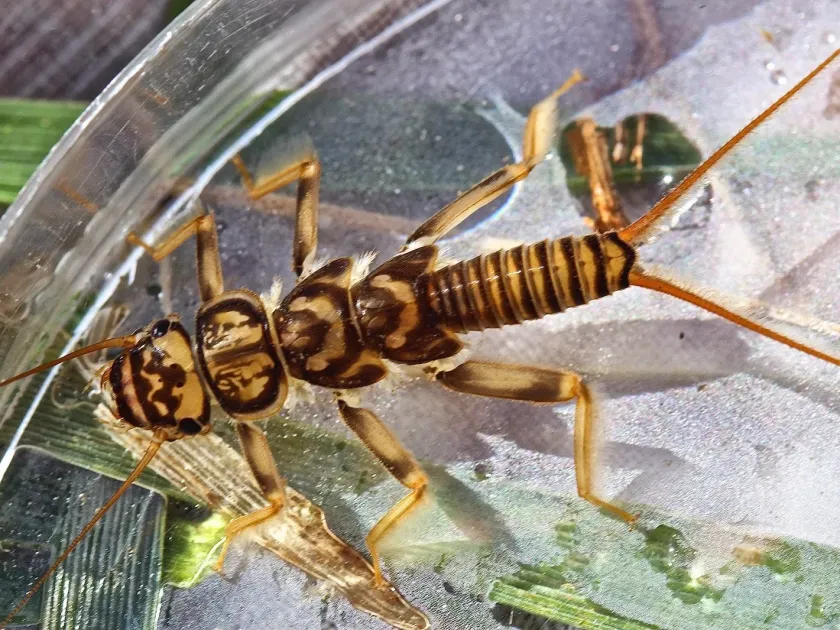
Description
How to identify
Peltoperla is a genus of insects belonging to the order Plecoptera (stoneflies) and the family Peltoperlidae. These insects are typically identified by their robust, brownish bodies and are well-adapted to living in moist environments.
The larvae, known as nymphs, are primarily aquatic or semi-aquatic. They possess a flattened body shape, which allows them to navigate through small spaces in damp soil or stream substrates, and they have prominent cerci at the end of their abdomen.
The life cycle involves incomplete metamorphosis. The development from egg to adult is highly dependent on environmental humidity and temperature, making them more common in areas with abundant water sources.
Systematically, they are recognized as bioindicators of water quality. Their presence in agricultural settings often correlates with poor drainage or proximity to natural water bodies, which is a key factor for field management.
Although they are not as widespread as common soil pests, their ecological niche allows them to interact with agricultural crops, particularly in specialized growing systems that mimic their natural habitat.
What it damages
Damage caused by Peltoperla nymphs is typically localized in nurseries, greenhouses, or moist agricultural fields. The larvae feed on tender root tissues and plant stems located at or just below the soil surface.
Crops grown in hydroponic systems, organic peat moss, or heavily irrigated greenhouses are at the highest risk. The larvae can sever small roots, leading to immediate stress for the plant.
Affected plants often show stunted growth, yellowing foliage, and reduced vigor. Because the damage provides entry points for fungi and bacteria, the plants are prone to secondary soil-borne infections.
While field crops are generally resilient to minor stonefly activity, significant infestation can lead to uneven seedling stands and localized crop failure, especially during the early stages of plant development.
Quantifying the damage requires careful examination of the root zone, as the symptoms can easily be mistaken for other soil-dwelling pests or nutrient deficiency-related physiological disorders.
When it appears
The adult phase of the insect is most active during the spring and summer months, coinciding with their mating flights. During this time, they may move from water bodies into surrounding cultivated fields.
Larval activity is most pronounced during periods of high precipitation or high irrigation frequency. Moist soil conditions provide the necessary environment for the nymphs to remain active and feed.
As temperatures drop in autumn, the insects shift into a dormant phase, often burrowing deeper into the soil or retreating into aquatic habitats to survive the winter season.
Monitoring for adults during the early spring is essential to predict potential larval outbreaks. Early detection allows for preventive measures to be taken before the life cycle progresses.
Successful management depends on understanding the seasonal triggers that cause these insects to migrate or become active, allowing for timely adjustments in irrigation and field operations.
Signs of infestation
One of the primary signs of infestation is unexplained wilting of plants, which does not recover with standard irrigation. Close inspection often reveals mechanical damage to the roots.
The presence of insect frass or larvae found within the damp substrate or root zone is a definitive sign. Nymphs are usually found in the wettest areas near the base of the plant stem.
Visible feeding patterns include ragged edges on roots and small necrotic patches on stems near the soil line. These injuries are distinctly different from the punctures made by sucking insects.
In indoor environments, detecting adults around lighting sources or on greenhouse structures indicates an active population nearby that is likely laying eggs in the growth media.
If symptoms are observed, growers should perform a soil or substrate audit, focusing on moist areas to identify the presence of the flattened nymphs characteristic of the Peltoperlidae family.
Control measures
The most effective strategy is the management of soil and substrate moisture. Improving drainage and avoiding over-irrigation are critical to reducing the suitability of the environment for larvae.
Biological control agents, such as entomopathogenic fungi, can be effective in reducing larval populations. These agents offer a sustainable alternative to harsh chemical treatments in sensitive environments.
Maintaining clean perimeters by removing debris, dead plant matter, and overgrown vegetation near water drainage channels helps to eliminate breeding sites and food sources for the stoneflies.
Chemical control should be reserved for high-threshold outbreaks and strictly following label instructions. Choosing targeted insecticides that minimize harm to beneficial organisms is highly recommended.
Preventive measures include the disinfection of growing media before planting and the physical isolation of the growing area from adjacent natural water sources to prevent adult colonization.
Taxonomy
- Latin name
- Peltoperla
- Family
- Peltoperlidae
- EPPO code
- PELPSP
Discussion
No discussions yet — be the first.