
Parastichtis suspecta
Parastichtis
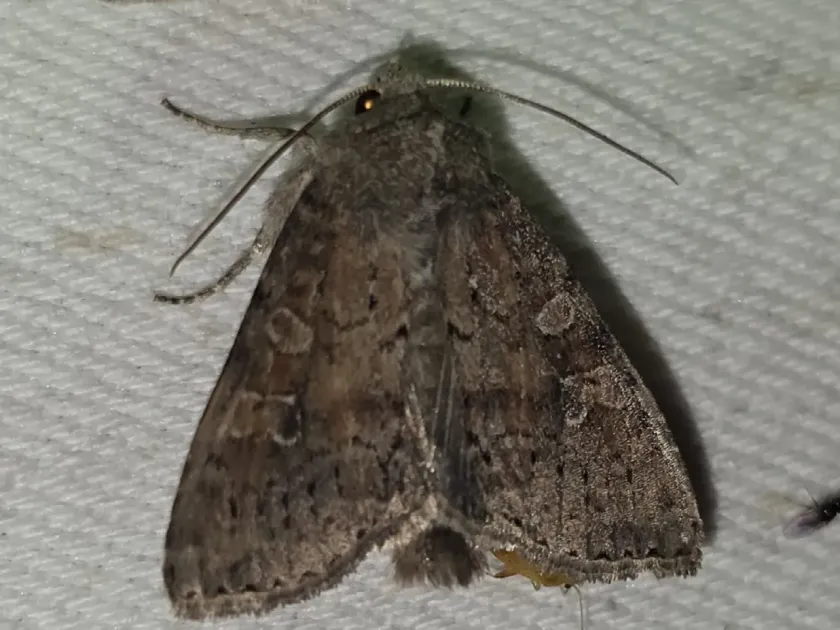
Description
How to identify
Parastichtis suspecta belongs to the family Noctuidae within the order Lepidoptera. The adult moth has a wingspan of approximately 30–35 mm, with forewings featuring patterns ranging from ochre-yellow to dark brown, often marked with distinct dark transverse lines.
The larvae, or caterpillars, are characterized by distinct body segmentation and longitudinal light stripes. They undergo several developmental instars, showing significant growth and coloration shifts, which is typical for many species within the subfamily Xyleninae.
For accurate identification of the adults, specialists often examine the genital structures, as the external appearance of the moths can sometimes overlap with closely related noctuid species inhabiting forest and forest-steppe ecosystems.
Females typically deposit eggs on the bark of trees or the vegetative parts of host plants, ensuring the clutch remains secured until the larvae emerge.
Pupation occurs in the soil or under leaf litter, where the pupa is encased in a protective cocoon made of silk and substrate particles, providing shelter for overwintering in temperate climates.
What it damages
The primary damage is caused by the caterpillars, which are polyphagous. They feed predominantly on the leaves and buds of deciduous trees such as birch, willow, and poplar, but during outbreaks, they can migrate to agricultural crops located near forest edges.
In orchard settings, the pest may damage young shoots and fruit blossoms, leading to decreased yields and weakened plant health. Young saplings in nurseries are particularly vulnerable to infestation.
Feeding patterns include skeletonization and defoliation. Early instars typically chew small holes in leaf blades, while older caterpillars are capable of consuming entire leaves, leaving only the tougher veins intact.
The pest's activity often promotes secondary infections, as damaged leaf tissues and wounded shoots provide easy access for fungal spores and bacteria to enter the plant system.
The economic impact of this pest increases during outbreak years, where widespread foliage destruction requires urgent intervention from agricultural protection services to prevent long-term damage to timber or fruit production.
When it appears
The flight period for Parastichtis suspecta occurs in mid-summer, typically spanning July and August. The moths are most active during dusk and nighttime hours, when mating and egg-laying take place.
The species overwinters in the egg stage, attached to the bark of host plants until the following spring. Mass hatching of larvae coincides with the bud-burst period, which represents the most vulnerable stage for the plant's development.
Larval development continues throughout the spring and early summer, after which they migrate to the soil to pupate. The entire life cycle of one generation is strictly tied to the phenology of their host plants.
Weather conditions, particularly air humidity and temperature during spring, directly impact larval survival rates. A warm, early spring usually facilitates more rapid and intensive population development.
There is typically one generation per year (univoltine), allowing for effective population monitoring and forecasting based on data collected from pheromone traps in the previous season.
Signs of infestation
The primary sign of infestation is the presence of eaten leaves and buds on trees and shrubs. During evening inspections, caterpillars can often be found on the undersides of leaves or along branches.
The presence of frass (caterpillar excrement) on leaves beneath feeding sites is another clear indicator of the pest's presence and demonstrates the intensity of their feeding activity.
Rolled leaves secured with silk webbing may also indicate larval activity, as the caterpillars use these structures as protection from predators and adverse weather conditions.
In orchards, stunted shoot growth and deformed young leaves are frequently the result of larvae damaging buds before they have fully expanded.
Visual inspection of tree canopies during the growing season often reveals "holes" or gaps in the foliage resulting from the active feeding of late-instar larvae.
Control measures
The main control method involves early spring applications of contact-stomach insecticides, which are most effective when the larvae are young and have not yet caused significant damage to the host plants.
Agrotechnical measures include regular cleaning of tree basins by removing weeds and fallen leaves where pupae may be overwintering, significantly reducing the pest pressure for the following season.
Pheromone traps are used to monitor adult population levels, providing timely alerts for necessary chemical or biological treatments and helping to reduce overall pesticide usage.
Biological control includes the use of preparations based on Bacillus thuringiensis, which effectively suppress larval development while remaining safe for beneficial entomophages.
Encouraging natural predators, such as birds and insectivorous insects (predatory bugs and beetles), helps to maintain the moth population at a low, non-damaging level in forest parks and protective shelterbelts.
Taxonomy
- Latin name
- Parastichtis
- Order
- Lepidoptera (butterflies)
- Family
- Noctuidae
- EPPO code
- PARISP
Discussion
No discussions yet — be the first.