
Cabbage moth
Papestra
Description
How to identify
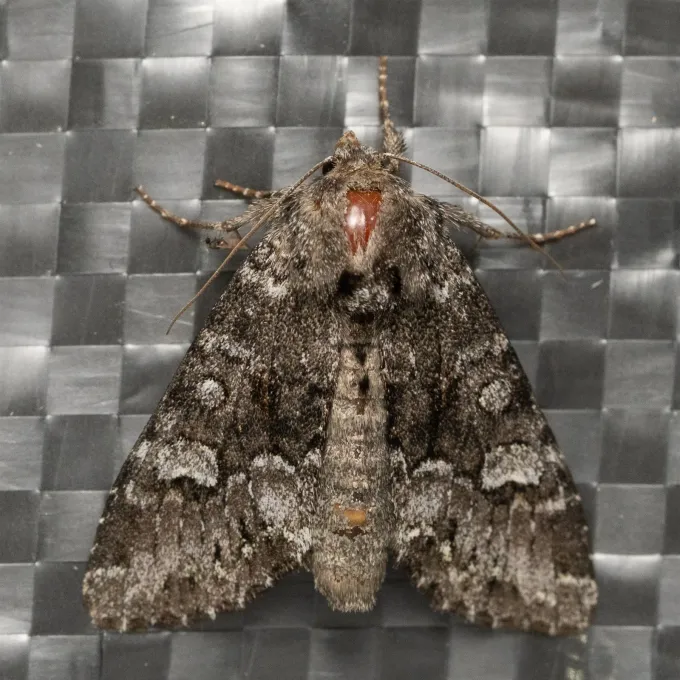
The cabbage moth (Papestra brassicae) is a notorious member of the Noctuidae family, widely known for its economic impact on vegetable production. The adult moth features a wingspan of approximately 40-50 mm, with mottled grey and brown forewings marked by a characteristic white, kidney-shaped spot.
The larvae, or caterpillars, exhibit varying coloration throughout their development. Early instars are often light green, whereas mature caterpillars can range from olive green to dark brown or nearly black, featuring distinct lateral stripes along their bodies.
The pupal stage occurs in the soil, where the insects spend the winter at depths of up to 15 centimeters. The pupae are glossy, reddish-brown, and roughly 20 mm long, which protects them from extreme winter conditions.
Females are prolific egg-layers, depositing batches of up to 300 eggs at a time on the undersides of host leaves. Over a single lifespan, a female can lay as many as 2,500 eggs, ensuring the rapid spread of the population.
The lifecycle duration is highly temperature-dependent. In warmer regions, this species can produce two or even three generations per season, significantly increasing the pressure on horticultural crops.
What it damages
As a polyphagous insect, the cabbage moth feeds on a wide range of plants, including cabbage, broccoli, cauliflower, kale, tomatoes, lettuce, and beetroot. The larval stage is responsible for all the crop damage.
Young caterpillars begin by feeding on the epidermis, creating small windows in the leaves. This damage is primarily localized but becomes more severe as the larvae consume larger portions of the leaf tissue.
As the larvae mature, they become voracious eaters, consuming entire leaves and leaving only the midribs intact. They often bore into the heads of cabbage and broccoli, leading to structural damage and cosmetic loss.
The presence of larvae within the heads introduces pathogens, causing the vegetables to rot and become unsuitable for consumption or market sale. This is especially problematic in late-season harvests.
Heavy infestations can devastate entire fields, leading to significant yield losses. The combination of leaf loss and internal rotting makes this pest particularly feared among vegetable growers.
When it appears
The flight period for the first generation of adults typically starts in late spring or early summer. These nocturnal moths are most active during warm, humid nights when they seek out host plants for egg-laying.
Egg incubation lasts approximately 5 to 12 days, depending on environmental factors. Once hatched, the larvae immediately begin feeding, moving rapidly through their developmental instars over several weeks.
The second generation usually appears in mid-to-late summer. This generation is often larger and more destructive because it coincides with the final development stage of many vegetable crops.
Larvae eventually drop to the ground to pupate in the soil as temperatures begin to drop in the autumn. They remain in the soil until the following spring, when they emerge as adults to restart the cycle.
Cultural and climatic conditions play a crucial role in population dynamics. Cool, wet springs might delay development, whereas warm, consistent summers lead to rapid outbreaks and severe crop damage.
Signs of infestation
One of the earliest indicators is the presence of egg clusters on the undersides of leaves. These clusters are often yellowish or white and are easily spotted by farmers during regular field scouting.
Leaf skeletonization and ragged holes in the leaves are classic signs of early-to-mid instar activity. Observing these patterns requires checking not only the tops but also the undersides of leaves.
The accumulation of frass, or dark fecal pellets, in the leaf axils or on the top of cabbage heads is a definitive sign of active caterpillar presence.
Plants showing signs of premature decay or wilting should be inspected immediately, as larvae often bore into the centers of heads, which might be hidden from casual observation.
Nighttime inspections using flashlights can reveal the nocturnal feeding activity, as caterpillars emerge from their hiding spots to feed under the cover of darkness.
Control measures
Cultural control, such as deep autumn plowing, is essential for disrupting the pupal stage. Turning the soil brings dormant pupae to the surface, exposing them to predators and freezing temperatures.
Weed management is equally important, as various wild cruciferous plants serve as alternative hosts during the early part of the season before the main crops are ready for colonization.
Biological control agents, particularly products containing Bacillus thuringiensis, are highly effective against young larvae and represent a safer alternative to synthetic chemical pesticides.
When the economic threshold is reached, chemical intervention with selective insecticides may be necessary. It is crucial to rotate chemical classes to prevent the development of resistance in moth populations.
- Maintain regular crop scouting schedules.
- Utilize pheromone traps to monitor adult flight activity.
- Encourage natural predators like parasitic wasps and birds.
- Use fine-mesh netting to physically prevent moths from laying eggs.
Taxonomy
- Latin name
- Papestra
- Order
- Lepidoptera (butterflies)
- Family
- Noctuidae
- EPPO code
- PAPESP
Discussion
No discussions yet — be the first.