
Burdock borer
Papaipema cataphracta
Description
How to identify
The Burdock borer (Papaipema cataphracta) is a moth species belonging to the Noctuidae family. The adult moth is typically brownish-orange with a wingspan of approximately 35-40 mm, well-adapted to camouflage.
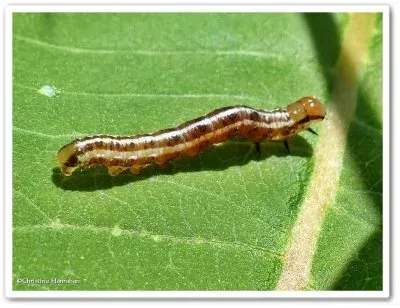
The larval stage, which acts as a borer, is the most destructive. The larva features a smooth body with distinctive dark spots and can reach a length of up to 45 mm, making it easily identifiable upon close inspection.
This species overwinters in the egg stage, typically deposited on the remnants of host plants or debris near the soil surface, ensuring high survival rates through cold winters.
The larvae hatch in late spring and initially feed on small herbaceous weeds before migrating to larger host plants as they grow.
The life cycle consists of one generation per year, which is a key factor in predicting infestation patterns during the growing season.
What it damages
The Burdock borer is a polyphagous pest that affects various plants, including popular ornamentals like dahlias, lilies, and peonies, as well as several vegetable crops.
Larvae bore into the center of the stem, feeding on the pith. This mining activity disrupts the plant's vascular system, leading to rapid wilting of the stems above the entry point.
Damage often results in weakened stems that break under their own weight or during windy conditions, rendering the plant aesthetically and structurally ruined.
Secondary infections by fungi and bacteria are common in the larval tunnels, which significantly accelerates the decay of the infested plant tissue.
In cases of severe infestation, the plant may fail to bloom or die prematurely, causing significant losses for growers and gardeners alike.
When it appears
Larval emergence begins in mid-to-late spring, coinciding with the rapid vegetative growth of host plants, which provides the necessary food source.
The active feeding period for larvae occurs throughout the summer months, during which they remain hidden inside the stems, making them difficult to detect.
Pupation occurs in late summer or early autumn, either within the stem or in the soil, depending on environmental conditions and plant health.
Adult moths emerge in the fall, usually from September to October, to mate and deposit eggs for the next generation.
Understanding these seasonal milestones is essential for implementing timing-based pest management strategies effectively.
Signs of infestation
The most common sign of infestation is sudden wilting of the plant tops, despite adequate irrigation, as if the water supply is being cut off.
Small entry holes in the stem, often surrounded by accumulations of frass (larval waste), are clear indicators of borer presence.
Discoloration or premature yellowing of the stem area near the entry hole often precedes the death of the upper portion of the plant.
If the stem is split open, the internal pith will show clear evidence of tunneling, and the larva itself may be found inside the cavity.
Stems that are prone to lodging or breaking easily at the point of entry are classic indicators of structural damage caused by the larvae.
Control measures
Effective sanitation is the primary control method, involving the thorough removal and destruction of crop residues and weeds at the end of the season.
Regular monitoring of susceptible host plants during the early spring allows for the identification of initial infestations before the larvae bore deep into the stems.
If an infestation is confirmed, infested stems should be carefully removed and destroyed to kill the larvae before they complete their development.
Preventative insecticide treatments using systemic formulations can be effective if applied just before the larvae penetrate the stem tissue.
Crop rotation and keeping the surrounding garden area free of host weeds, such as burdock and thistle, are critical to minimizing future risks of infestation.
Taxonomy
- Latin name
- Papaipema cataphracta
- Order
- Lepidoptera (butterflies)
- Family
- Noctuidae
- EPPO code
- PAPACA
Discussion
No discussions yet — be the first.