
Pine moth (Panthea coenobita)
Panthea coenobita
Description
How to identify
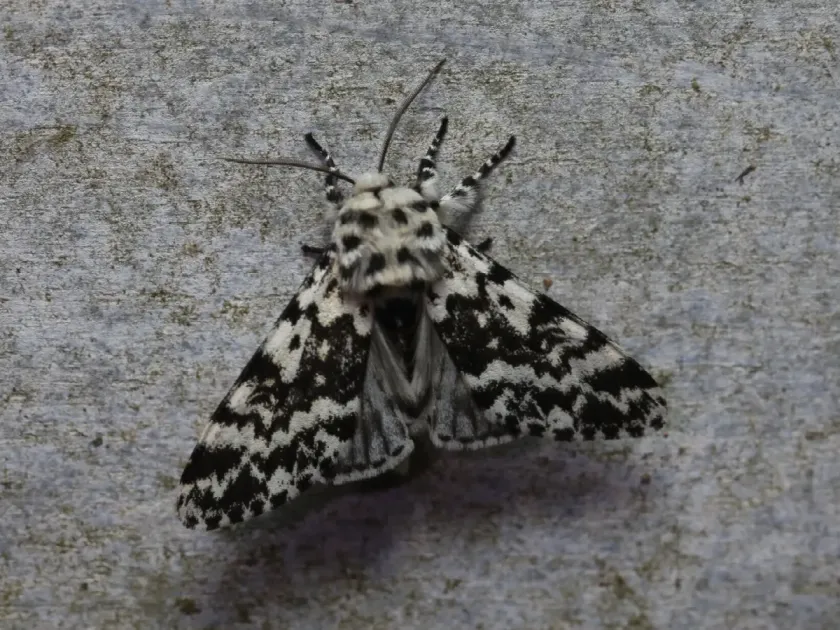
The pine moth (Panthea coenobita) is a moth belonging to the family Noctuidae. The adult moth features a wingspan of 40-50 mm and grayish-black coloration with distinct patterns on the forewings.
The larvae are distinctively hairy, covered in dense tufts of long setae, which provides a protective, woolly appearance throughout their development.
Caterpillars reach up to 50 mm in length and exhibit variable coloring, ranging from ash-gray to dark brown, often with vivid dorsal stripes.
The pupae are dark brown and encased in loose, grayish cocoons typically found tucked away in bark crevices or near the base of the tree.
As a holometabolous insect, the species completes a full life cycle including egg, larva, pupa, and adult stages, adapted to temperate climates.
What it damages
The primary host for the pine moth is the Scots pine (Pinus sylvestris), where the larvae feed extensively on needles during their development.
Secondary hosts include other conifers such as spruce, fir, and larch, which may suffer damage during population outbreaks.
Larval feeding significantly reduces the tree's photosynthetic capacity, causing the crown to thin and the tree to lose its vigor.
Severe infestations lead to widespread needle loss (defoliation), which weakens the trees and makes them highly susceptible to secondary pests.
Bark beetles and wood-boring insects often colonize trees previously weakened by the pine moth, eventually leading to tree mortality.
When it appears
Adult moths are typically active from May to July, with the specific timing dependent on regional climate conditions and spring temperatures.
The species overwinters in the egg stage, which are laid on the bark or needles, showing high resilience to cold winter conditions.
Larval emergence occurs in late spring, corresponding with the bud break and the emergence of new, tender needle growth.
The feeding phase of the caterpillars lasts throughout the first half of the summer before they initiate the transition to the pupal stage.
The species generally completes one generation per year, concentrating its impact on forest health during the peak summer growth season.
Signs of infestation
Visual identification starts with the presence of hairy, colorful caterpillars feeding on the needles within the forest canopy.
Increased needle drop and yellowing of the branches are classic signs of feeding activity, particularly noticeable in early summer.
Dark granular frass accumulating on the ground beneath the infected trees provides a clear signal of high caterpillar activity in the canopy.
Pupal cocoons can be found hidden in the bark texture of the trunks, marking the end of the larval damage phase.
Nighttime observation near artificial light sources during the summer may reveal the presence of adult moths, signaling potential infestation risk.
Control measures
Chemical control involves the application of approved insecticides during the early larval stages when caterpillars are most vulnerable.
Biological treatments using Bacillus thuringiensis (Bt) sprays are highly recommended as they target the larvae without harming beneficial insects.
Enhancing natural biodiversity, such as encouraging birds and predatory wasps, provides long-term natural suppression of pest populations.
Silvicultural practices, including the removal of dead or dying trees and maintaining forest hygiene, help disrupt the pest's life cycle.
Implementing pheromone-based monitoring helps land managers assess population density and decide on the necessity of intervention strategies.
Taxonomy
- Latin name
- Panthea coenobita
- Order
- Lepidoptera (butterflies)
- Family
- Noctuidae
- EPPO code
- PANTCO
Discussion
No discussions yet — be the first.