
Panthea
Panthea
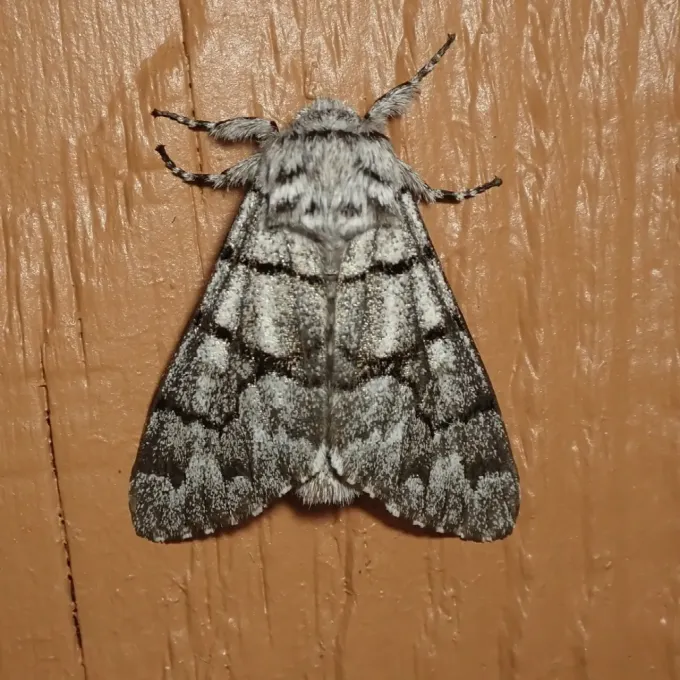
Description
How to identify
The genus Panthea belongs to the family Noctuidae. These moths are nocturnal and have a wingspan of approximately 40–50 mm, featuring greyish-brown patterns that provide excellent camouflage against tree bark.
The larvae, commonly referred to as caterpillars, are distinctive due to their thick hair tufts and variable coloration. They are often found on various coniferous trees, primarily pines.
Taxonomically, the genus is well-defined within the order Lepidoptera. The most common species observed in temperate climates is Panthea coenobita, known for its impact on forest health.
The life cycle involves four stages: egg, larva, pupa, and adult. The pupal stage is spent within a sturdy cocoon, usually hidden in bark crevices, ensuring survival through winter conditions.
Correct identification often relies on observing the larval characteristics, as adults are difficult to spot during the day. Experts look for specific seta patterns to confirm the species.
What it damages
Panthea species are significant defoliators of conifers, particularly Scots pine (Pinus sylvestris). They feed primarily on needles, consuming both young and mature growth.
Heavy infestations can lead to significant needle loss, which weakens the host tree. This physiological stress makes the trees more susceptible to secondary attacks by bark beetles or wood-boring insects.
In forest stands, the damage is characterized by a thinning of the canopy. This loss of needles reduces the tree's photosynthetic capacity, negatively impacting its overall growth and vigor.
Ornamental trees are particularly sensitive to defoliation. The aesthetic damage caused by the larvae often requires rapid intervention to maintain the value of the landscape.
Even moderate feeding can result in stunted development of new shoots. Repeated cycles of infestation may lead to the long-term decline of individual trees in susceptible areas.
When it appears
The flight period for adult Panthea moths typically occurs between May and July. They are attracted to lights, which is a common way to monitor their presence in forested areas.
After mating, females lay eggs on the needles or bark. The larval development phase lasts throughout the summer, with the most active feeding occurring in July and August.
Pupation generally begins in late summer or early autumn. The pupae remain dormant in cocoons throughout the winter until the following spring, when the cycle repeats.
Local climatic conditions, such as temperature and precipitation, dictate the speed of larval development. Warm, dry summers often lead to higher survival rates for the population.
Regular monitoring starting in late spring is recommended for forest managers to track the moth's activity levels and prepare for potential outbreaks.
Signs of infestation
Early signs of an infestation include the presence of larval droppings (frass) under the tree canopy. Additionally, yellowing of the needles indicates feeding damage.
Upon closer inspection, you may see the caterpillars resting on branches, where their hairy appearance camouflages them against the foliage and bark.
Defoliation patterns are often visible as notched or missing sections on the needles. In severe cases, large portions of the branch may appear bare.
- Notched or absent needles.
- Frass accumulation under the canopy.
- Hairy caterpillars visible on branches.
- Cocoon remnants in bark crevices.
Using the branch-shaking method over a white sheet is a highly effective way to detect the presence of larvae in dense pine crowns.
Control measures
Biological control using Bacillus thuringiensis (Bt) is the most environmentally friendly and effective way to manage larvae, especially in early development stages.
In cases of significant outbreaks, professional foresters may use systemic insecticides. These should be applied carefully to minimize impact on non-target species and pollinators.
Good silvicultural practices, such as maintaining proper spacing between trees and promoting tree vigor through irrigation and soil health, reduce the likelihood of severe outbreaks.
Encouraging natural predators, such as birds and parasitic wasps, provides long-term population suppression. Installing bird boxes is a simple and effective strategy.
Mechanical removal is only practical for small-scale infestations or individual decorative trees. Hand-picking caterpillars should be done using gloves to avoid potential skin irritation from hairs.
Taxonomy
- Latin name
- Panthea
- Order
- Lepidoptera (butterflies)
- Family
- Noctuidae
- EPPO code
- PANTSP
Discussion
No discussions yet — be the first.