
European spiny lobster
Palinurus vulgaris
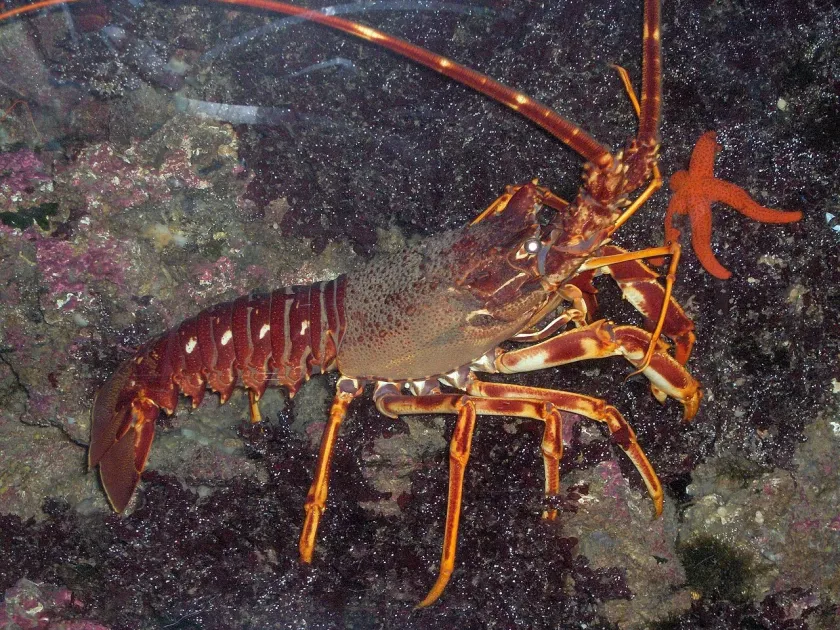
Description
How to identify
The European spiny lobster (scientific name Palinurus vulgaris or Palinurus elephas) belongs to the order Decapoda and the family Palinuridae.
This species is a marine decapod crustacean, characterized by a large, spiny carapace and two long, robust, whip-like antennae instead of claws.
It inhabits rocky crevices in the Mediterranean and the northeastern Atlantic Ocean, living exclusively in marine environments.
The biology of the species relies on marine salinity and specific water temperatures, making it physically impossible for it to survive on agricultural land.
It is a benthic predator that feeds on sea urchins, mollusks, and small benthic fauna rather than plant tissues or vegetation.
What it damages
The European spiny lobster is not a plant pest and does not cause damage to any known agricultural or horticultural crops.
As an aquatic organism, there is no biological pathway for this species to interact with field crops, orchards, or greenhouse plants.
Claims suggesting this lobster damages crops are biologically unfounded and inconsistent with modern agronomic data.
There are no recorded instances of this crustacean feeding on stems, roots, leaves, or fruits of any terrestrial plants.
The species has zero economic impact on global food production systems or plant-based agriculture.
Control measures
There are no pest control strategies or management practices associated with this species in the field of agronomy.
Using chemical pesticides, baits, or any other plant protection products against this lobster is strictly non-recommended and environmentally hazardous.
Agricultural professionals should focus their monitoring efforts on established plant pests rather than marine species.
Since the organism does not exist in an agricultural setting, no protective measures or mitigation plans are required.
If this species is listed in any outdated agricultural database as a pest, it should be considered an error in taxonomic classification.
Taxonomy
- Latin name
- Palinurus vulgaris
- Family
- Palinuridae
- EPPO code
- PALIVU
Discussion
No discussions yet — be the first.