
Pachybolus laminatus
Pachybolus laminatus
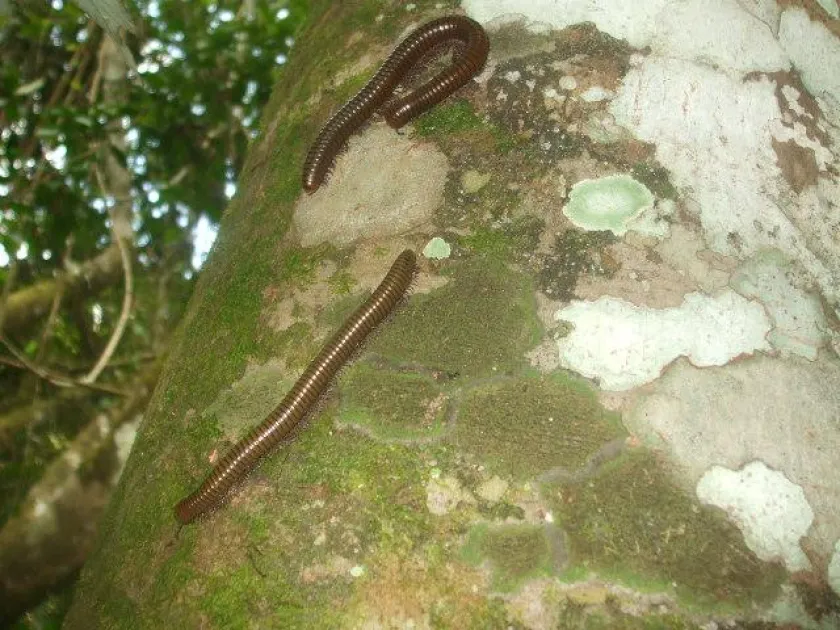
Description
How to identify
Pachybolus laminatus is a species of millipede belonging to the class Diplopoda and the family Pachybolidae. They are relatively large arthropods, characterized by a segmented, cylindrical body protected by a robust chitinous exoskeleton.
The adults typically exhibit a dark coloration, ranging from deep brown to black, often with distinct transverse bands marking each segment along their body.
These millipedes possess a firm, cylindrical structure that is specifically adapted for moving through soil layers and maneuvering around subterranean obstacles.
Equipped with mandibulate mouthparts, they are capable of feeding on tough plant tissues, including tubers, thickened roots, and tender shoots during the early stages of development.
The species prefers habitats with high humidity and soil rich in organic matter, which provide optimal conditions for their survival, growth, and reproduction throughout the season.
What it damages
The primary damage is inflicted upon the root systems of young plants, which disrupts the uptake of vital water and nutrients, leading to physiological stress.
Crops susceptible to Pachybolus laminatus attacks include potatoes, carrots, and beets, where the millipedes create deep cavities and pits, significantly reducing the market value of the harvest.
Furthermore, this pest poses a significant threat to germinating seeds and cereal seedlings, often causing severe crop thinning in infested agricultural fields.
Vegetable crops are particularly vulnerable during the seedling stage, as millipede feeding on the root collar can lead to the death of the entire plant.
Beyond mechanical damage, the wounds created by these millipedes serve as entry points for secondary pathogens, facilitating the development of various fungal and bacterial rots.
When it appears
The highest level of pest activity coincides with periods of high soil moisture, especially during the spring when moisture levels are conducive to seed germination.
Their life cycle is intricately linked to soil hydration, and population peaks are frequently observed during or immediately after periods of heavy rain or intensive irrigation.
During the summer, if the upper layers of the soil become too dry, Pachybolus laminatus typically migrates to deeper, more humid soil horizons to survive.
In autumn, activity may increase again as the millipedes search for food reserves to prepare for overwintering in the soil profile.
Consistent monitoring of soil moisture and plant status is essential, as the pest's localized activity can cause significant damage before it is visually detected.
Signs of infestation
A classic sign of infestation includes the presence of deep, clean-edged craters or holes on the surface of tuberous roots, often without immediate decay signs.
In the field, farmers may notice sudden, unexplained wilting of individual plants, which, upon inspection, reveal damaged or destroyed root systems.
Small, granular fecal pellets left on the soil surface near the base of the plant are indicative of the presence of millipede populations.
Excavating the soil around the root zone often reveals the presence of adult millipedes or their larvae within the immediate vicinity of the injured plants.
A general appearance of stunted growth and yellowing foliage serves as a secondary indicator that the root system has been compromised by underground pests.
Control measures
Crop rotation remains the most fundamental management practice, as it prevents the accumulation of organic debris that promotes high millipede population densities.
Autumn plowing is highly effective for population reduction, as it exposes the millipedes to surface environmental extremes and avian predators.
Managing irrigation practices to avoid constant saturation of the soil can limit the pest's ability to thrive and successfully reproduce in the root zone.
For high-pressure situations in vegetable cultivation, soil-applied insecticides may be utilized according to specific regional agricultural regulations.
- Utilizing systemic seed treatments for protection during germination.
- Mechanical soil tillage to disrupt millipede movement corridors.
- Setting bait traps using moist organic matter to aggregate and remove the pests.
Taxonomy
- Latin name
- Pachybolus laminatus
- Family
- Pachybolidae
- EPPO code
- PACULA
Discussion
No discussions yet — be the first.