
Clouded Drab
Orthosia miniosa
Description
How to identify
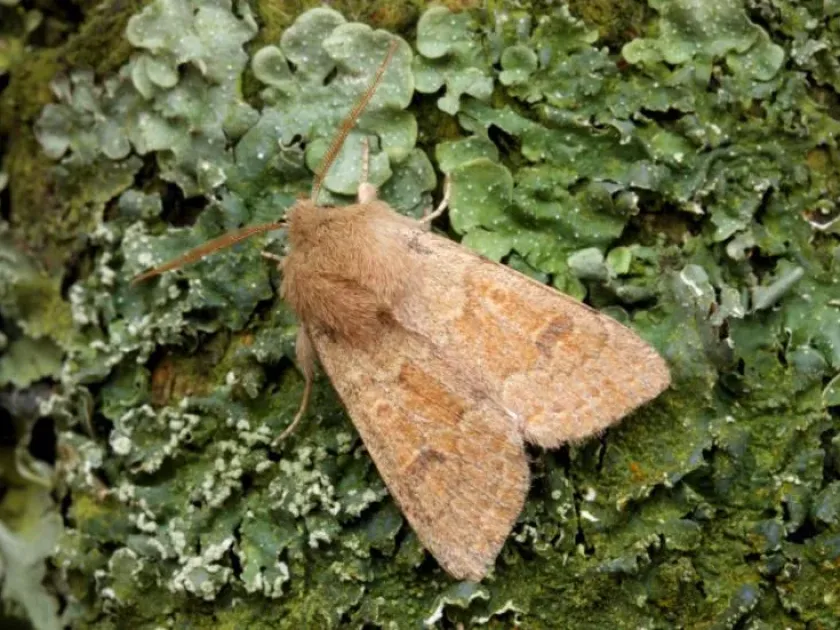
The Clouded Drab (Latin: Orthosia miniosa) is a moth belonging to the Noctuidae family. It is a nocturnal insect with a wingspan typically ranging from 35 to 40 mm.
The forewings exhibit a vibrant color ranging from ochre-yellow to brick-red, often featuring a distinct central dark mark which helps in identification.
The larvae, or caterpillars, develop through several instars. Mature caterpillars can reach 40 mm in length and are characterized by a dark dorsal stripe and light side patterns.
The species has a univoltine life cycle, meaning it produces only one generation per year. It overwinters as a pupa in the soil underneath trees or within leaf litter.
Adult moths emerge in early spring, usually in April, coinciding with the bud-burst stage of their host plants, which is critical for the survival of the offspring.
What it damages
As a polyphagous species, the larvae feed on a wide variety of deciduous trees. While oaks are their primary natural host, they frequently migrate to orchards.
Fruit trees such as apples, pears, and plums are often targeted. The caterpillars consume emerging buds, young leaves, and developing flower clusters, causing direct damage.
Severe infestations can lead to significant defoliation, which hampers the tree's photosynthetic capability and weakens its overall vigor throughout the growing season.
In nursery settings, the feeding activity on young saplings can be particularly destructive, potentially causing long-term growth defects or branch death.
The economic impact is primarily driven by the reduction in potential fruit yield and the increased stress on trees that makes them prone to secondary infections.
Signs of infestation
An early sign of infestation is the presence of caterpillars during the spring bud-burst. They are often found feeding openly on the new green growth.
Leaf damage typically presents as irregular holes or skeletonized edges. In heavy cases, only the main leaf veins remain, leaving the tree looking scorched.
Accumulation of larval excrement (frass) on the leaves or the ground beneath the canopy indicates an active feeding population residing in the foliage.
The premature drop of flower buds or the appearance of hollowed-out blossoms is another key indicator that the larvae have been active in the flowering stage.
Evening inspections using a light source can reveal the presence of adult moths, which indicates that oviposition (egg-laying) is likely occurring on the host trees.
Control measures
Cultivating the soil around the base of trees in late autumn is a highly recommended agricultural practice to disrupt the pupation sites of the overwintering generation.
The use of sticky bands or mechanical tree guards around trunks can help limit the movement of larvae, particularly in young or managed orchard settings.
Biological control agents, such as Bacillus thuringiensis, are effective and eco-friendly options for managing larval populations without harming beneficial insect biodiversity.
If chemical intervention becomes necessary, insecticides targeting early-stage larvae should be applied in strict accordance with local regulatory guidelines.
Regular scouting and monitoring programs are essential. Identifying the presence of the moth early allows for a more targeted and less pesticide-intensive response.
Taxonomy
- Latin name
- Orthosia miniosa
- Order
- Lepidoptera (butterflies)
- Family
- Noctuidae
- EPPO code
- ORTOMI
Discussion
No discussions yet — be the first.